
When treble hooks make sense on the water
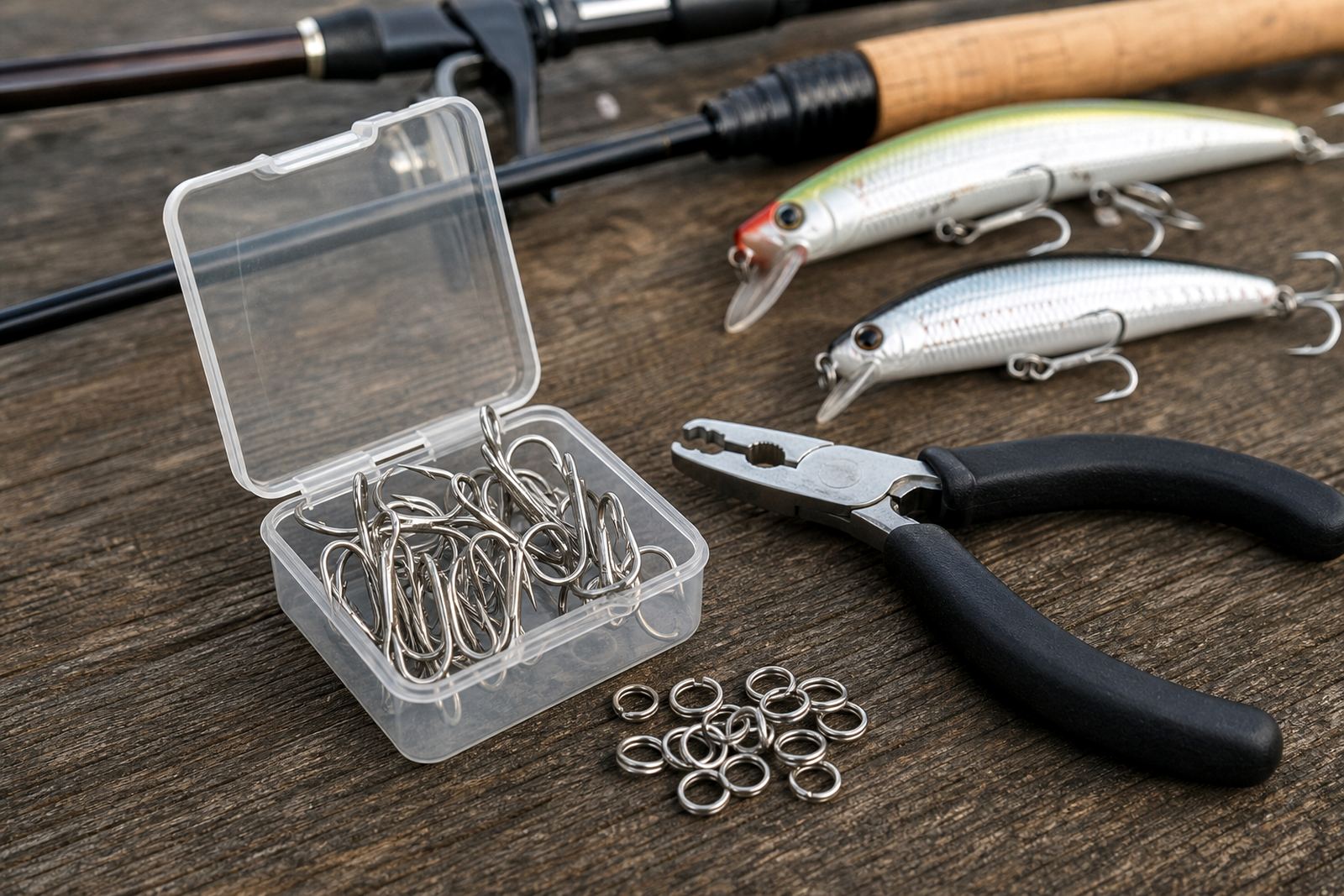
Treble hooks have three points on one shank, which helps spread the load and can improve hook-up rates on lures that move fast or wobble hard. They are commonly used on spoons, crankbaits, jerkbaits, topwater plugs and some deadbait rigs, especially where fish strike at the rear of the lure. For Durban saltwater work, they are often fitted to kingfish, shad and bonito style lures, while inland anglers use them on bass, kurper and predator presentations.
They suit anglers who want a compact hook with multiple points, but they are not always the right answer for every setup. In heavy weed, around rock, or where catch-and-release handling matters, some anglers prefer singles or assist hooks. The choice depends on your lure action, target species and how much foul-hooking you can accept.
Treble hook sizes, wire grades and finish options
Choosing the right treble is mostly about matching size, gape and strength to the lure and fish. Smaller sizes are used for light freshwater lures, while larger sizes suit bigger saltwater plugs and heavy body lures. The hook must sit balanced on the lure without killing the action or rubbing the body on the cast.
- Small sizes: for finesse lures, trout, bass and small jerkbaits
- Medium sizes: for general freshwater and mixed coastal use
- Large sizes: for big plugs, surf-style lures and stronger fish
- Thin wire: easier penetration and better action on lighter tackle
- Heavy wire: better for stronger fish and tougher drag settings
- Coated or corrosion resistant finishes: useful in coastal salt air and humid storage conditions
As a rule, the hook should be strong enough for the fish but light enough to keep the lure swimming correctly. If the hook is too heavy, the lure can roll over or sink too quickly, and that often costs bites.
Where treble hooks work best across South Africa
Treble hooks are a common choice for anglers fishing the coast from Durban, Ballito and Cape Town to Gqeberha and East London, especially on hard baits worked from shore, harbour walls and estuary edges. Inland, they are just as useful for bass dams, stillwater predators and the occasional stocked trout session. Around Johannesburg and Pietermaritzburg, many anglers keep a mixed tray of treble sizes for lure tuning, replacements and emergency repairs.
Saltwater anglers should give extra attention to corrosion. Durban humidity and spray can start rust quickly if hooks are stored damp, so rinsing and drying after a trip is not optional. If you fish often, it is worth keeping spares in a sealed box with the silicone pack that came in the packet, even if the packet looks clean.
- Surf and rock lure fishing
- Harbour and estuary lure work
- Freshwater predator lures
- Tackle repair and maintenance kits
- Backup hooks for club and charter bags
Fitting treble hooks without spoiling the lure
Replacing a treble is straightforward if you use proper split ring pliers and take your time. Open the split ring, slide the old hook off, then fit the new one with the points facing the correct way so the lure tracks well and the hook does not foul on the split ring. On some lures, the rear hook can be one size up or down depending on balance, but it should still clear the body and tail section.
If you are building a fresh setup, check the lure weight, hook hanger size and how much clearance there is between the hook points and the body. On small lures, an oversized treble can tangle in the cast or hang on weed. On bigger lures, a hook that is too light may open under pressure. If in doubt, bring the lure details through the enquiry form and we can guide the match. That saves a lot of trial and error, and a few bent hooks too.
Care, safety and saltwater servicing habits
Treble hooks last longer when they are cleaned after use and checked for dull points, bent shanks and rust around the eye. A small amount of surface corrosion can spread fast, especially in coastal conditions or after bait juice has dried on the hook. If a point feels rounded or the wire shows a twist, replace it before the next trip.
- Rinse with fresh water after salt exposure
- Dry fully before storage
- Store hooks away from wet traces and sinkers
- Check every point before reusing a lure
- Replace rusty or opened hooks immediately
For anglers who fish often, keep spare trebles in the boat bag, car kit or tackle tray so you are not caught short on the bank. That applies doubly for charter days and club competitions where time matters.
What to check before you order the right trebles
Before ordering, look at the lure size, existing hook size, target species and whether you need standard replacement hooks or stronger upgrade hooks. A treble that fits one brand of lure may sit differently on another because hanger lengths, split rings and body profiles vary. You should also think about the style of fishing. Fast casting for shad from the Durban side asks for a different setup than a slow rolled freshwater crankbait.
Please check the following details before you send your enquiry through the contact page:
- Lure length and weight
- Current hook size if available
- Freshwater or saltwater use
- Target species and drag pressure
- Whether you need single replacements or bulk pack quantities
- Any corrosion resistance needs for coastal storage
If you are building maintenance kits for a club, shop or charter bag, we can also help with mixed sizes so you have coverage for more than one lure type.
Key facts
| Product type | Three-point replacement hook for lures and maintenance kits |
|---|---|
| Common sizes | Small to large, matched to lure weight and target fish |
| Best use | Hard lures, plugs, spoons and some bait rig applications |
| Material | High-strength steel with corrosion resistant finish options |
| Water use | Freshwater and saltwater, with extra care needed in coastal conditions |
| Fitting method | Installed with split ring pliers and correct hook orientation |