What Ball Sinkers Do On The Water
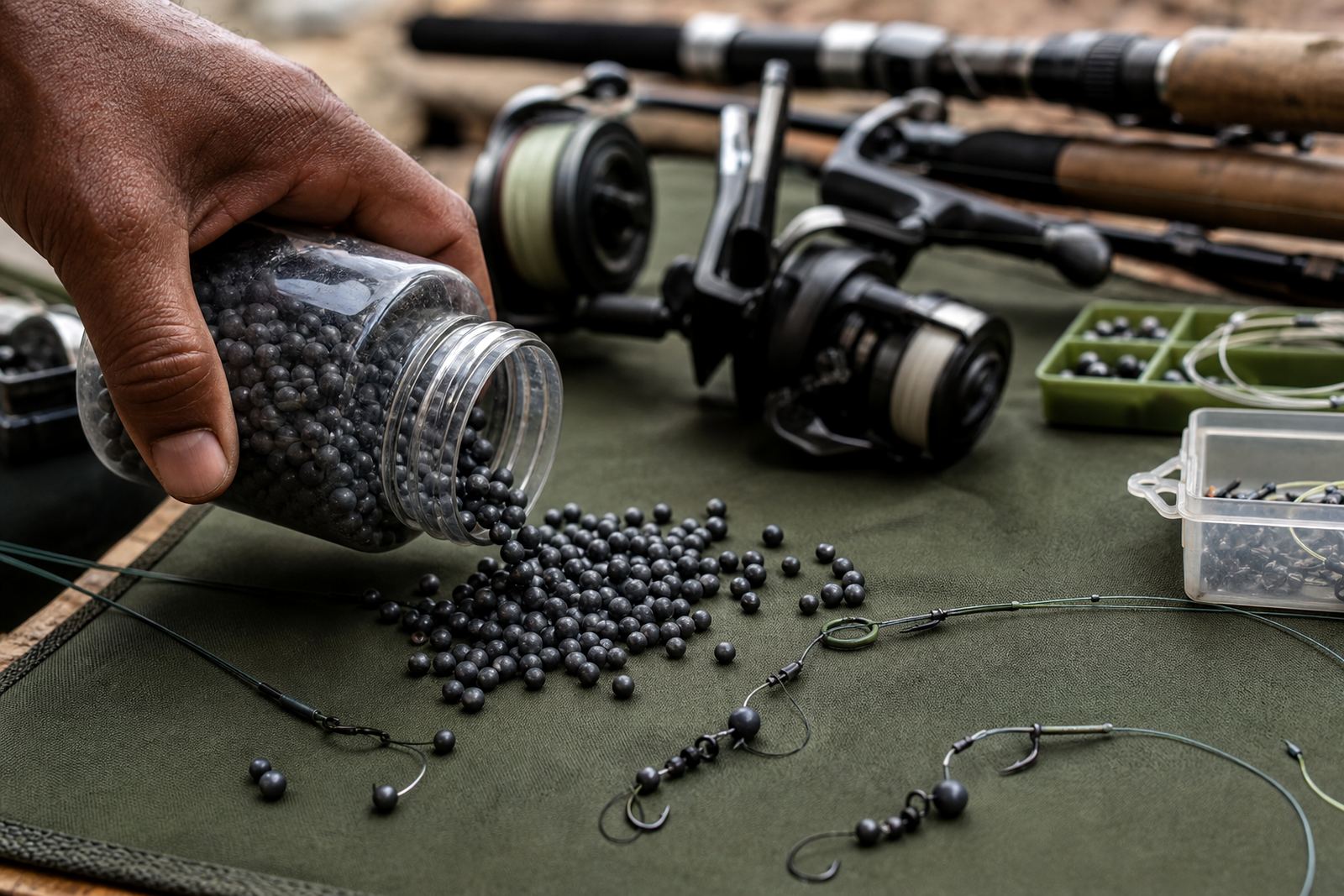
Ball sinkers add weight to a rig without making it bulky, which helps when you need a bait to reach the bottom and stay put in moving water. They are used on freshwater venues, estuaries and sheltered coastal spots where a neat presentation matters more than a heavy casting weight.
Because the line passes through the sinker, the bait can move more naturally than it would with a fixed weight. That makes ball sinkers useful for bottom fishing, light bait traces and simple running rigs. They are a common choice for anglers who want one weight that can cover more than one setup, without carrying a full box of oversized tackle.
Sizes, Hole Types And Weight Options
Ball sinkers are supplied in a range of weights so you can match the sinker to the current, the rod rating and the bait size. Lighter options suit finesse fishing and small baits, while heavier options help in faster water or when a longer cast is needed. The right weight depends on the venue and your line strength, not just the fish you are after.
- Light weights for small hooks, worm rigs and subtle presentation
- Mid-range weights for estuary water, dams and general bait fishing
- Heavier weights for stronger current or longer casts from shore
- Standard through-hole design for running rigs and sliding traces
- Selected sizes suited to both monofilament and braid setups
For anglers fishing around Durban harbour mouths or a still-water dam near Pietermaritzburg, the right size can make a noticeable difference. Too light and the rig drifts off line, too heavy and the bait looks unnatural. If you are unsure, it is usually better to start mid-range and adjust from there.
Where Ball Sinkers Work Best
Ball sinkers suit freshwater dams, river mouths, canals and quiet estuary edges where a controlled drop is useful. They are also handy for bait setups in surf zones with lighter swell, especially when you want the bait to hold without dragging hard through sand.
These sinkers are commonly used for kurper, barbel, carp and mixed bait fishing, plus estuary species where presentation is important. In coastal areas, they work well for short to medium range bait fishing and for rigs that need a smaller profile in tidal water. If you fish the Umhlanga area or Ballito area, the extra control can help when the tide is moving but the water is not rough.
- Freshwater dams and rivers
- Estuaries and tidal channels
- Light coastal bait fishing
- Running rigs for bottom fishing
How To Set Them Up On A Rig
Ball sinkers are usually threaded onto the main line before the swivel or hook trace is tied on. In a running rig, the sinker slides freely until the fish takes the bait, which gives a cleaner bite indication than a fixed weight in many situations. Keep the knot neat and use a swivel where needed to reduce line twist.
If you are using a leader, make sure the sinker hole is smooth enough to travel without chafing the line. Check the line diameter against the hole size, because a tight fit can weaken the line and a loose fit can make the rig clumsy. For better results, many anglers pair the sinker with a sinker stop or bead so the knot is protected.
- Thread sinker onto the line before the final knot
- Use a bead or stop to protect knots where needed
- Match sinker size to rod rating and bait weight
- Check that the sinker slides cleanly on the line
No power or gas is needed for fitting ball sinkers, just basic rigging tools and a steady hand. If you are setting up gear during load-shedding, the work can still be done at home or on the tailgate with a hook tyer, scissors and a few spare beads.
Care, Storage And Wear Checks
Ball sinkers need very little maintenance, but they should be rinsed after saltwater use and dried before storage. Coastal humidity in Durban and Gqeberha can cause corrosion on any metal tackle left wet in a bag, so keep sinkers in a dry compartment with your terminal tackle rather than loose in a wet bait box.
Check for cracked coatings, rough edges and enlarged holes. A sinker that has started to chip can mark the line over time, especially on repeated casts. If you use them often, keep heavier sizes separate from lighter ones so you can find the right weight quickly before a trip. A quick check before leaving for Cape Town or East London can save you from missing the first hour of good fishing.
- Rinse after saltwater use
- Dry fully before packing away
- Watch for burrs or chipped surfaces
- Store by weight for quicker rigging
What To Check Before You Order
Before ordering ball sinkers, check the weight range you need, the type of water you fish and the line size you use most. It also helps to know whether you want a small pack for personal use or a bulk quantity for a club, bait table or regular fishing group. For anglers in Johannesburg orders or coastal towns, the same basic questions save time and reduce mismatched tackle.
Think about the rigs you already use, then choose weights that cover your usual conditions. If your fishing changes from freshwater to estuary work, it is often smarter to order a small spread of sizes instead of only one option. That gives you more flexibility when the weather or tide turns. Our team can help with starter setup, trace advice and bait rig choices through the enquiry form on the contact page.
- Confirm the weight range you need
- Check line diameter and rig style
- Decide if you need light, mid or heavier weights
- Ask about bulk club orders if you buy for a group
Local Supply For Coastal And Freshwater Anglers
From Springfield Park, Durban, we supply anglers across South Africa with tackle that suits real fishing conditions, not just catalogue descriptions. Whether you are fishing close to home in KwaZulu-Natal or ordering from another province, ball sinkers are one of those small items that belong in every tackle box because they do a simple job properly.
We stock gear for coastal and freshwater use, with practical options for Durban, Cape Town, Gqeberha, Johannesburg and East London anglers. If you are building a fresh rig after a reel service or adding weights to a bait kit, ball sinkers are an easy place to start.
Key facts
| Product type | Ball sinkers for freshwater, estuary and light bait rigs |
|---|---|
| Typical use | Running rigs, bottom fishing and light casting setups |
| Weight range | Light to heavier options depending on venue and current |
| Material | Weighted metal body with central line hole |
| Care | Rinse after saltwater use and dry before storage |
| Power or gas requirement | None |