What swivels and clips do on the water
A swivel lets two sections of line or trace move against each other without winding up. That matters when you are casting spoons, drifting baits, fishing a bait runner setup or working a trace with multiple hooks. A clip gives you a quick and secure way to attach leaders, sinkers or traces, so you spend less time retying and more time fishing.
For Durban rock and surf, a strong swivel can help when the bait gets pushed around in current. For carp, barbel and bass fishing inland, clips make it easier to change leaders, sinkers or hook lengths when the dam is finicky. They are small parts, but they save time and they help keep your rig tidy when conditions are changing fast.
- Helps reduce line twist from bait movement and retrieve action
- Makes trace changes faster on the bank or beach
- Useful for fresh and saltwater rigs
- Can improve presentation by keeping components aligned
Sizes, styles and the right choice for your rig
Swivels and clips come in different sizes and strengths, from light freshwater options to heavier saltwater fittings for bigger fish and rougher conditions. Matching the size to the line and sinker is important. Too small and the fitting can fail under strain, too large and it adds unnecessary bulk to the rig.
For light spinning or carp work, smaller sizes are usually neater and cast better. For surf fishing, live bait and heavier traces, a stronger swivel with a secure clip is safer. Stainless and corrosion resistant finishes are worth choosing when you fish near the coast, especially in Durban, Umhlanga, Ballito or East London where salt air and humidity can rust cheaper fittings quickly.
- Light duty: fine traces, small hooks, finesse fishing
- Medium duty: general coastal and freshwater use
- Heavy duty: surf rigs, larger sinkers and stronger main line
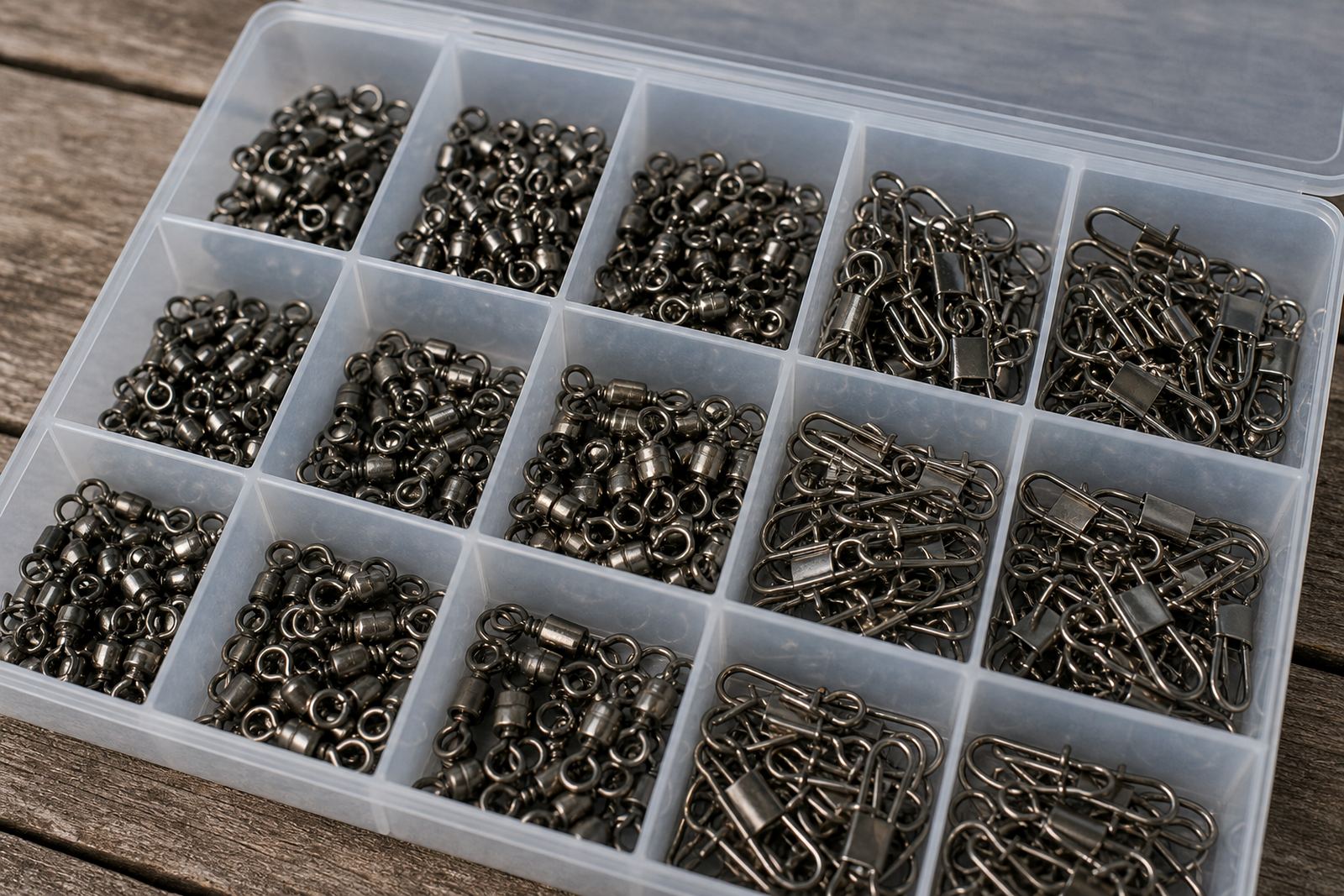
- Options include barrel swivels, crane swivels, snap clips and coastlock style clips
Where swivels and clips suit best
These fittings suit a wide mix of South African fishing styles. In freshwater they work well for carp, barbel, kurper and bass rigs where you need neat connections and easy changes. On the coast they are common in sliding bait rigs, paternoster setups, traces for shad, kob, grunter and other target species.
They are also useful for club anglers and competition anglers who want repeatable rigs. If you fish from the promenade, the beach, a harbour wall or a private dam, a small box of the right swivels and clips can save you from carrying loose knots and awkward tangles. We see anglers in Johannesburg, Pietermaritzburg and Cape Town ordering them for both weekend trips and regular stock top ups.
- Coastal surf fishing and harbour use
- Freshwater dams, rivers and canals
- Live bait, trace fishing and feeder setups
- Quick leader changes for travelling anglers
How to fit them properly without weakening the trace
Fitting a swivel or clip is simple, but the knot and line choice still matter. Use a knot that suits the line type, keep the tag ends neat and check that the swivel eye or clip gate is seated properly before fishing. If you are using braid, fluorocarbon or monofilament, make sure the knot beds down cleanly and does not cut into the line.
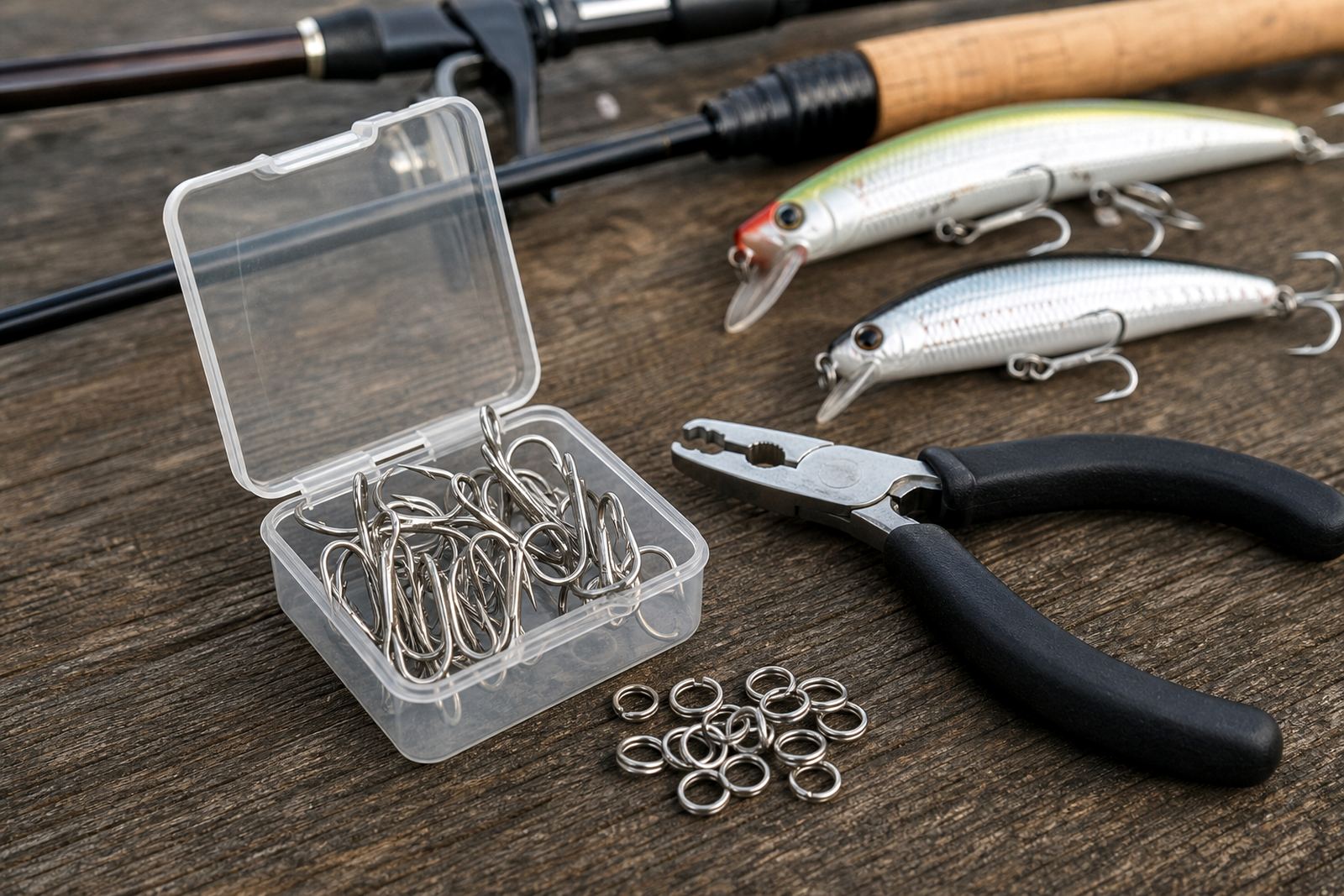
When clipping on a trace or sinker, close the gate fully and give it a firm pull test by hand. On the beach, sand and grit can get into moving parts, so rinse the terminal tackle after use. There is no power or gas requirement for these items, just a clean setup and a bit of regular checking. If you fish often, keep a small pair of pliers in your tackle bag for tightening split rings and checking clips.
- Check knot seating before every trip
- Match the swivel strength to the sinker and line class
- Rinse after saltwater use
- Replace any clip that has bent, opened up or shows rust
Care, servicing and signs it is time to replace them
Swivels and clips do not need much servicing, but they do need inspection. Salt water, sand and repeated load can wear them down faster than most anglers expect. If a swivel is stiff, the barrel does not turn freely or the clip no longer closes firmly, replace it. A weak fitting can cost you a fish and a trace.
Keep them stored dry in a tackle box with separate compartments so they do not scratch or corrode against sinkers and hooks. For coastal anglers in Durban and Gqeberha, a quick freshwater rinse after a session helps a lot. If you are putting together bulk club orders, we can help you choose consistent sizes so every angler in the group fishes the same trace format, which makes packing and topping up much easier.
- Look for rust, whitening on metal and bent gates
- Check for swivel stiffness or rough turning
- Store dry and separated from wet tackle
- Use matching sizes across a standard rig system
What to check before you place an order
Before you order, check the line class, target species, sinker weight and the style of rig you use most. A swivel for light freshwater work is not the same as one you would trust for a heavy surf trace. If you fish both coast and dam, it is often better to keep a few sizes on hand rather than trying to make one fitting do everything.
Think about whether you need snap clips for fast changeovers, crane swivels for stronger pulling pressure or smaller barrel swivels for neat trace work. If you are unsure, our team at Springfield Park can help match your setup to the right terminal tackle. Sibusiso Mthembu leads the business, with support from Ayesha Naidoo, Lwandle Dlamini, Pieter van Rooyen, Nokuthula Khumalo and Jason Petersen, so you can get practical advice for rods, reels, traces and bait all in one place.
- Line strength and rod rating
- Freshwater or saltwater use
- Desired rig change speed
- Sinker weight and species target
Key facts
| Product type | Terminal tackle fittings for traces, rigs and leaders |
|---|---|
| Common styles | Barrel swivels, crane swivels, snap clips, coastlock style clips |
| Typical sizes | Light, medium and heavy duty options |
| Best use | Coastal surf, harbour, freshwater dams and river fishing |
| Material choice | Corrosion resistant metal options for saltwater use |
| Maintenance | Rinse after use, dry fully, replace worn or bent fittings |