What a Sabiki Rig is and how it works
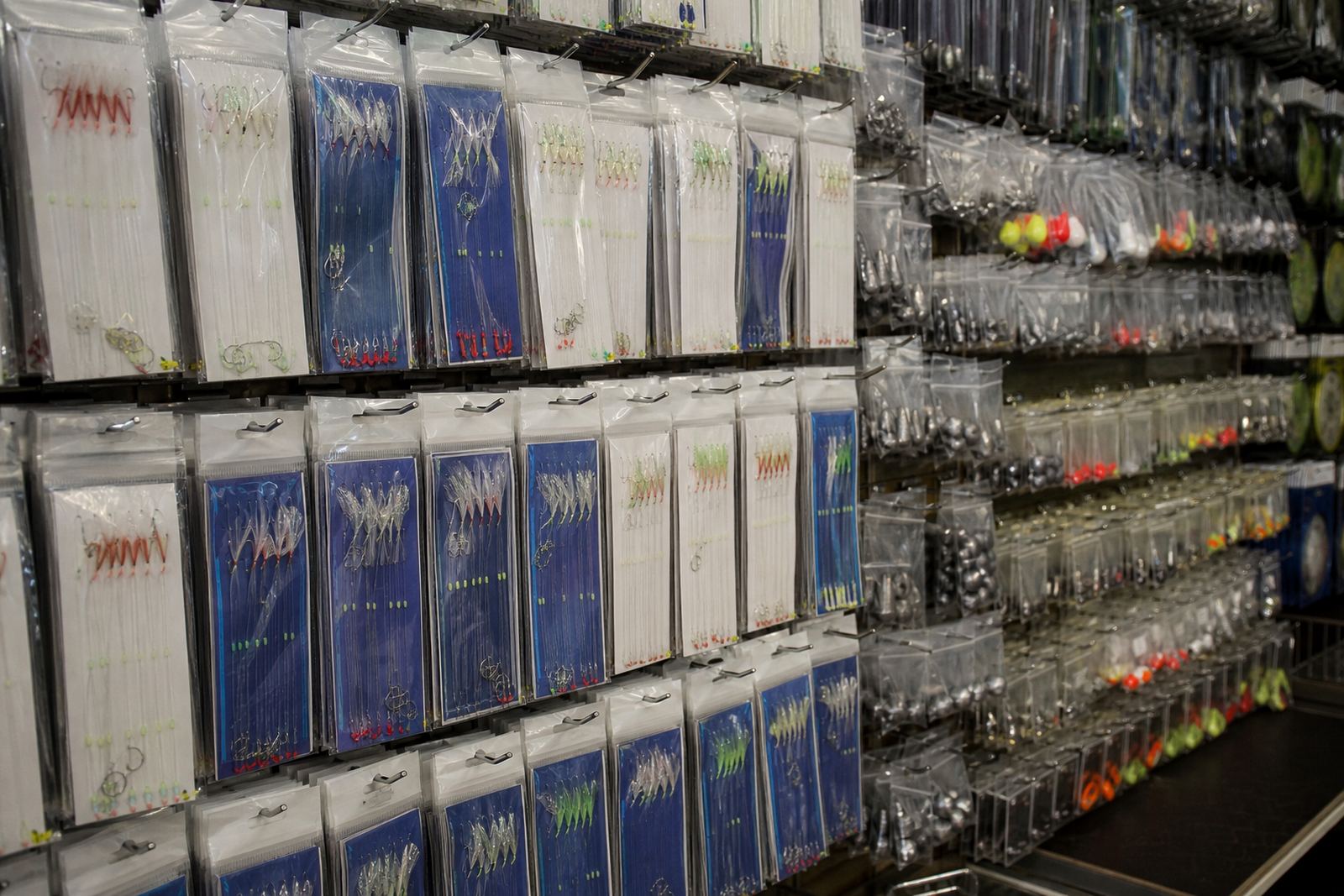
A sabiki rig is a multi-hook trace built with several small hooks, each dressed with feather, film or synthetic bait attractors. It is lowered into a feeding area and worked with a gentle lift and drop so the hooks move through the shoal, which helps tempt mackerel, pilchards, round herring, sardines and other small bait fish.
Most anglers use it for live bait or cut bait. In Durban harbour conditions, or from boats off the North Coast, the rig is simple to deploy and quick to recover when fish are schooling close to the surface. A good rig is light, balanced and easy to handle, even when the bite window is short.
Sizes and rig options to match your fishing
We stock sabiki rigs in a range of hook sizes and trace strengths so you can match the size of the bait fish in your area. Smaller hooks work well for tiny shoaling bait and clear water, while slightly larger hooks suit stronger fish and rougher conditions. Trace length and hook spacing also matter, especially when fish are feeding high in the water column or sitting deeper near a harbour wall.
- Hook sizes from very small baitfish patterns up to larger general-purpose options
- Light mono traces for calm conditions and clear water
- Heavier traces for boat use, snag-prone harbour edges and stronger fish
- Multi-hook rigs for quick bait collection
- Single and double rig setups for anglers who want less tangling
If you are not sure which size to choose, the right option usually depends on the local bait species, the water colour and whether you are fishing from a pier, jetty or boat. A rig that is too heavy can reduce bites, while one that is too light may tangle or fail in rough current.
Where sabiki rigs work best around South Africa
Sabiki rigs are most effective where bait fish hold in numbers, such as piers, sheltered harbours, slipways and around boats working the edge of a shoal. They are widely used in Durban, Cape Town, Gqeberha and East London, and they also suit inland waters where smaller bait species are present. On freshwater dams, they are less common but can still be useful for collecting small bait where local rules allow it.
For coastal anglers, they are handy when fishing from a boat at anchor, beside harbour structures, or near surface activity at first light and late afternoon. If the fish are close to the bottom, a short drop and slow lift often works better than jerking the line. In stronger current, use a little extra sinker weight and keep the rig vertical to cut down on tangles.
- Piers and jetties with bait fish around the legs and shadows
- Harbours and slipways where small fish school near structure
- Boat fishing at anchor or drifting slowly along bait marks
- Sheltered bays and estuaries with visible bait movement
How to rig, drop and retrieve without tangles
Sabiki rigs are straightforward to install. Tie the top of the rig to your main line or leader, then attach the sinker to the bottom clip or loop. Use a light to medium rod with enough tip sensitivity to feel small taps, and keep the drag set smoothly so a sudden pull does not snap the trace. If you are fishing from a boat, a short drop straight down gives the cleanest presentation.
To fish the rig, lower it to the depth where the bait fish are showing and work it with small lifts. Pause now and then so the dressed hooks can flutter naturally. Once you feel weight or steady taps, lift slowly and keep the line under control. Rushing the retrieve causes knots around the hooks, so a steady hand is best. On windy Durban afternoons, keeping the line as vertical as possible makes a big difference.
- Match the sinker to the current and depth
- Lower slowly to avoid twisting the trace
- Use short, controlled lifts instead of hard jerks
- Keep the rod high on the retrieve to reduce hook wrap
Care, servicing and what shortens rig life
Saltwater and sand will shorten the life of any sabiki rig, so rinse it after use and let it dry before storage. If the hooks have lost their finish, the knots look worn, or the feathers are matted with slime and grime, it is time to replace the rig. A bent hook or nicked trace can cost you bait on the next trip.
When you are fishing often, keep a few spare rigs in a dry pouch and check them before each outing. If one hook is missing or the trace has been chewed by a fish, replace it rather than trying to push through one more session. For anglers who fish through load-shedding schedules and early launches, a ready spare saves time and keeps the day moving.
We also help with related tackle needs such as line spooling, trace making and starter setup, so if your reel or rod setup needs a once-over before a bait run, it can be sorted together.
What to check before you order
Before you place an order, check the size of bait fish you usually target, the water you fish most often and whether you want a rig for boat use or shore use. It also helps to know your preferred sinker weight, your line class and whether you need extra trace length for clearer water or deeper drop-offs.
- Hook size and number of hooks on the rig
- Trace strength and overall length
- Suitable sinker weight for your fishing spot
- Whether you need a light, medium or heavier duty rig
- Target species and where you fish most often
If you are buying for a club, family trip or mixed group, it is worth ordering a few different sizes. That gives you options when the bait changes from one harbour to another, or when the fish shift deeper after sunrise. Our team can help you choose the right mix for Durban, the North Coast, Cape Town, Gqeberha, East London and inland orders.
Key facts
| Product type | Ready-made sabiki rig for catching small bait fish |
|---|---|
| Hook count | Commonly 5 to 8 hooks per rig |
| Trace material | Monofilament trace with dressed hooks |
| Best use | Piers, harbours, jetties and boats |
| Target species | Mackerel, sardines, pilchards, herring and similar bait fish |
| Care | Rinse after saltwater use, dry fully and replace worn rigs |