What braided line does on the water
Braided line is made from tightly woven synthetic fibres rather than a single smooth filament. That construction gives it very low stretch, which means you feel taps, bumps and weed cover more clearly through the rod. It also helps when casting lures, spoons, soft plastics and live bait rigs where sensitivity matters, especially in wind or when fishing deeper water.
Because braid is thinner than mono at the same breaking strain, you can load more line onto the spool and still keep good casting range. That helps on surf sets, estuary edges, piers and freshwater dams where long casts can make the difference. It is a good choice for anglers targeting kob, garrick, shad, bass, barbel and carp, depending on the rod and reel setup.
For most anglers in Durban and other coastal towns, braid is used with a leader. That gives you abrasion resistance near rocks, pylons and reef edges, while the braid handles the main casting and fight. It is a practical choice for anglers who want more feel without moving to a heavier line diameter.
Sizes, colour options and breaking strains
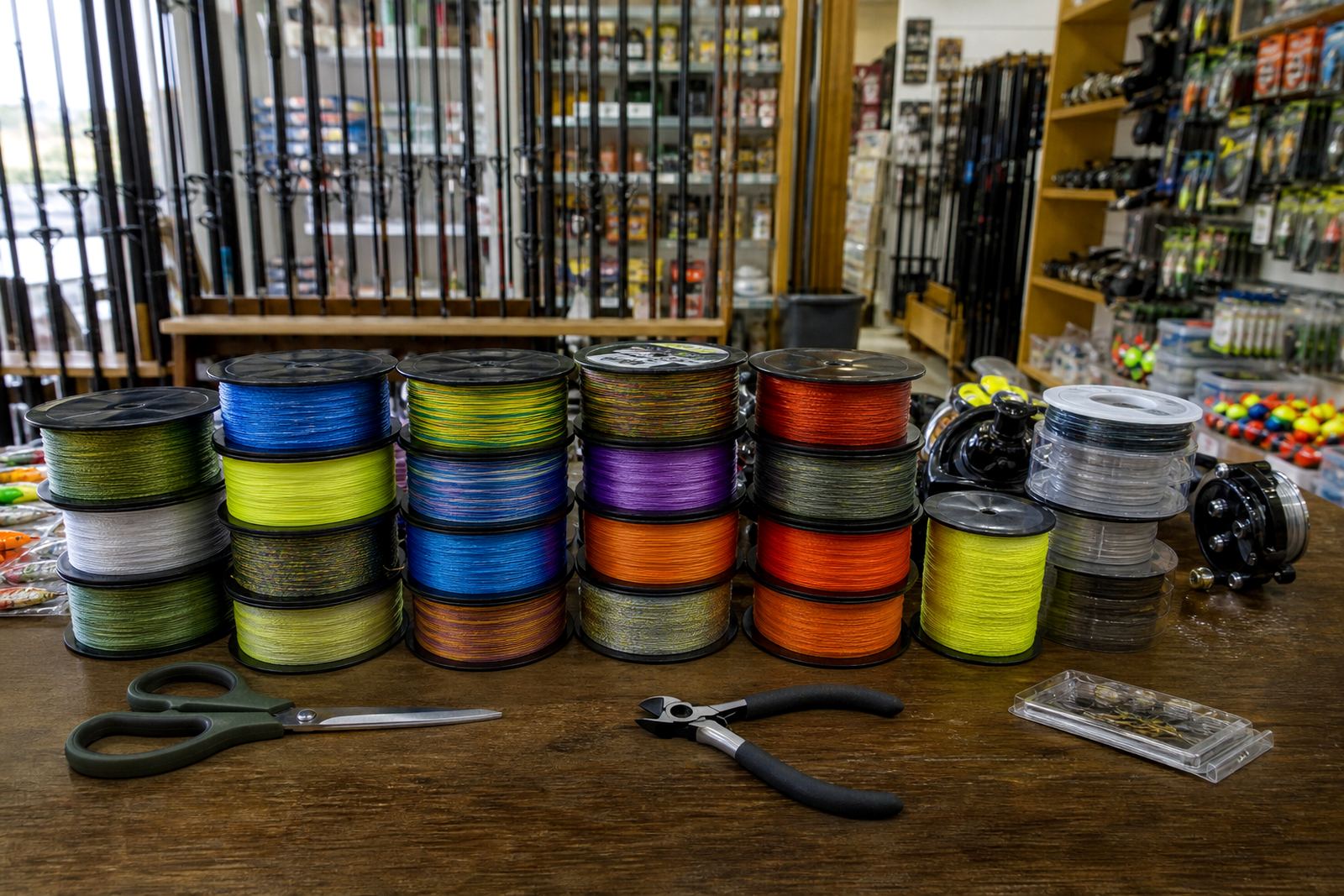
We supply braided line in popular breaking strains and spool lengths for small spinning reels, baitcasters and larger surf and boat reels. Choice usually comes down to the rod rating, reel capacity and the species you are targeting. Lighter lines cast farther and suit finesse work, while heavier lines handle rough cover and stronger fish.
- Light braid: 6 lb to 15 lb for finesse spinning, trout, small bass and light estuary use
- Medium braid: 20 lb to 30 lb for general saltwater spinning, bass, shad and inshore work
- Heavy braid: 40 lb to 80 lb for surf fishing, heavy cover, reef work and stronger hook pressure
- Hi-vis colours for line watching and low-light fishing
- Low-vis and darker colours for clearer water and cautious fish
- Multiple spool lengths, depending on how much line your reel needs
Colour is not just about looks. Bright braid makes it easier to see slack line, wind knots and subtle bites, while muted colours can be useful in clear water or when fish are line shy. Some anglers use a bright main line with a clear leader so they get the best of both. If you are fishing the coast, a slightly thicker braid can also help when the sea is rough and the line gets pushed around a bit more.
Where braid suits coastal and freshwater fishing
Braid performs well across a wide range of South African fishing situations. On the coast, it suits casting from Durban’s beaches, the rocks around the KZN South Coast, the piers near Gqeberha and the surf edges around Cape Town where you need distance and feel. In estuaries and harbours, its low stretch helps with quick strikes when fish hit and move off fast.
Freshwater anglers use braid for bass around weed beds, barbel in rivers and dams, and carp setups where bite detection matters. If you fish around reeds, timber, jetties or snaggy structure, braid gives you better control and more direct pressure on the fish. That said, it is not always the best option for every setup. Very light leaders, abrasive structure and some finesse presentations still need the right combination of rod action, drag setting and terminal tackle.
For long sessions in humid coastal weather, braid is a useful line because it does not absorb water the same way some other lines do. Still, salt, sand and dirty guides can wear it quicker if you do not rinse and check your gear after each trip.
How to spool and set up braided line properly
Braid is easy to fit, but it must be loaded correctly so it beds down neatly on the spool. It can slip on a bare spool if the reel is not prepared properly, and overfilled spools can cause wind knots or loose coils. Most anglers pair braid with a backing layer or use a suitable knot to stop slippage.
- Check your reel size and line capacity before ordering
- Use backing or a secure base layer if the spool is smooth
- Set the line under firm, even tension while spooling
- Do not overfill the spool, leave a small lip at the edge
- Match braid diameter to the rod guides and intended casting style
- Pair the braid with the right leader knot for your application
No power or gas is needed for the line itself, but a proper spool setup saves you time on the water and reduces tangles. If you want help matching braid to your reel, rod and target species, our team can guide you on the right breaking strain and setup. That is especially useful if you are changing from mono to braid for the first time.
Care, rinsing and line life in local conditions
Saltwater, sand and UV all shorten line life, so braid should be checked often. After a coastal session, rinse the reel lightly with fresh water and let it dry before storage. Do not blast it hard with water, because that can push grit into the reel. If the line has been scraped across rocks or a dirty pier edge, run it between your fingers and look for fraying or flat spots.
In hot Durban weather and coastal humidity, braid can last well if it is washed and stored properly, but old line on the top layers of the spool should be reversed or replaced when it starts looking faded or fuzzy. Also check your rod guides. A chipped guide can wear braid very quickly, sometimes before you notice it. On freshwater rods, line can last longer, though repeated casting and snag work still takes its toll.
If the reel feels rough, the drag changes suddenly, or the line lays unevenly, bring the setup in for servicing. We handle reel servicing, reel repairs, line spooling and drag tuning, so the line works as it should and not against you. A clean reel with correct line lay makes braid cast better and last longer, simple as that.
What to check before you place an order
Before you choose braided line, check the reel model, spool depth, rod rating and the kind of fishing you do most often. A 10 lb braid for finesse bass is not the same as a 50 lb braid for surf work or heavy cover. If you are fishing from Durban, Ballito or the wider KZN coast, think about current, wind and the size of fish you expect, not just the line price.
- Reel size and line capacity in metres
- Desired breaking strain for your target species
- Line diameter if you need extra casting distance
- Colour preference for visibility or low visibility
- Whether you need a backing layer or leader material
- Use case: surf, boat, estuary, bass, carp or mixed fishing
If you are ordering for a club, a family trip or a mixed set of rods, tell us the reel sizes and what you are chasing. We also assist with bulk club orders and starter setups, so you can get braid matched properly without wasting money on the wrong spool. For anglers in Johannesburg, Cape Town, Gqeberha and East London, orders can be arranged through our enquiry form and checked against your intended use before dispatch.
Key facts
| Material | Multi-strand synthetic fibre braid |
|---|---|
| Stretch | Very low stretch for better bite detection |
| Typical strengths | 6 lb to 80 lb |
| Common spool lengths | 150 m, 300 m and selected larger spools |
| Best use | Casting, sensitivity and direct hook sets |
| Care | Fresh-water rinse, dry storage and regular abrasion checks |