What a live bait aerator actually does
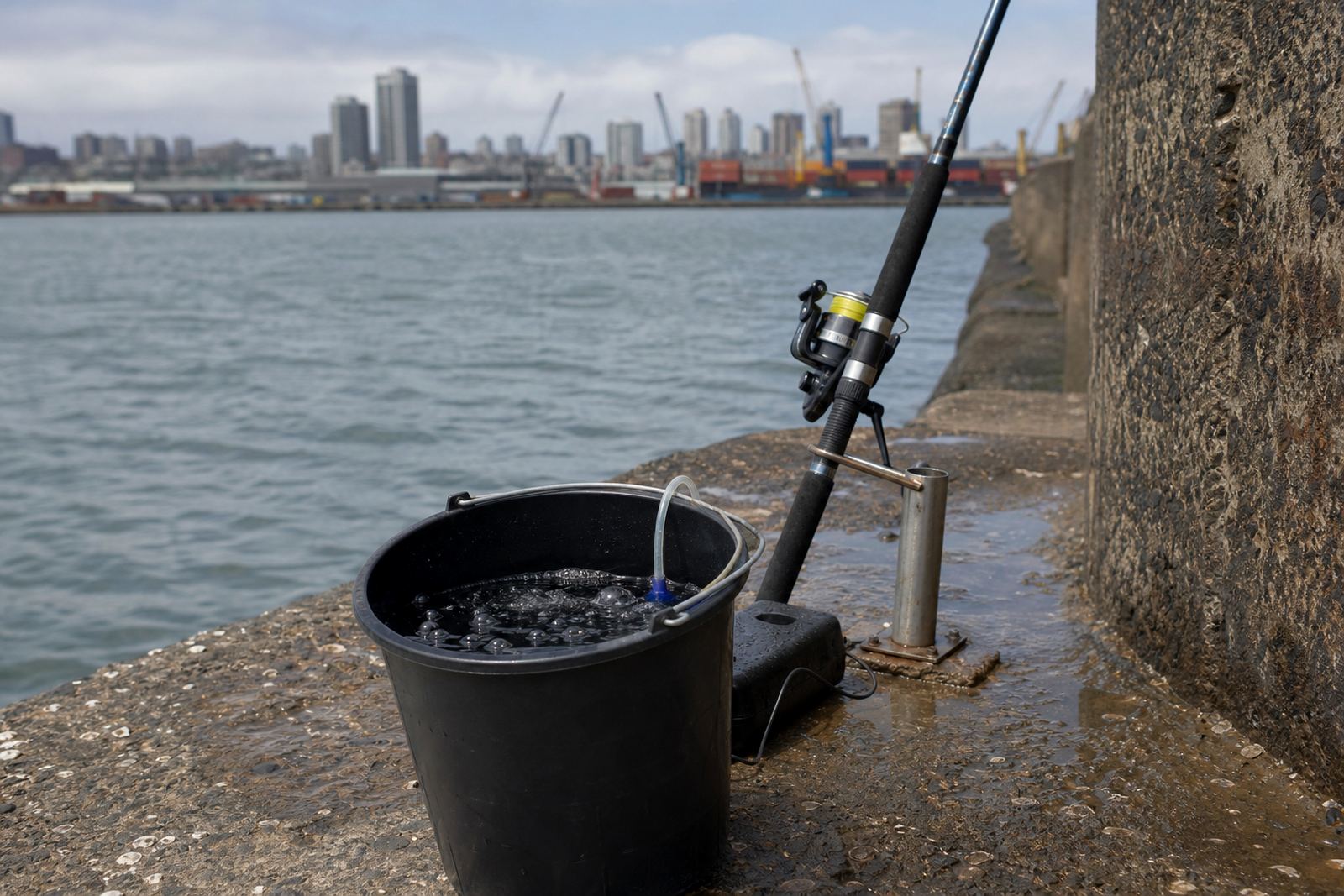
A live bait aerator adds air to the water so baitfish stay lively, upright and stress free for longer. It is a simple kit, but it makes a proper difference when you are carrying mullet, sardines, redeye, kurper or small freshwater bait over a long drive or a hot day on the beach.
Most setups use a small pump, airline tubing and an air stone or diffuser. The pump pushes air into the water, which helps keep oxygen levels up and reduces the chance of bait rolling over in the bucket. If you fish Durban harbour, the Natal south coast, or inland dams around Pietermaritzburg and Johannesburg, an aerator is one of those pieces of kit that pays for itself because bait lasts longer and stays usable, not just alive.
For anglers who buy bait before dawn, then sit through traffic or a long boat launch, the difference is clear. Less bait loss means less money wasted and less scrambling for fresh stock at the ramp.
Sizes and options for buckets, drums and bait tanks
We stock aerators for small portable buckets right up to larger live bait containers used on boats, at camp sites or at home before a trip. The right choice depends on water volume, how many baitfish you want to carry and how long you need them to last.
- Single outlet pumps for one bait bucket or small cooler
- Dual outlet pumps for two containers or one larger tank with better circulation
- Battery powered units for mobile use in the car, on the pier or at the dam
- Mains powered units for home bait tanks and prep stations
- Replacement stones, tubing and fittings for servicing an existing setup
For coastal anglers, a stronger unit is useful when the weather is warm and the bait needs more oxygen. Inland, a compact pump often suits a few hours on the bank. If you keep bait in a shaded garage or utility area, a mains unit can run for long periods with very little fuss, even during load-shedding if you pair it with a backup power source.
Where these aerators suit South African fishing conditions
Live bait aerators are useful for surf anglers, harbour anglers, ski-boat crews and freshwater anglers alike. They are especially handy where temperatures climb quickly or where you need to keep bait alive between the shop, the launch site and the fishing ground.
In Durban and along the KZN coast, the combination of heat, humidity and salt in the air means gear needs a bit more care. A good aerator setup helps when you are moving bait to Umhlanga, Ballito or the south coast. In Gqeberha and Cape Town, the wind and spray can be hard on small electrics, so a covered container and dry storage matter. Inland, where anglers travel from Johannesburg to weekend waters or to the Vaal, a battery unit is useful in the car and at the bank.
These aerators also suit club anglers who take bait in bulk for group outings. If you are preparing several buckets at once, a dual outlet or higher output unit helps keep the water moving evenly. That is important when you want bait to stay healthy for the entire morning, not just the first hour.
Power, battery life and setup details to check
Before ordering, check where the aerator will run and how long it must last. A small bucket pump can be enough for short sessions, but a live bait tank on a boat or a home prep station may need stronger airflow and a better power plan. Some units run from disposable batteries, some from rechargeable packs and some from 12V vehicle power or mains electricity.
- Confirm the voltage or battery type needed
- Check the outlet count and hose length
- Make sure the pump output matches the water volume
- Ask whether the unit is suitable for fresh or salt water use
- Plan for backup power if you fish through load-shedding or long road trips
If you are using the aerator in a vehicle, make sure the container is stable and the airline is not kinked. A lid with a neat hose pass-through helps stop spills in the boot. For boat use, keep the unit out of direct spray and do not let the pump sit where water can pool around it.
Care, cleaning and simple servicing that helps it last
Salt water, bait slime and sand can shorten the life of any aerator if it is left dirty. Rinse the hose, stone and outer casing after use, then dry the parts before storing them. If the unit has been used in coastal conditions, wipe it down with a cloth and keep it out of a damp tackle bag.
Most problems come from blocked airline tubing, a worn stone or low battery power. If airflow drops, check the hose for cracks, make sure the outlet is not clogged and confirm the battery contacts are clean. A little maintenance goes a long way and can save a trip from turning into a hassle, especially when bait prices are high.
We can also help with practical matching advice if you are unsure whether to buy a compact unit, a higher output pump or a replacement part for an older setup. If your current aerator is underperforming, bring the details and we will help you work out what needs replacing first.
What to check when ordering live bait aerators
To avoid getting the wrong unit, note the size of your container, the type of bait you keep and how long the aerator must run. If you fish from multiple spots, think about whether you need one unit that can move with you or a more permanent option for home storage.
- Container size in litres or approximate bucket size
- Freshwater or saltwater use
- Single bait bucket or multiple containers
- Power source available on the trip or at home
- Whether you need spare stones, tubing or a backup pump
That last check matters more than most anglers think. If you rely on live bait for a weekend trip or a charter, a spare airline and stone can keep things going when one part blocks up. It is a small item, but it can save the day when the tide is right and the fish are feeding.
Key facts
| Product type | Live bait aerators for portable and fixed setups |
|---|---|
| Power options | Battery, 12V vehicle power or mains powered units |
| Typical use | Buckets, bait tanks, coolers and boat bait boxes |
| Recommended capacity | Small single bucket up to larger multi-bucket setups |
| Included parts | Pump, airline tubing and air stone or diffuser |
| Maintenance | Rinse after use, dry thoroughly and replace worn stones or tubing |