What a grapnel sinker does in surf and current
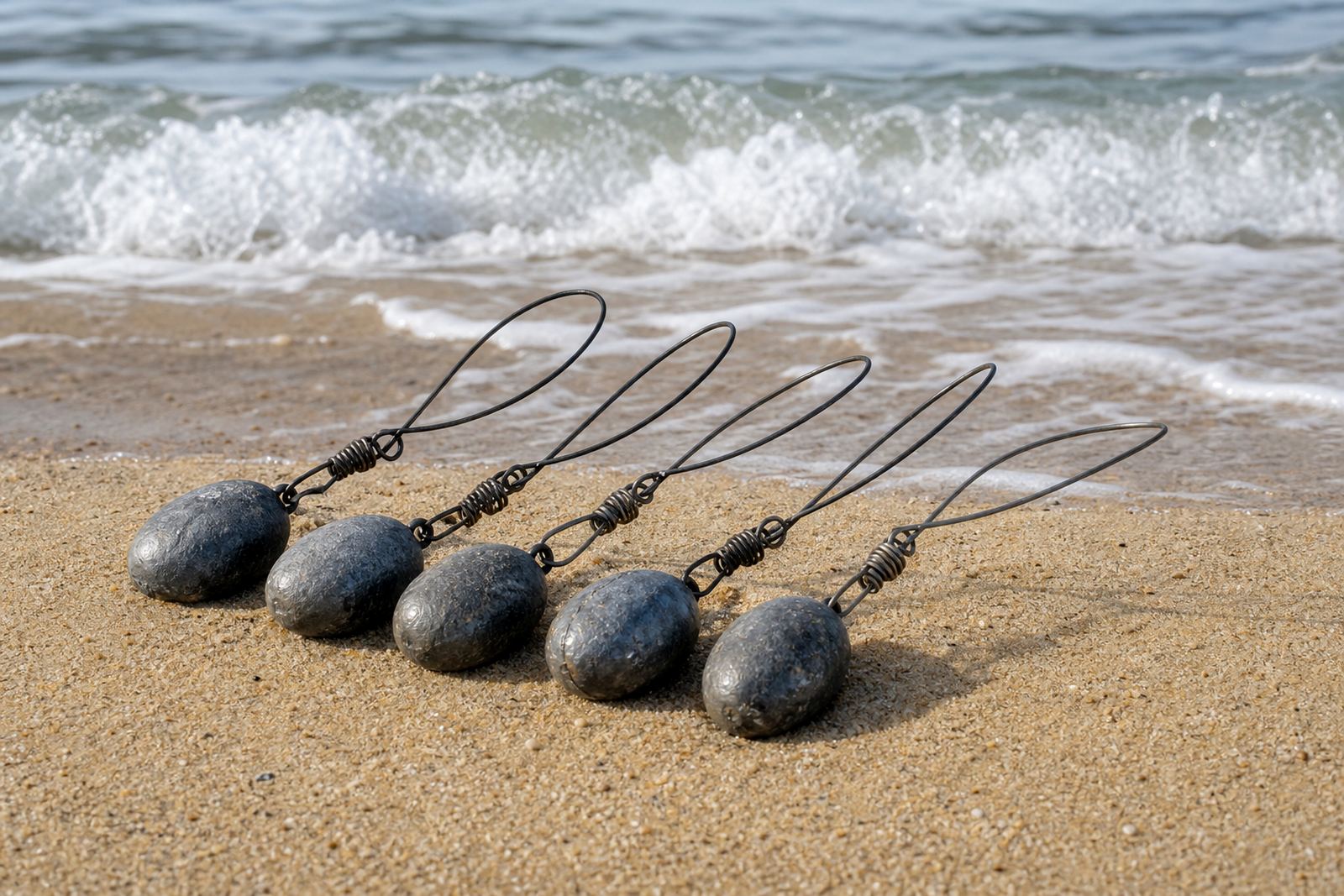
A grapnel sinker is a bottom-holding weight with wire arms that dig into sand or gravel and help keep your trace in place. On the KZN coast and other exposed beaches, that extra grip matters when you are fishing into waves, wash and side current. It is a simple piece of terminal tackle, but it can make the difference between a bait staying in the strike zone or sliding back towards the shore.
These sinkers are commonly used for surf casting, gullies, river mouths and rough water where a plain bomb sinker may start rolling. They are also useful when you need to hold a presentation in one place for longer, especially when you are fishing cut bait, sardine traces or baited rigs that need time to work. For anglers who fish from Durban beaches, rocky points, or east coast inlets, the grip style gives a steadier hold in changing conditions.
Sizes, wire arms and weight options available
Grapnel sinkers are usually sold by weight, with the wire arms shaped to fold in for casting and open on the bottom. Common sizes suit light estuary work through to heavier surf conditions. Choosing the right weight depends on wave pressure, current speed, rod rating and how far you need to cast. A lighter sinker may be enough in a sheltered bay, while a heavier one is often needed on open beaches, especially when the wind is blowing cross-shore.
- Light options for calm water, estuaries and shorter casts
- Mid-range options for general surf fishing and moderate current
- Heavier options for rough seas, stronger current and long casts
- Foldable wire arms for easier casting and retrieval
- Grip styles suited to sand, mixed bottom and broken water
When ordering, check whether you want a single sinker for one rig or several for club use and regular trip prep. If you fish different areas from Cape Town to Gqeberha and East London, it helps to keep a range in the tackle box rather than relying on one size for every spot.
Where grapnel sinkers suit best
These sinkers suit anglers who fish in places where holding bottom matters more than drifting naturally. That includes surf marks, river mouths, harbour edges, current lines and beaches with a bit of movement under the water. In Durban and along much of the KZN coastline, they are often chosen for rough sand, shore break and wash zones where bait needs to stay steady.
They are also handy for freshwater anglers fishing big rivers or wind-affected dams, though they are mainly a coastal solution. If you are targeting species that feed close to the bottom, a sinker that stays put can keep your bait in the feeding lane longer. For new anglers, it is a practical way to improve rig control without changing the whole setup.
- Surf fishing on open beaches
- Fishing in strong tidal flow
- Rough coastal water and wash zones
- River mouths and channels
- Mixed-bottom spots where rolling is a problem
How to fit and fish them properly
Grapnel sinkers are fitted in the same way as most terminal tackle weights. They sit at the end of the rig or on a sliding setup, depending on how you build your trace. Make sure the sinker is attached securely and that the arms can open and close as intended. If the wire arms are bent out of shape, the sinker may cast poorly or snag too early. A neat knot and a clean swivel connection help keep the rig balanced.
There is no power or gas required to use or install grapnel sinkers. What matters is matching the weight to the rod, line strength and the water you are fishing. If the sinker is too light, it will move. If it is too heavy, it can reduce casting comfort and put unnecessary strain on your line during the retrieve. A sensible setup also makes bait presentation more natural, which helps when fishing for edibles or larger coastal species.
- Check that the sinker matches your rod casting range
- Use a trace strong enough for surf strain and abrasion
- Test the rig in shallow water before fishing deep wash
- Keep spare sinkers in case of loss on rock or reef
Care, rinse routine and when to replace
Saltwater, sand and constant impact will wear any sinker over time. After fishing, rinse grapnel sinkers in fresh water and dry them before storing. This is especially important in coastal areas with high humidity, like Durban and Ballito, where rust can start quickly if tackle is left wet in a closed box. If the sinker has folding arms, check that they still move freely and do not stick with sand or corrosion.
Look for bent arms, cracks in the body and sharp edges that can damage your leader or trace. A sinker that has lost its shape may still look usable, but it can cast unevenly and hold less effectively. If you fish often, keep an eye on the swivel or connection point too, since that part takes a lot of load when the sinker catches and releases on the bottom.
We also suggest checking your tackle after any hard trip, not just at the end of the season. If you are building a bulk order for a club or family fishing group, it is worth including a few spare weights and a small repair kit so you are not caught short before a weekend trip.
What to check before placing your order
Before ordering grapnel sinkers, decide where you will use them most often and what kind of water you fish. That will help you choose the right weight and style without buying the wrong mix. If you are fishing both surf and estuary marks, you may need more than one size. Anglers in Johannesburg who travel to the coast should also consider packing a mixed set for different destinations and conditions.
- Preferred weight range for your usual fishing spots
- Whether you need light, medium or heavy surf holding power
- How many sinkers you want for personal use or club orders
- Whether you need folding wire arms for easier casting
- What trace and line strength you plan to pair with them
If you are unsure, ask for advice based on the beach, river or harbour you fish most often. A good match saves tackle, time and frustration, and it helps you fish more efficiently when the current picks up or the sea turns rough.
Key facts
| Product type | Grapnel sinker for surf and current fishing |
|---|---|
| Typical use | Holding bait in place in sand, wash and moving water |
| Common weights | Light to heavy options for different conditions |
| Body style | Folding wire arm grip design |
| Best suited for | Surf beaches, river mouths, current lines and rough coastal water |
| Care | Freshwater rinse, dry fully, inspect arms and fittings |