What a cooler bag does on a fishing trip
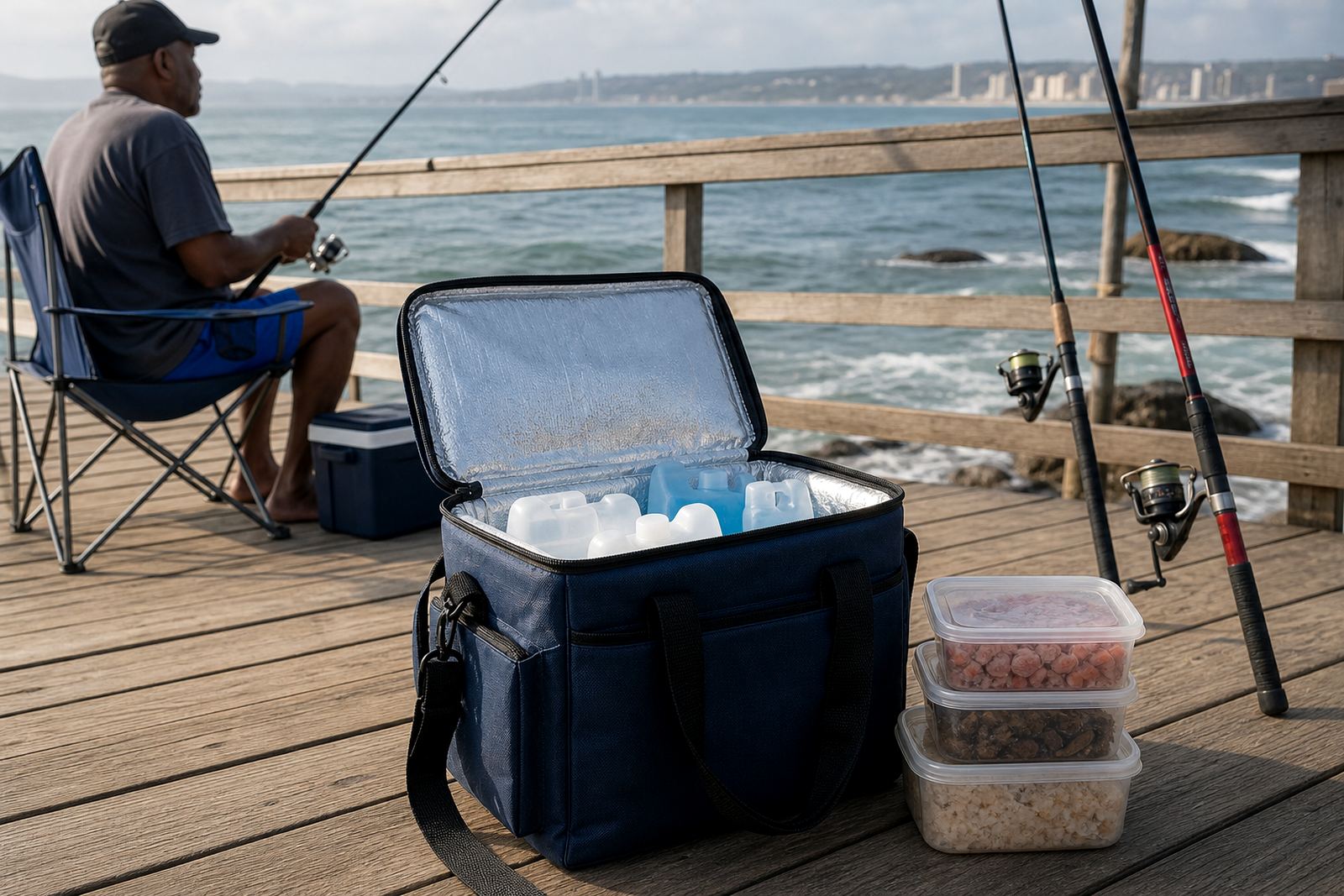
A cooler bag is built to hold ice, cold bait, drinks and food in one insulated carry bag. For anglers, that means pilchards stay usable for longer, prawns do not soften as quickly, and a cold drink stays cold while you work the tide or bank. On warm KZN days, even a short drive from Springfield Park to the beach can warm up a soft bag fast, so insulation and zip quality matter.
Most cooler bags use a thick foam lining, an easy-wipe inner surface and a water-resistant outer shell. They are lighter than hard boxes and easier to carry over rocks, into estuaries or onto a boat. Some anglers use them for lunch and bait together, while others keep one bag only for bait so smells do not mix. If you fish often, a good bag saves money by reducing spoilage and cutting down on repeat bait buys.
Sizes and options that suit local fishing
We supply cooler bags in practical sizes for single anglers, family outings and club trips. Smaller bags are useful for quick sessions and carry just enough ice, bait and a few drinks. Medium bags suit most shore anglers. Larger bags are better when you are packing bait trays, extra ice packs and food for the whole day.
- Compact bags for short sessions, bait storage and a few cans or water bottles
- Medium carry bags for day trips, shore fishing and light boat use
- Large bags for group outings, longer sessions and bulk bait carry
- Soft-sided formats that fit easier into bakkies, hatchbacks and boats
- Options with shoulder straps, carry handles and easy-clean linings
If you fish in Durban, Ballito, Cape Town or Gqeberha, a smaller bag with a good seal may be enough for a single session. For freshwater trips around Pietermaritzburg or long drives from Johannesburg, a larger bag with more ice retention is worth having because travel time can be a factor.
Where cooler bags work best
Cooler bags are useful on surf launches, rock and pier sessions, estuary fishing, dam banks and boat trips. They work well for anglers who need bait kept cool in hot weather, but do not want the bulk of a hard cooler box. They also help when you are fishing from places with limited space, such as compact boat decks or crowded harbour spots.
In coastal areas, salt air and humidity can be hard on zips, stitching and inner linings. A bag with tough seams and a wipe-down interior is easier to keep in service. Inland, the main issue is heat build-up inside a parked vehicle, so insulation and pre-chilled contents make a real difference. If you are heading out before sunrise and only coming back late afternoon, pack the bag the night before and keep it closed until you need it.
Many anglers also use cooler bags for bait prep advice and trip gear checks, especially when mixing live bait, frozen bait and drinks in one load. A neat pack is easier to carry, easier to clean and less likely to leak over tackle.
Power, ice and prep requirements
Cooler bags do not need power or gas. They rely on insulation, sealed zips and the quality of the ice or ice packs you put inside them. For the best result, pre-chill the bag for a short time with ice packs before loading it, and keep the contents cold from the start. If you fill it with warm drinks and warm bait, it will struggle from the first hour.
- Use block ice or frozen packs for longer hold times
- Keep bait and drinks separated in inner pouches or wrapped containers
- Open the bag less often to reduce cold loss
- Drain melt water before it soaks labels, trays or bait packets
- Keep the bag out of direct sun where possible
For boat anglers and beach anglers alike, a simple setup works best. Freeze your ice packs overnight, chill bait where practical, and pack the bag tightly so there are fewer air gaps. If the bag is half empty, cold air moves around too much and ice will melt quicker.
How to care for the bag after fishing
Rinse the bag after use, especially after a saltwater session. Sand, fish slime and bait residue can sit in seams and zips if left too long. Use fresh water on the outside and a mild cleaner on the inner lining, then let the bag dry fully with the zip open. Do not store it damp, because odours and mildew build up quickly in closed conditions.
Check the zip path, stitching, base panel and shoulder strap before the next trip. If you see loose stitching, a sticky zip or a torn lining, sort it out early. A small fault can become a bigger one after a single hard weekend. If the bag has a removable liner, wash and dry that separately. Keep hooks, traces and sharp tools in a separate pouch so they do not puncture the insulation, no one wants a leak before dawn.
For anglers who fish regularly, a good cleaning routine makes the bag last longer and keeps bait fresher. It also helps if you use the same bag for club orders or shared trips, because cleanliness matters when several people are packing bait together.
What to check before you order
Before you choose a cooler bag, think about how you fish, how far you travel and what you carry. A shore angler in Durban may want a medium bag with a strong shoulder strap, while a freshwater angler in Gauteng might prefer more internal space for lunch, ice and bait. If you fish with a group, size and durability become even more important.
- Internal capacity in litres or the number of bait boxes it can hold
- Insulation thickness and how long it keeps contents cold
- Zip quality and whether the opening is easy to access with wet hands
- Outer material that can handle sand, spray and regular wiping
- Carry style, including handles, straps and bag shape
- Whether you need a soft bag for travel or a firmer base for stacking
If you are unsure, send through your enquiry from the contact page and tell us where you fish, what bait you use and how long your sessions normally run. That makes it easier to match the right size and format to your type of fishing. We supply anglers from Springfield Park through to Cape Town, Johannesburg, Gqeberha and East London, so we know the practical differences between coastal and inland use.
Good fit for bait, refreshments and long sessions
A cooler bag should do more than just keep drinks cold. It should carry bait safely, stay easy to clean and fit into the way you fish. For early starts, hot afternoons and long sessions, a well-chosen bag helps you stay organised and keeps essentials ready when you need them. It is one of those items that seems simple, but you notice the difference as soon as the weather turns warm.
Whether you are packing for the beach, the dam or a weekend club trip, choose a size that suits your load and a build that can handle regular use. That way your bait stays in better condition, your drinks stay cold, and your kit is easier to manage from the car park to the water's edge.
Key facts
| Product type | Insulated cooler bags for anglers |
|---|---|
| Typical use | Bait storage, drinks, food and day-trip carry |
| Common sizes | Compact, medium and large options |
| Insulation | Foam-lined soft bag construction |
| Care | Rinse, dry fully and keep zips clean |
| Power or gas needs | None required |