Boat Rods Built for Saltwater Pressure
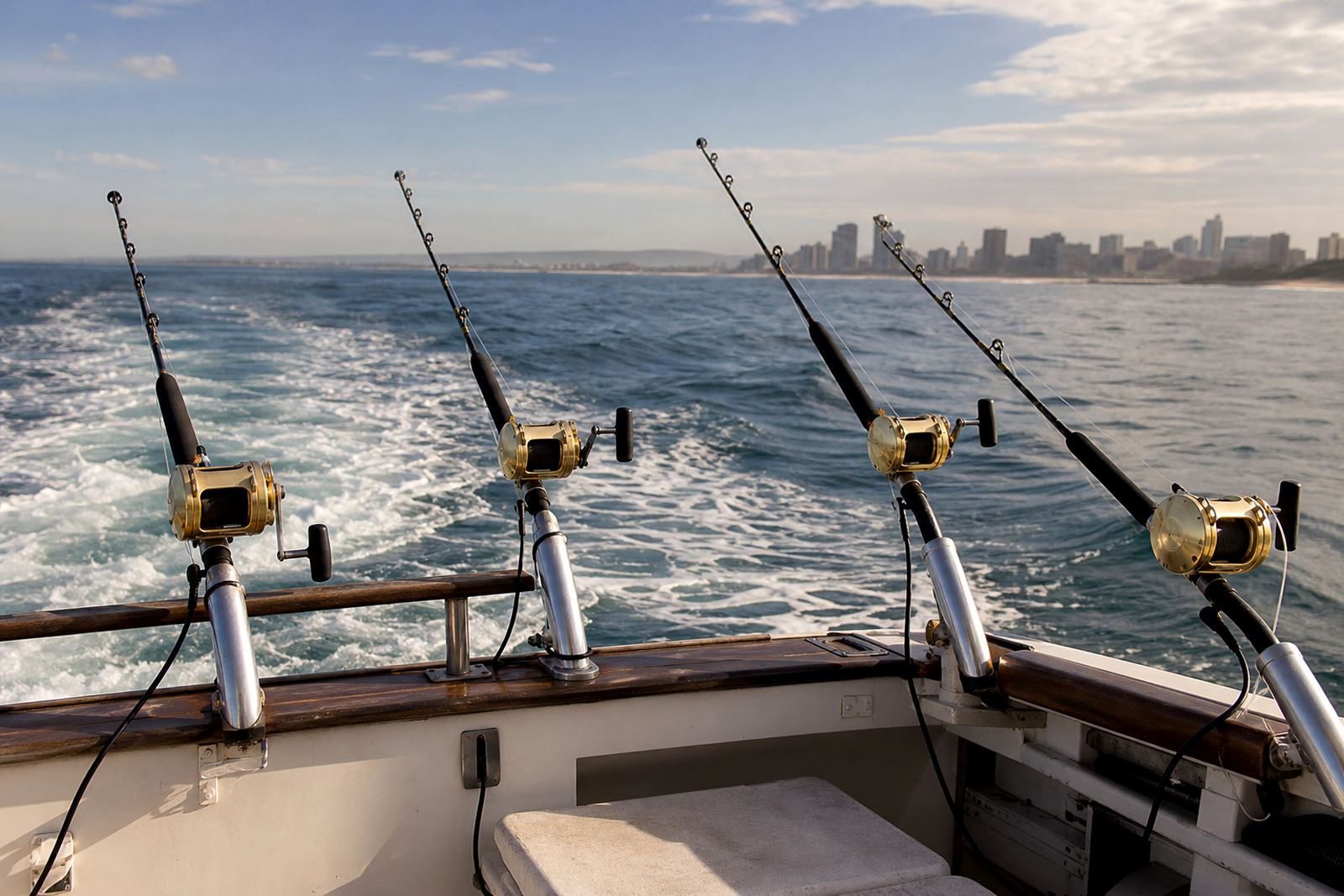
Boat rods are shorter, stronger rods made for fishing from a moving vessel rather than from the bank. They are designed to work with heavier sinkers, traces and bait rigs, and to hold up when a fish runs under the boat or digs deep in current. For Durban harbour mouth fishing, offshore reef work, ski-boat trips and nearshore drops, the right rod gives better control and less strain on your arms and back.
Most boat rods in this range use a tough composite blank with a firm butt section and a more forgiving tip. That mix helps you strike cleanly, keep tension on the line, and protect knots and hooks when a fish surges. If you are fishing in salty spray around Durban, Umhlanga, Ballito or East London, choose a rod with corrosion-resistant fittings and guides that can handle regular rinsing after each trip.
We stock boat rods for light bait fishing, medium reef fishing and heavier offshore use. Some are suited to spinning reels, others to overhead reels. The right choice depends on the size of fish you target, the sinker weight you need, and how much room you have on the boat.
Sizes, Actions and What They Change on the Water
Boat rods are usually shorter than surf rods because they are easier to manage on deck and they work better when you are fishing straight down or at a short angle. Common lengths are 5 ft 6 in, 6 ft and 6 ft 6 in. Shorter rods suit tight boat spaces and heavier work. Slightly longer rods give a bit more casting range for drifting baits or working small lures around structure.
Action matters just as much as length. A fast action rod bends mainly in the tip and upper third. That gives quick bite response and strong lifting power. A moderate action rod bends a little deeper, which can be useful for live bait, bottom fishing and protecting lighter traces. If you are targeting snoek, geelbek, couta, kob or reef species, the rod action should match the bait size and the reel drag you plan to use.
- Light boat rods: 5 ft 6 in to 6 ft, for smaller species and lighter sinkers
- Medium boat rods: 6 ft to 6 ft 6 in, for mixed coastal fishing and reef work
- Heavy boat rods: stronger blanks for bigger fish and heavier trace systems
- Overhead rod options: suited to controlled drops and deeper water fishing
- Spinning rod options: useful for mobile anglers and lighter tackle setups
Where Boat Rods Suit Best
Boat rods work well on small craft, charter vessels and private boats where anglers need compact gear that performs under pressure. They are a practical choice for offshore runs out of Durban, nearshore trips from Cape Town, and mixed fishing on the South Coast, Port St Johns side and the Eastern Cape coast. They also suit freshwater boat fishing on dams where stronger tackle is needed for large carp, catfish or bass fishing with heavier terminal gear.
For coastal fishing, boat rods help with jigging, bait drops over reefs, and fishing around wrecks and marks where the line has to stay tight. If you fish in areas with strong current or deeper water, a properly matched rod makes it easier to feel taps, set the hook, and bring fish up without overworking the reel. On charter vessels, a short and well balanced rod also reduces tangles between anglers, which matters when the deck gets busy.
Freshwater anglers often choose a boat rod when fishing from a dam wall boat or a bass boat with limited space. The same rod can be useful for multiple styles if the line class and lure rating are matched properly. A bit of common sense goes a long way here, because the wrong rod can make a simple session feel hard work.
Fittings, Reel Setup and No Power Needs
Boat rods do not need power or gas to use, but they do need the right reel setup and secure mounting on the boat. Most anglers pair them with overhead or spinning reels in a line class that matches the rod rating. Check that the reel seat holds the reel firmly, and that the guides line up cleanly so the line runs straight without rubbing.
If you are setting up a new rod, make sure your drag is set before the first drop. A rod that is too stiff for the reel or line can cause hook pulls, while a rod that is too soft may not lift fish cleanly from structure. When fishing from boats in salty air, keep all metal fittings washed and dry after use, especially around Durban and the coast where humidity lingers. A quick rinse after the trip saves trouble later.
- Use a reel that matches the rod line rating and lure or sinker rating
- Check the reel seat, grip and ferrules before every trip
- Confirm the rod can handle your usual sinker weight and trace length
- Make sure guides are aligned and free of cracks or insert damage
- Choose a butt length that is comfortable when fighting fish seated or standing
Care After Saltwater Trips and Routine Servicing
Salt, sand and sun shorten the life of boat tackle if it is left dirty. After each trip, rinse the rod with fresh water, wipe the blank down, and dry the guides before storing it. Do not leave a wet rod in a closed hatch for days, because dampness encourages corrosion and can weaken thread wraps over time. In coastal areas, a simple storage routine makes a big difference.
Check the rod for loose guide bindings, chipped guide inserts, cracked blanks near the ferrules and wear on the grip. If you see a flat spot or hairline crack, stop using the rod until it is inspected. Small damage can become serious after a hard strike or a heavy fish. Our team can help with rod guide replacement, rod tip repair and general tackle checks, so your gear stays ready for the next outing. Load shedding has no effect on the rod itself, but it helps to keep your servicing and line work planned ahead of time.
If a rod has been knocked, stepped on or stored under pressure, bring it in for a closer look. Many issues show up only when the rod is flexed under load, and it is better to catch them early than lose a fish offshore.
What to Check Before You Order
Before ordering a boat rod, think about the type of fishing you do most often and the reel you already own. The right rod should suit your target species, boat space and line class. It should also be comfortable to hold for a full session, because a poor fit becomes tiring very quickly on the water.
We recommend checking the following details before you place an order:
- Rod length and whether you want a short, compact rod or a slightly longer one
- Rod action, especially if you prefer fast tip response or a softer bend
- Line class and sinker rating for your usual fishing style
- Whether the rod is intended for an overhead reel or spinning reel
- Target species and whether you fish offshore, nearshore or in freshwater
- Transport size, since a two piece rod is easier for travelling anglers
If you are unsure, our team in Springfield Park can guide you through the options for Durban Store, Umhlanga Area, Ballito Area, Johannesburg Orders, Cape Town Orders and Gqeberha And East London. We also help with starter setups, trace making and trip gear checks, which is useful if you are building a new rig from scratch.
Key facts
| Product type | Boat rods for offshore and nearshore angling |
|---|---|
| Common lengths | 5 ft 6 in, 6 ft, 6 ft 6 in |
| Typical actions | Fast, moderate and heavy power options |
| Use cases | Reef fishing, bait drops, jigging, live bait and freshwater boat fishing |
| Reel compatibility | Overhead and spinning reel options |
| Care | Fresh water rinse, dry storage and regular guide checks |