What cone sinkers do on the line
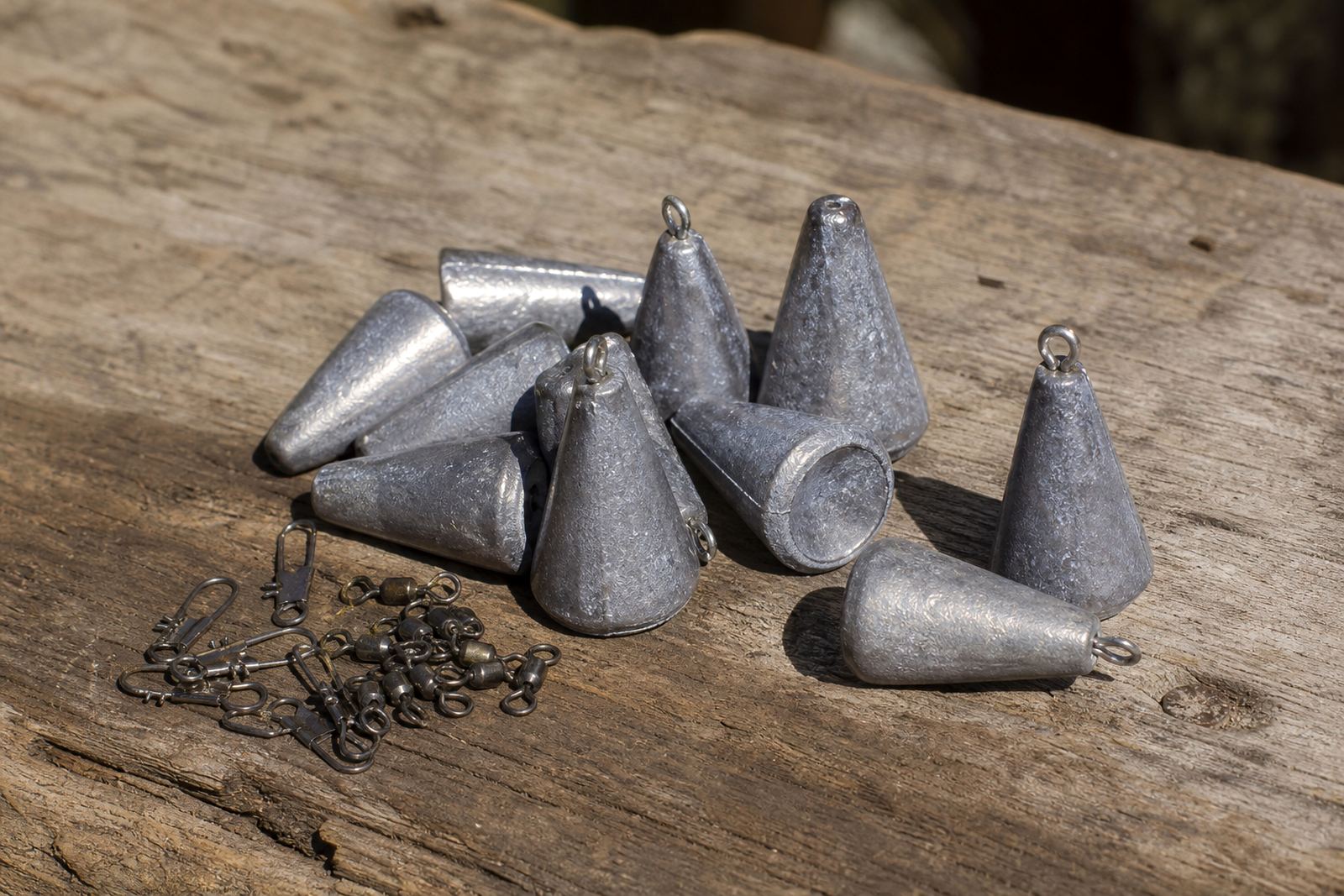
Cone sinkers are shaped to cut through the water and settle neatly on the bottom, which makes them useful when you want distance, control and a clean bait presentation. The tapered body reduces tumble in the cast, so they are a good fit for surf work, estuary edges, harbour mouths and freshwater spots where a bait needs to sit naturally without dragging too much. They are simple, tough and easy to rig, which is why many anglers keep a few sizes in the tackle box at all times.
In practice, a cone sinker is chosen when you need the bait to reach the zone first, then hold position while you wait for a bite. That can mean fishing into a strong south-easter on the Durban coastline, dropping a rig off a jetty, or fishing a dam bank where wind and current keep moving the line around. A good cone sinker won’t solve every problem, but it does give you a reliable starting point.
Sizes, finishes and the specs that matter
We supply cone sinkers in a range of common weights so you can match the sinker to the rod, trace and conditions. Lighter options suit finesse fishing and short casts, while heavier weights help in surf, deeper water and on windy days. The main thing is to use enough weight to reach the target area without overloading the rod or killing the feel of the bait.
- Light sizes for estuary, river and close-range freshwater fishing
- Mid-range sizes for beach, harbour and general boat or bank use
- Heavier sizes for strong current, rough surf and longer casting
- Metal construction for durability and repeated use
- Tapered cone shape for smoother casting and less drag
- Suitable for sliding, fixed or trace-based rig setups depending on your method
The finish is usually practical rather than fancy, with a focus on sink rate and durability. If you fish around rocks, sand, mud or mixed bottoms, it helps to choose a sinker that is heavy enough to stay put but not so heavy that it buries itself too deeply. A bit of trial and error is normal, and it’s better to start slightly lighter before moving up.
Where cone sinkers suit best
Cone sinkers are widely used by South African anglers because they adapt well to different waters. On the KZN coast they work for beach casting, gullies and harbour edges. In Cape Town they are handy for rougher water and colder seasons when bait needs a proper hold on the bottom. Around Gqeberha and East London they suit mixed shore conditions, while inland anglers use them on dams and rivers where they need a steady presentation.
They are also useful for Johannesburg anglers fishing freshwater venues with deeper water, shelf edges and wind drift. If you are fishing a venue with municipal rules, marked zones or controlled access, a cone sinker can help keep your rig in the strike area without repeated recasting. In practice, that can save bait and reduce line wear over a long session.
- Surf fishing from open beaches and groynes
- Harbours, piers and sheltered wall fishing
- Rivers, estuaries and lagoon mouths
- Dams and stillwater bank fishing
- Boat fishing where a stable bottom presentation is needed
How to fit a cone sinker to your rig
Most cone sinkers are simple to install, but the right setup depends on your rig style. Some anglers run them fixed above the hook trace, while others use a sliding arrangement so the fish can take line more freely. The sinker should sit straight on the line or trace and not twist the leader when you cast. If the rig is badly tied, the sinker can spin and tangle, which wastes time and bait.
When putting a cone sinker onto a setup, check the bore size, bead spacing and knot protection. If you are using a heavier weight, make sure the rod is rated for that load and that your leader can handle repeated casting. On boats, boatside drops and controlled drifts usually need less weight than surf work, so do not assume the same sinker will suit every trip. A quick test cast on the lawn or at the water’s edge can save a lot of frustration later.
- Use the correct bore size for smooth line movement
- Match sinker weight to rod rating and casting distance
- Check knots, swivels and beads before the first cast
- Keep the rig straight so it tracks properly through the cast
- Step up in weight only when current, wind or depth asks for it
Care in saltwater, sand and muddy bottoms
Saltwater is hard on tackle, and cone sinkers are no exception. After use, rinse them in fresh water, dry them fully and keep them away from damp tackle boxes where corrosion starts quickly. Around Durban and other coastal areas, humidity can settle on metal overnight, so a little care goes a long way. If a sinker is scratched or chipped, clean it before storing it so sand and salt do not sit against the surface.
If you fish over rocks or broken ground, inspect the sinker for dents and burrs that can damage line. A rough edge can nick fluorocarbon or monofilament during the cast, especially with heavier leads and strong rods. It helps to keep sinkers sorted by weight in small containers or pouches, not loose in a bag where they knock together. That simple habit makes it easier to grab the right size when the bite window is short.
For anglers who fish often, a basic tackle service routine is worth it. Check the rest of the rig, clean the reel, and look over rod guides and tip sections before the next trip. If the line is worn or the knots are slipping, the sinker is doing its job but the rig may still fail. Small issues turn into lost fish faster than many people expect.
What to check before you order
Before placing an order, think about where you fish, what you target and how far you need to cast. A cone sinker for light freshwater use is not the same as one for a surf session off a windy Durban beach. Weight is the first choice, then line bore, then how many pieces you need for regular fishing or club use. If you fish different venues, it often makes sense to buy a mixed set instead of one size only.
Also check whether you need sinkers for trace fishing, sliding rigs or fixed presentations. If you are unsure, our team can help you match the sinker to your rod, reel and bait. We assist anglers from Springfield Park, Umhlanga, Ballito, Pietermaritzburg, Johannesburg, Cape Town, Gqeberha and East London through the enquiry form on our contact page. That helps you order the right weight first time, rather than guessing and ending up with tackle that sits unused in the box.
- Target species and fishing venue
- Current, wind and expected casting distance
- Rod rating and line strength
- Rig type and bore size needed
- Quantity required for personal use or club orders
Helpful support from the Catches team
Catches is based in Springfield Park, Durban, and we support coastal and freshwater anglers across South Africa. Our team can help with reel servicing, line spooling, trace making, rod guide replacement, starter setups, trip gear checks and bulk club orders. If your cone sinkers are part of a larger rig purchase, we can help you keep the whole setup balanced from rod to bait.
For anglers who fish regularly in load-shedding conditions or travel for weekend trips, good planning matters. A small change in sinker weight, line choice or trace length can make a real difference when the wind comes up or the water colour changes. If you need help choosing cone sinkers for a local spot or a longer coastal trip, send an enquiry through the contact page and we’ll point you in the right direction.
Key facts
| Product type | Cone sinkers for fishing rigs |
|---|---|
| Available weights | Light to heavy sizes for freshwater and coastal use |
| Material | Durable metal construction |
| Best use | Surf, harbour, river, estuary and dam fishing |
| Rig compatibility | Fixed or sliding setups depending on method |
| Service area | South Africa, with support from Durban and orders nationwide |