
What Rod Holders Do on the Water
A rod holder gives you a fixed resting point for your rod so it stays upright, angled or secure while you bait up, watch the trace or reset after a cast. For Durban surf anglers, estuary banks, boat decks and dams, the right holder reduces tip bounce and helps you keep the line set where you want it.
Most holders are made from corrosion resistant metal or heavy duty plastic, with a pointed ground spike, sand spear or clamp mount depending on where you fish. If you are fishing the salt, choose fittings that can handle coastal humidity and rinsing after every trip. In freshwater, lighter setups can work well, but the butt cup and shaft must still match your rod.
Sizes, Mounts and Angling Positions
Rod holders come in different lengths and head styles so you can use them on sand, grass, wood, boats or paving. Some are fixed angle, while others let you change the tilt to suit wave action, current or bank height. A good holder keeps the reel clear of the ground and the line angle steady.
- Ground spike holders for sand, soft soil and grass banks
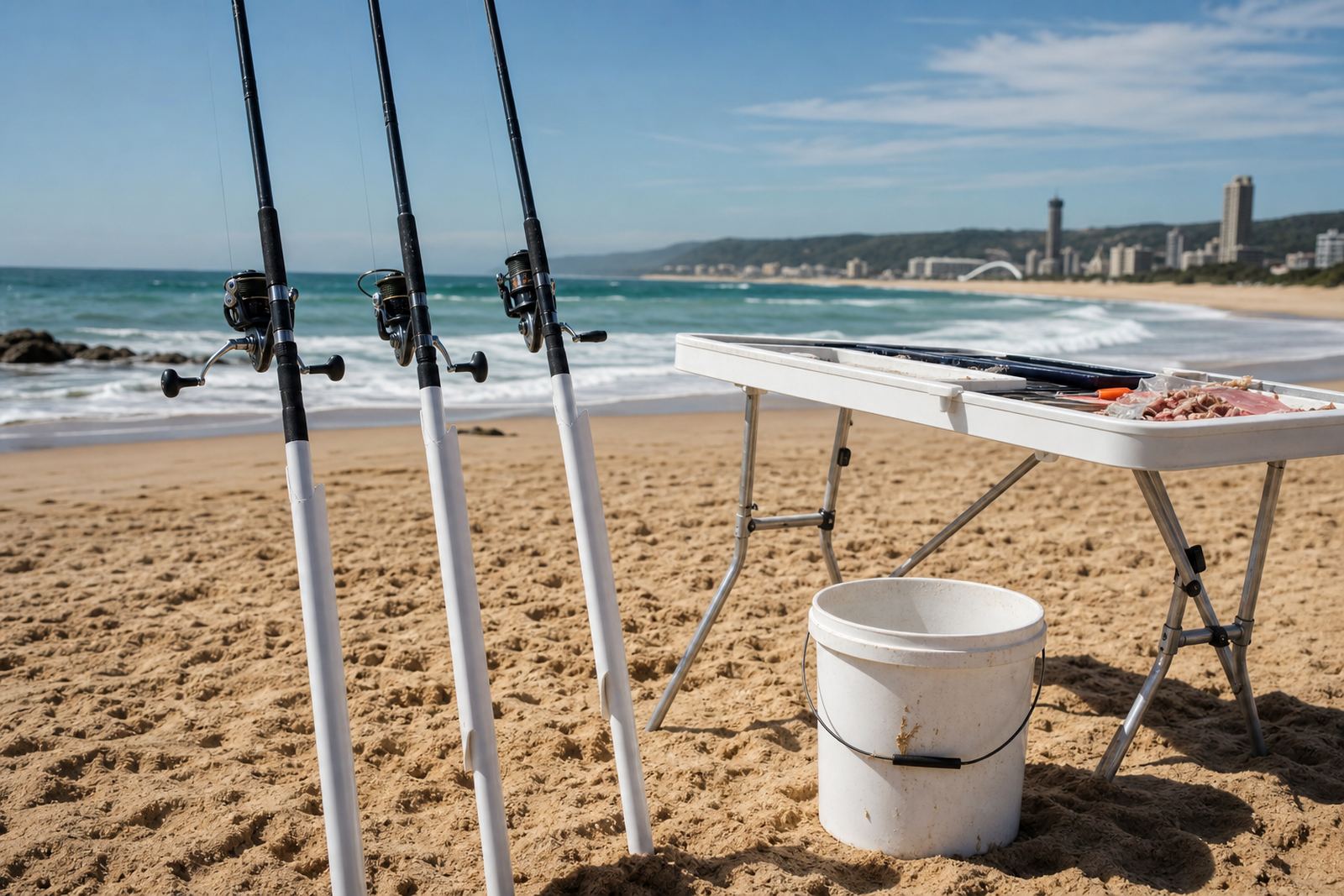
- Sand spear holders for beach work and firmer hold in surf conditions
- Clamp on holders for boat rails, trolleys and piers
- Adjustable angle holders for changing tide lines or sloping banks
- Wide mouth butt cups for bigger surf rods and heavier blanks
For most anglers in South Africa, a holder around 80 cm to 120 cm is common, while longer models give extra height for surf fishing or high banks. Shorter units are easier to pack and carry. The right choice depends on rod length, reel size and how much movement you expect from wind or swell.
Where Each Holder Type Works Best
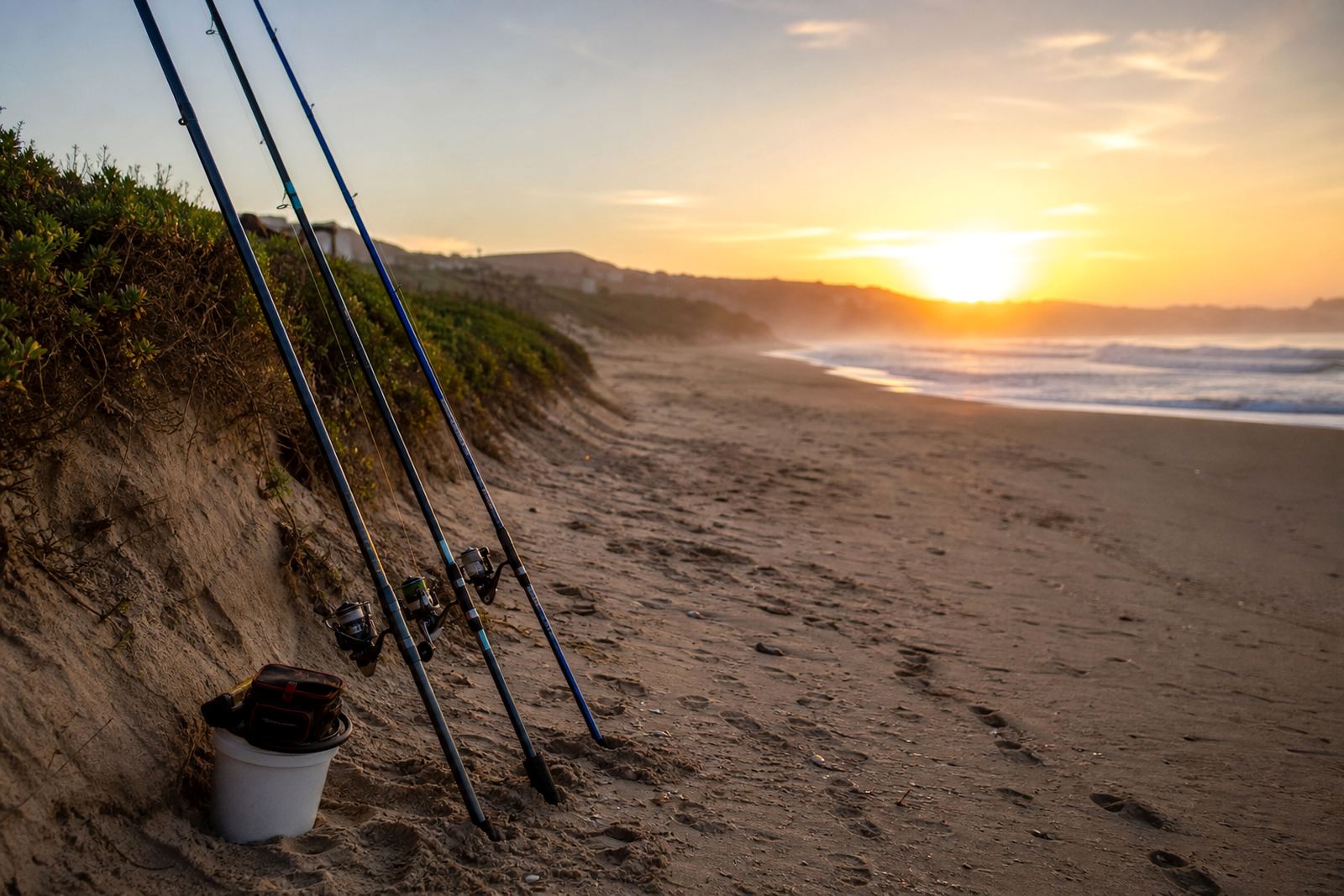
Beach anglers in Durban, Cape Town and Gqeberha often need a holder that bites into sand and stays steady when the wind picks up. A spear or spike model works well for long waits with bait rigs, especially when you are fishing off the backline. On boats, a clamp style holder is better because it fixes to a rail and keeps rods tidy between drifts.
For freshwater spots around Pietermaritzburg or inland dams near Johannesburg, a lighter ground holder is usually enough for carp, barbel and bass bait setups. If you fish from rocky banks or concrete, check whether the base can take a stabiliser plate or if a clamp mount will be more practical. We also see anglers use rod holders at club matches where quick bait changes and neat spacing matter.
- Surf and beach: sand spear, corrosion resistant finish, long shaft
- Boat: clamp mount, padded grip points, compact storage
- Bank and dam: spike base, adjustable angle, lighter carry weight
- Pier and jetty: clamp or locking base, slip resistant grip
Installation, Power and Gear Setup
Most rod holders do not need power or gas, which makes them simple to use on remote beaches and at rural dams. Installation is usually manual: push the spike into firm sand or soil, tighten the clamp to the rail, and check the angle before loading the rod. In harder ground, a pilot hole or a small mallet can help, though you should avoid damaging coated metal parts.
When setting up, keep the butt seated fully and make sure the reel is not pressing against the holder edge. A holder that is too narrow can mark the rod blank, while one that is too wide can let the rod move in gusty weather. If you fish at night, place the holder where you can see it clearly by headlamp or torch, and keep lines clear of walkways.
Care for Coastal Use and Ongoing Servicing
Salt water is hard on any fishing gear, so rod holders should be rinsed after each trip and dried before storage. Pay special attention to clamps, screws and spring points because sand and salt can work into the moving parts. If a holder starts to stick or wobble, clean it straight away rather than waiting for rust to take hold.
For aluminium or metal holders, check for corrosion around welds and fasteners. For plastic units, look for cracks near the cup and base, especially after transport in hot vehicles. A light coat of suitable grease on threaded parts can help, but keep it off the rod contact areas. If the holder forms part of a larger beach setup, inspect it with your rod and reel before every trip so you do not get caught out at dawn.
What to Check Before You Order
Before placing your order, match the holder to your rod butt diameter, reel size and fishing location. A light spinning rod needs a different support from a heavy surf rod with a long handle. If you are buying for a club or family setup, count how many rods need holding at once and whether everyone uses the same style.
- Rod butt size and handle length
- Ground type: sand, soil, rock or rail
- Desired height and angle
- Material choice for salt or fresh water use
- Storage space in the vehicle or tackle bag
- Whether you need a single holder or multiple units
If you are not sure, our team can help you pick a holder that suits Durban surf, boat fishing or freshwater bank work. That saves time and avoids buying a model that looks right but does not fit your setup properly.
Key facts
| Material options | Powder coated metal, stainless steel fittings, heavy duty plastic cups |
|---|---|
| Mount types | Ground spike, sand spear, rail clamp, adjustable base |
| Common lengths | Approximately 80 cm to 120 cm, with compact and extended options |
| Rod fit | Suitable for most spinning, surf and bait rods with standard butts |
| Use areas | Beach, boat, bank, pier, jetty and dam fishing |
| Care | Rinse after saltwater use, dry fully, check screws and moving parts |