Choosing tackle for South African surf conditions
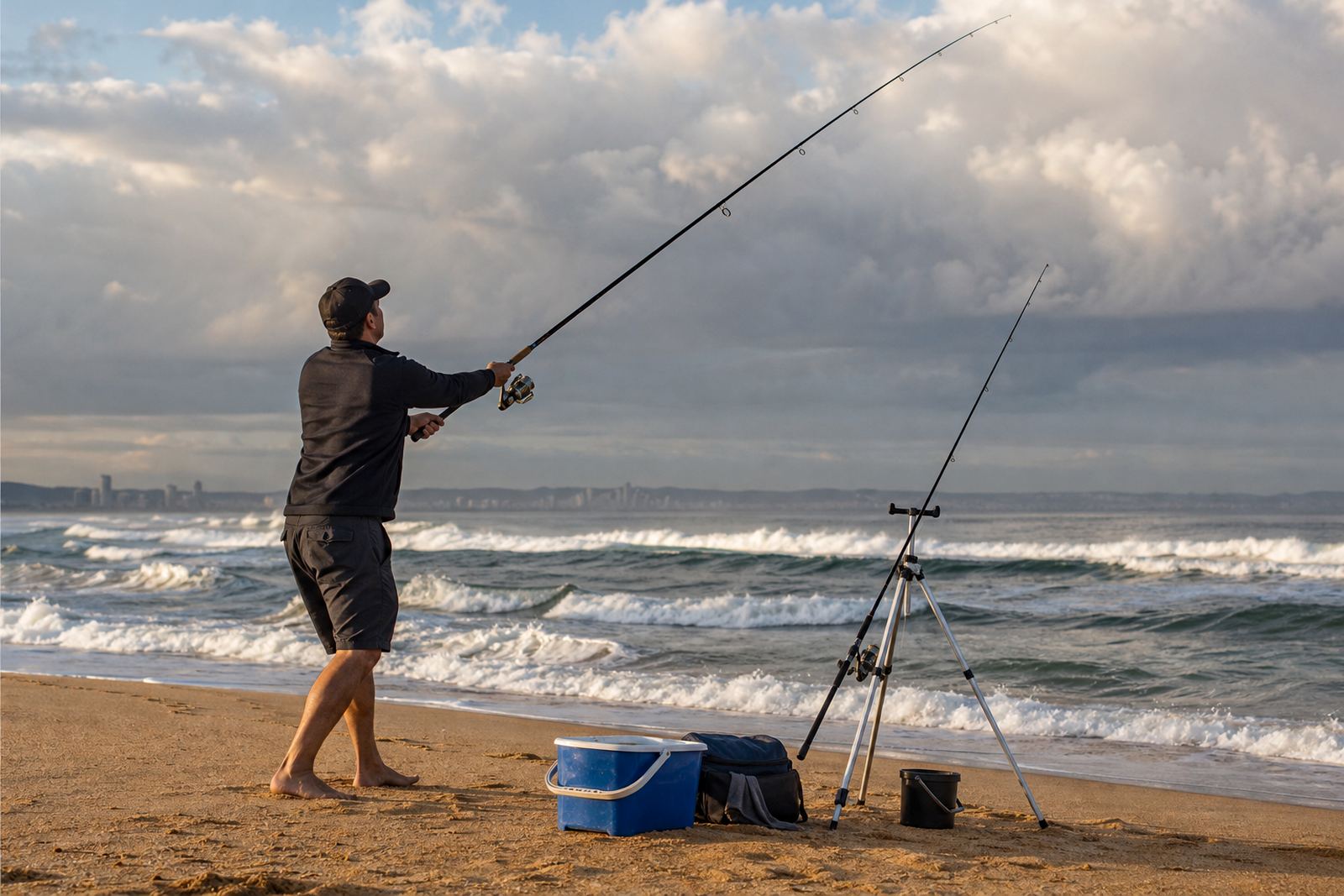
Surf fishing is about matching your setup to the water in front of you. On the KwaZulu-Natal coast, you may be dealing with warm water, strong current and oily baitfish. In Cape Town and Gqeberha, colder water, wind and rougher conditions can call for a bit more weight and a firmer rod action. For most beach anglers, a 12 to 14 foot surf rod paired with a medium to large spinning reel is a practical starting point.
When clients come in from Durban, Ballito or even Johannesburg for a coast trip, we usually start with the basics: a rod that can cast a 4 to 6 oz sinker, a reel with a smooth drag, and line that will hold up against sand and salt. Braided line gives better casting distance and sensitivity, while mono is often easier for beginners and more forgiving around knots. If you fish at night or in crosswind, line choice matters more than many people think.
- Rod length: 12 to 14 feet for most beach work
- Reel size: enough line capacity for long casts and strong runs
- Line: braid for distance, mono for easier handling
- Sinkers: 3 to 6 oz depending on surf and current
A practical surf setup that covers most beaches
A well balanced surf kit does not need to be complicated. You want one setup that can throw bait past the backwash, hold bottom in moving water, and still stay comfortable after an hour of casting. Many anglers ask for a setup that works on both open beaches and harbour mouths, and that is where a versatile rod and reel combo earns its keep.
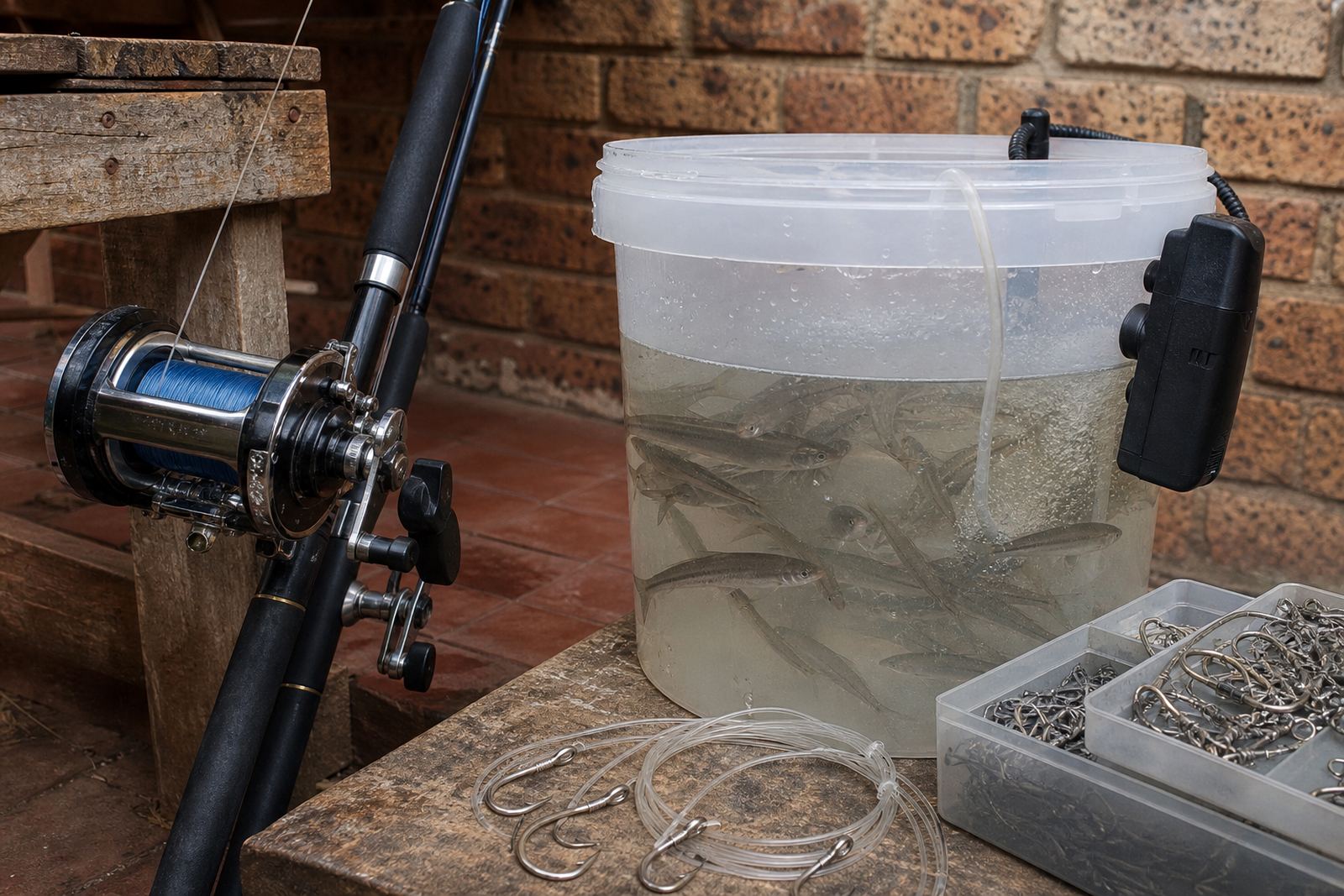
A common beach kit includes a main rod, a trace with one or two hooks, a suitable sinker, bait elastic, a landing tool, and a spare spool or leader material. Around Durban and the North Coast, a long trace with a bait clip can help present sardine, chokka or prawn cleanly. In stronger surf, a pulley rig can improve casting and keep the bait moving less in the wash. For learners, we often suggest starting simple before adding clips, wires and extra swivels.
- Basic kit: rod, reel, line, trace, sinkers, bait knife and pliers
- Useful extras: headlamp, towel, cooler bag, spare leader and hooks
- For night fishing: reflective markers and a backup light source
Rigging for distance, bait presentation and holding bottom
Rig choice changes the way your bait sits in the surf zone. A plain sliding trace can be a good all round option when fish are feeding close in. A fixed or pulley style rig helps when you need longer casts and stronger bait presentation. If you are fishing a gutter, point or sandbank, the goal is to place the bait where the fish are travelling, not just cast as far as possible.
We advise anglers to think about three things before tying a rig: where the current is pushing, how much weed is in the water, and whether the fish are feeding on the bottom or mid water. On the KZN coast, smaller traces can work well for shad, grunter and stumpnose when bait is fresh and the surf is manageable. On rougher days, a heavier sinker and stronger leader may save you from constant re-casting.
Common rig choices include:
- Sliding trace for general beach fishing
- Pulley rig for distance and reduced snagging
- Double-hook trace for bigger bait or mixed species
- Light trace for cleaner water and finicky fish
Layout and planning before you cast
Good surf fishing starts before the first cast. Walk the beach and look for darker channels, foam lines, cleaner water edges and any change in the sand bars. A gutter can hold fish all day if the tide and current are right, but the same spot may go quiet when the tide turns. Planning the setup around the spot saves bait and time.
At Springfield Park we often speak to anglers heading to Durban beaches, Umhlanga, Ballito, the South Coast and even travel anglers flying in with limited tackle. For them, the best plan is usually one versatile rod, a compact tackle box and pre-tied traces. If you are fishing a new beach, start with one rod only and learn the water first. Two rods can sound efficient, but it can become a muddle quickly if the surf is moving hard and the wind picks up.
- Check tide times and wind direction before leaving home
- Identify gutters, points and foam lines before setting up
- Keep sinkers, traces and bait within easy reach
- Fish one area first, then adjust depth and distance
Common mistakes that cost fish and money
Surf fishing can get expensive if the setup is wrong. A rod that is too stiff makes casting tiring, while a reel that is too small will struggle with line capacity and drag pressure. Another common mistake is using the wrong sinker for the conditions. Too light and your bait rolls into the wash, too heavy and you lose bite feel and casting comfort.
We also see anglers use old line that has been left in the sun or stored wet. Salt, sand and coastal humidity weaken tackle faster than many people expect. Rinse gear after use, dry it properly, and service reels before the season gets busy. If the drag feels jerky or the line lay looks uneven, get it checked before the next trip. A small repair now is cheaper than replacing a reel after one bad fight with a fish.
Another easy mistake is buying too much too soon. Start with a solid base setup, then add specialist traces, extra rod holders and bait accessories as your fishing improves.
Budget ranges for surf fishing gear in Rand
For anglers starting out, a workable surf fishing kit can be built at different price points. A basic setup for occasional beach trips may start around R1,800 to R3,500, depending on rod length, reel size and line choice. That will usually cover a functional rod and reel, line, a few traces and the first batch of sinkers and hooks.
A mid range setup for regular coastal fishing often sits between R3,500 and R8,500. This can include a stronger rod, better reel drag, spare line, a selection of sinkers, terminal tackle and a few specialised rigs. More serious anglers who fish often around Durban, Cape Town or East London may spend R8,500 and up on a more refined setup with quality components and backup kit.
For club anglers or families fishing together, bulk trace packs, shared bait prep and sensible spares can keep costs down. It is better to buy the right rod once than replace a poor one twice, even if the first spend feels bigger.