When Drop Shot Fishing Makes Sense
Drop shot fishing works well when fish are holding tight to structure, sitting off the bottom, or showing interest but not fully committing. In Durban and along the coast, that often means harbour edges, lagoon mouths, rocky points and deeper shore breaks. Inland, the same approach suits dam walls, bridges and drop-offs where bass and other target species move slowly with light pressure.
The main idea is simple, keep the bait in the strike zone and let the weight do the work. You are not throwing a heavy presentation through the water. Instead, you are using a fine line, a sensitive rod and a neat rig that keeps the lure moving naturally. That makes it a strong choice for clear water, calm mornings and days when standard jigging gets ignored.
For anglers who want more contact with the lure and better bite detection, drop shot fishing is a practical system. It also helps when load-shedding, weather shifts or boat traffic make fish cautious. A softer presentation can still get results when other setups are too aggressive.
The Typical Drop Shot Setup We Recommend
A proper drop shot setup does not need to be complicated, but each part matters. Rod action, reel smoothness, line choice and hook size all affect how the rig behaves. At our Springfield Park shop, we often match gear by target species, water depth and whether the angler is fishing from shore, bank or boat.
- Rod length: usually 6 ft 6 in to 7 ft 6 in for most shore and bank work
- Rod action: light to medium-light with a sensitive tip and enough backbone to control a fish
- Reel size: generally a 2500 to 3000 size spinning reel for balance and line control
- Main line: fine braid for feel, often paired with a fluorocarbon leader in clear water
- Hooks: small to medium drop shot hooks matched to the bait profile
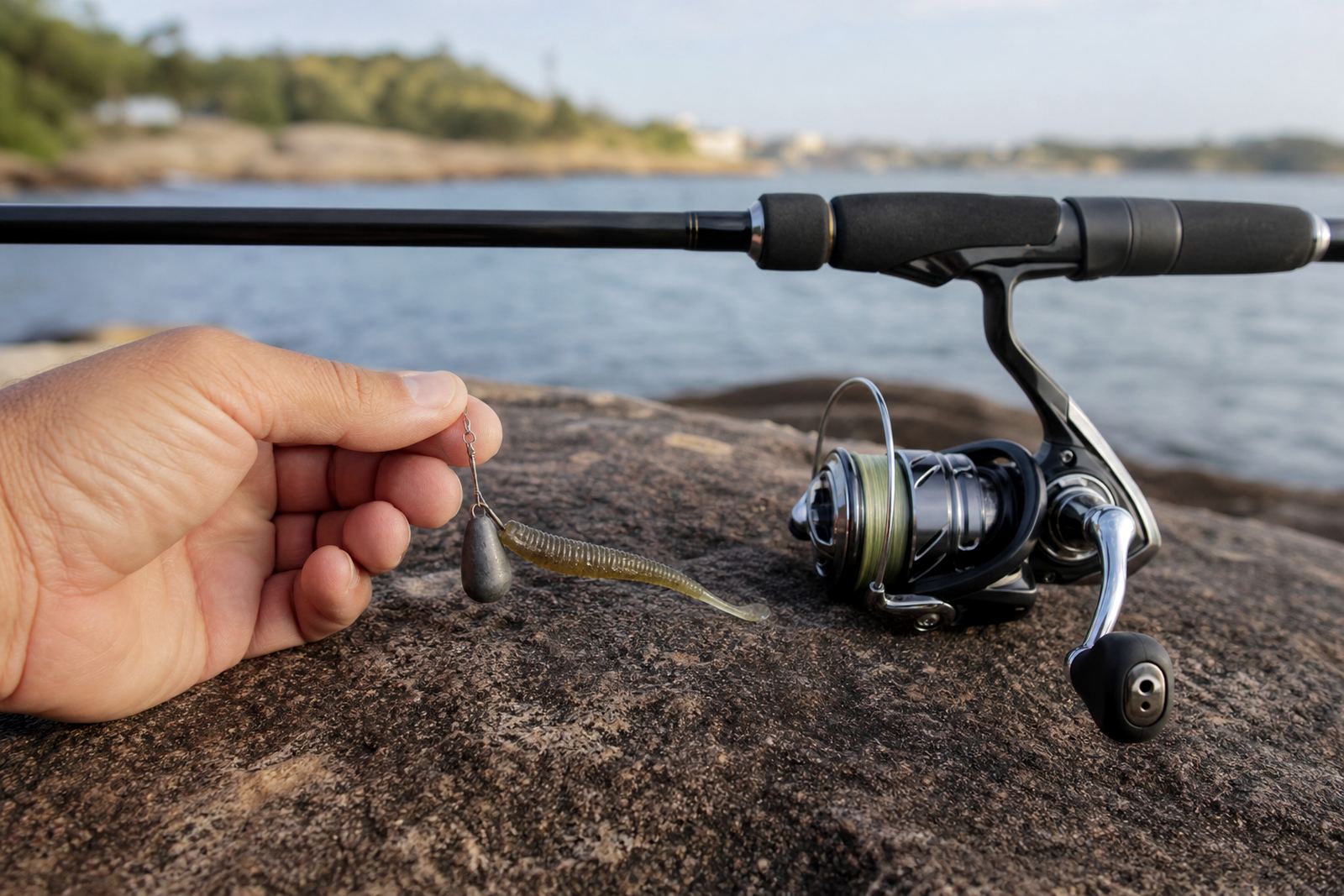
- Weights: pencil or cylindrical sinkers in light to moderate gram sizes, depending on depth and current
- Soft plastics: slender worms, minnow styles and small shads that move with subtle twitches
For coastal anglers, corrosion resistance matters. Salt spray, humid storage and sandy conditions can shorten the life of reels and terminal tackle. For freshwater anglers, the focus is often on sensitivity and clean presentation, especially when fishing pressured waters. Jason in our workshop can assist with reel servicing, drag tuning and line spooling so the outfit is ready before the trip.
How to Lay Out the Rig for Better Contact
Rig layout is where many anglers either gain confidence or lose it. The hook should sit neatly on the line, with the weight fixed below at the depth you want to hold. Once the line is tight, the bait hangs in a controlled way and moves with very small rod twitches. That is what makes drop shot fishing so effective for tentative bites.
Start by choosing the depth you want to work. In shallow rock pools or bank edges, a shorter drop between hook and weight can keep the bait near the bottom without snagging as much. In deeper water, a longer drop can help the bait hover a bit above the floor where fish are feeding. If the water is coloured, keep the presentation slightly more active. If it is clear, keep the movements small and deliberate.
- Use a thin leader to reduce visibility in clear water
- Keep knots neat and test them before casting
- Match sinker weight to wind, current and depth
- Trim soft plastics so they stay straight on the hook
- Check the leader often for abrasion after rock contact or rough bottom
When you need a rig for a specific venue, our team can help with trace making and starter setup advice. Lwandle handles coastal tackle questions, while Pieter often helps freshwater anglers adjust the rig for bass dams, weedy banks and deeper ledges.
Common Mistakes That Cost Bites
Drop shot fishing is easy to overcomplicate, but most problems come from a few predictable mistakes. The first is using gear that is too heavy. A stiff rod and thick line can kill the natural action and make small bites hard to see. The second is choosing a bait that is too bulky for the conditions. If the fish are shy, a slimmer profile usually works better.
Another common issue is letting the rig drag too fast over the bottom. This often happens in wind or current, especially along open coastlines and bigger reservoirs. When that happens, the bait no longer sits where it should. A heavier sinker may help, but sometimes the better answer is a lighter, more controlled cast angle and slower retrieve.
Anglers also forget about hook placement. If the bait is crooked, it spins in the water and looks wrong. If the hook is too large, the lure loses movement. If the line is twisted, the presentation becomes messy. These problems are small, but they add up quickly and that can cost you fish.
We also see people overlook basic maintenance. Salt on a reel, grit in the drag or a nicked leader can turn a good session into a poor one. After a coastal trip, rinse and dry your tackle properly. In humid Durban weather, storing wet gear in a closed bag is a quick way to damage line, fittings and guides.
Budget Ranges for a Good Starting Kit
You do not need to spend a fortune to start drop shot fishing, but the budget should match how often you plan to fish. If you are learning the method and fishing a few times a month, a practical starter kit can get you going without overspending. If you fish weekly or travel between Durban, Cape Town, Gqeberha and inland dams, it is worth putting money into better line, a smoother reel and a more sensitive rod.
- Starter setup: about R1 200 to R2 500 for a usable rod, reel and basic terminal tackle
- Mid-range setup: about R2 500 to R5 500 for better sensitivity and smoother drag
- Higher-end setup: from about R5 500 upward for anglers who want finer control and longer service life
- Consumables: hooks, weights, line and soft plastics should be factored in every season
For club anglers or teams buying in bulk, we can help plan mixed orders so the group gets the right sizes and quantities. If you are setting up for a trip, it is often cheaper to sort line, leaders and sinkers before you leave than to buy them under pressure at the last minute.
Getting the Right Advice Before Your Next Session
Drop shot fishing is about matching the rig to the day, not forcing one setup to do everything. Water clarity, wind, depth and target species all change what works. A light breeze on a Pietermaritzburg dam is not the same as a rough Durban harbour edge, and the tackle should reflect that.
At Catches, we help anglers choose gear for coastal and freshwater conditions, then fine-tune the setup so it fishes properly. That can include reel servicing, line spooling, rod guide replacement, drag tuning, trace making, trip gear checks and bait prep advice. If you are unsure where to start, send an enquiry through our contact page and tell us where you are fishing, what species you are after and what gear you already have.
Our team works from Springfield Park and supports anglers in Durban, Umhlanga, Ballito, Johannesburg, Cape Town, Gqeberha and East London. Whether you are starting out or refining a serious lure setup, we can help you build a drop shot outfit that feels right in the hand and performs when the bites are subtle.