
When live bait makes the difference
Live bait is often the first choice when fish are feeding on movement rather than scent alone. It is useful for kob, leerie, shad, geelbek, tuna, yellowtail and a range of freshwater predators, depending on where you fish and which size baitfish you can source. The key is to match the tackle to the baitfish and the conditions, not just to the target species.
In Durban and along the KZN coast, live mullet or shad bait needs a rig that keeps the bait upright and swimming. In freshwater areas around Pietermaritzburg, JHB dams and inland rivers, a live bluegill or small kurper can be enough to turn follows into bites. If the bait is too heavy for the hook trace or the sinker is too big, the bait will tire quickly and the presentation suffers.
Good live bait fishing also means planning for the day. If you are launching from a ski boat before sunrise, or walking the surf at Umhlanga or Ballito, you need a setup that is quick to rig and easy to control in wind and current.
The usual tackle combination for shore and boat
A solid live bait outfit usually starts with a rod that has enough backbone to cast and control the fish, but enough tip action to avoid tearing the bait free. For shore work, many anglers prefer a 10 to 12 foot rod with a smooth casting action. From a boat, a shorter rod around 6 to 7 foot is often easier to manage when the bait is being fished close to structure or dropped at a specific depth.
The reel should run smoothly under pressure and hold enough line for the venue. Braided mainline is common for better feel and quicker response, while some anglers add a fluorocarbon or monofilament leader for abrasion resistance around rocks, reefs and boat fittings. Hook size, sinker weight and trace length should be chosen for the bait size and current. Too much weight kills the natural swim, too little and the bait drifts away from the strike zone.
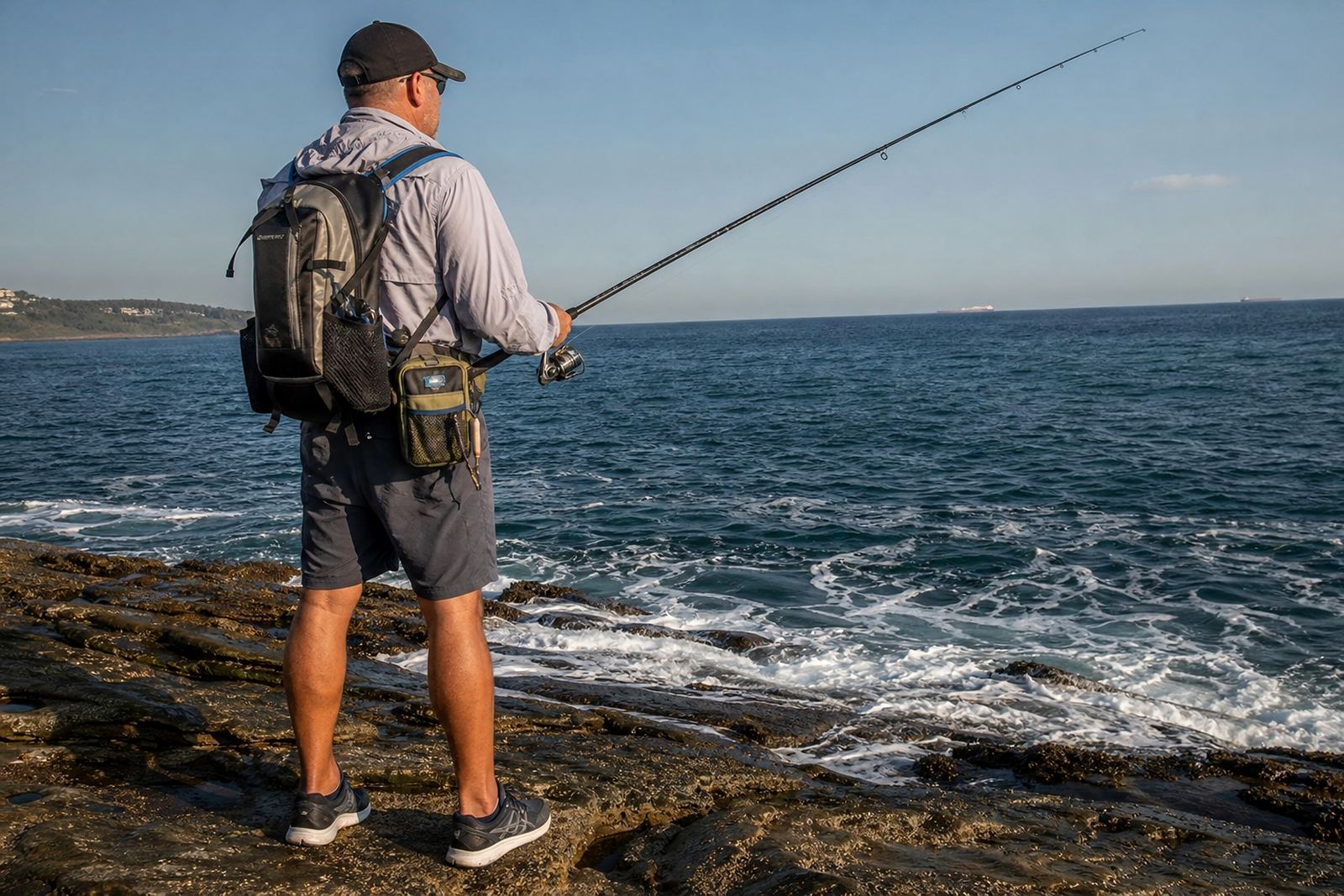
- Shore setup: longer rod, fixed spool reel, braid or mono mainline, abrasion-resistant leader, circle or live bait hook
- Boat setup: shorter rod, smooth drag reel, lighter trace, swivel, hook sized to the baitfish
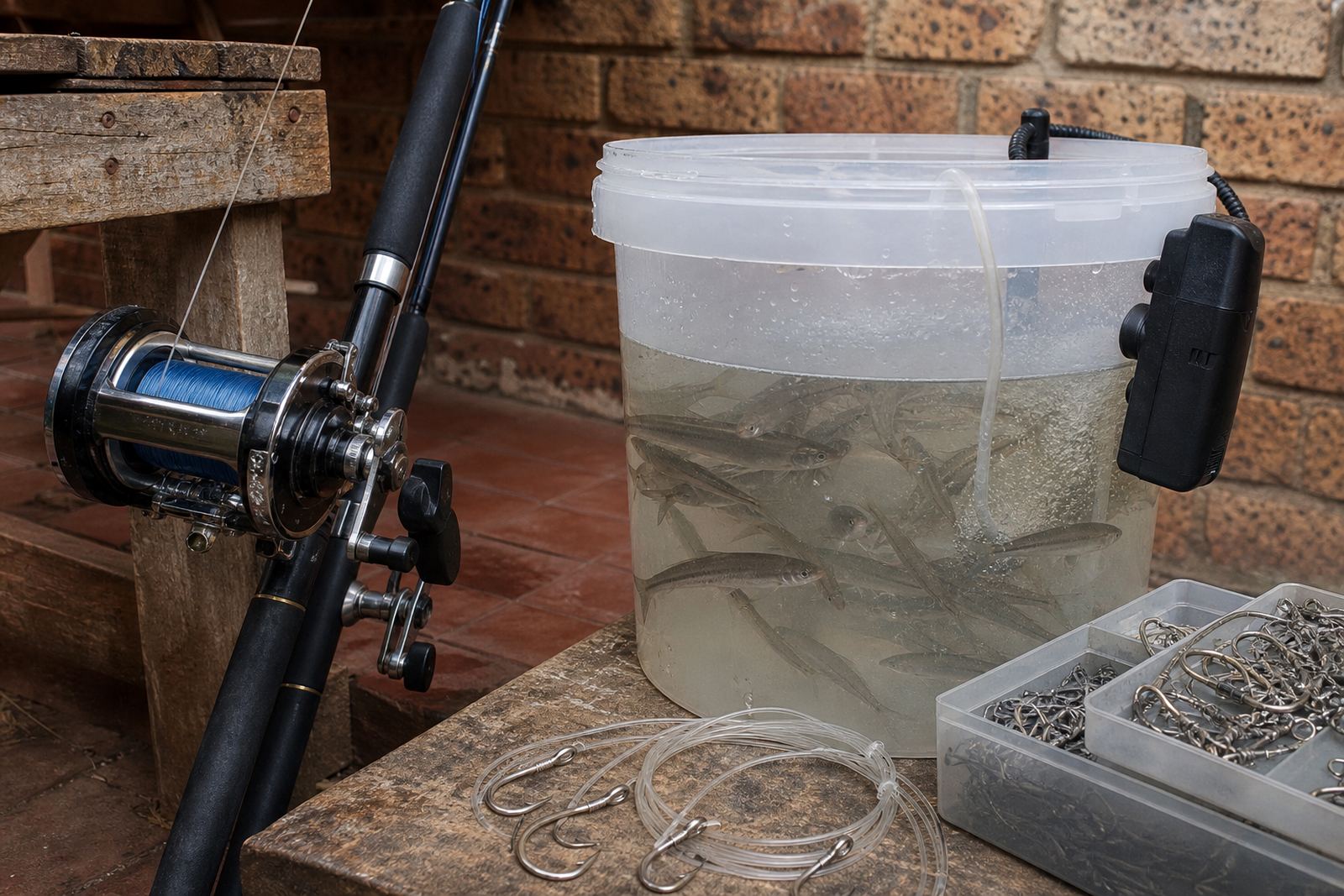
- Extra items: bait net, bait bucket, pliers, spare traces, scissors, sinkers and hook covers
How to plan the rig before you leave the house
Most problems with live bait start before the first cast. If you are trying to sort trace material, hooks, floats and sinkers at the car park or on a pitching deck, you lose time and bait. A better approach is to plan the whole combination around the species, venue and tide. That includes checking whether you will fish from sand, rocks, estuary mouth or boat.
For coastal anglers in Cape Town and Gqeberha, strong wind can push a bait into the reef or washline, so a cleaner rig with the right sinker size is worth more than extra hardware. In East London and the KZN coast, current and wave action may require a slightly stronger trace and a hook that sets well without overloading the bait. Inland, where the water may be clearer and calmer, lighter line and smaller terminal tackle can make a big difference.
- Choose bait first, then size the hook and trace around that bait
- Match sinker weight to current, depth and drift
- Keep one rig for distance casting and another for tighter structure
- Carry spare hooks and traces because live bait gets chewed, rubbed and twisted
Common mistakes that cost bites
A frequent mistake is using bait that is too large for the conditions. A big live bait may look impressive, but if the target fish are cautious or the current is running hard, a smaller bait often gets more attention. Another problem is overhandling the baitfish. Dry hands, rough nets and hot deck surfaces can weaken the bait before it reaches the water.
Many anglers also set the drag too tight. With live bait, the fish often picks up the bait and moves off with it, so the reel must give line smoothly. If the drag is locked down, the bait tears free or the hook pull happens too early. On the other hand, a drag that is far too loose causes poor hooksets and lost fish near the rocks or boat side.
Another issue is poor trace storage. Traces left tangled in a bag, especially in coastal humidity, take a memory set and become difficult to present properly. A neat trace wallet and a few labelled spares save time and reduce frustration, especially when load shedding disrupts prep at home and you need to pack quickly.
Budget ranges for a proper live bait setup
Live bait fishing can be started on a sensible budget, but the right gear matters. A basic shore setup for occasional use can begin around R1,500 to R3,000 if you already have some accessories. That range usually covers a serviceable rod, an entry-level reel, line and a few terminal tackle items. It is enough for learning the method, bait handling and rig control.
A mid-range setup for regular coastal or freshwater use often sits between R3,500 and R7,500. At that level you can look for a better reel drag, stronger guides, improved line capacity and a fuller spread of hooks, traces and sinkers. Anglers who fish often from Durban rocks, surf zones near Ballito, or offshore around Cape Town may prefer this bracket because it holds up better to salt, spray and frequent rinsing.
More specialised setups can run beyond R8,000, especially if you want separate outfits for shore and boat, plus spare spools, bait buckets and dedicated trace packs. The real cost is not only the rod and reel, it is the support gear that keeps the bait alive and the rig fishing properly.
Practical advice for Durban, inland waters and travel orders
For Durban anglers, saltwater exposure is a constant factor. Rinse reels after use, dry them properly and check the drag washers if they start to feel sticky. In coastal humidity, hooks and swivels can corrode fast if they are stored wet. Inland anglers around Johannesburg and Pietermaritzburg should still treat tackle carefully because dust, heat and rough storage can damage line and small components.
If you are ordering for Cape Town, Gqeberha or East London, it helps to think about the venues you fish most often. Rocky points call for tougher leader material and abrasion resistance, while sandy beaches may allow a slightly lighter presentation. Boat anglers should keep spare traces, a few extra hooks and a backup leader in the tackle box, because a good session can change quickly when the bait is worked hard by small fish or pulled into structure.
We also see many anglers benefit from a simple trip check before heading out: line condition, reel drag, hook sharpness, sinker choice, bait container and trace count. That small routine saves time on the water and helps keep the whole setup working as intended.