What offshore boat anglers usually need
Offshore boat fishing puts different demands on tackle than harbour or surf work. You are dealing with moving water, bigger fish, spray, tight rod holders and long sessions where a weak drag or light trace can cost you a fish. Most customers come in when they are setting up for kob, geelbek, snoek, geelstert, couta and bottom species, and they need gear that can handle the trip without being overcomplicated.
For coastal waters around Durban, the South Coast and further down to Gqeberha, a good offshore setup should be easy to clip in, easy to rinse and strong enough for repeated use in salt spray. On windy days and in rougher sea, neat rigging also matters because loose coils, tangled traces and poorly packed bait waste time when the bite is on.
Typical tackle set for a boat trip
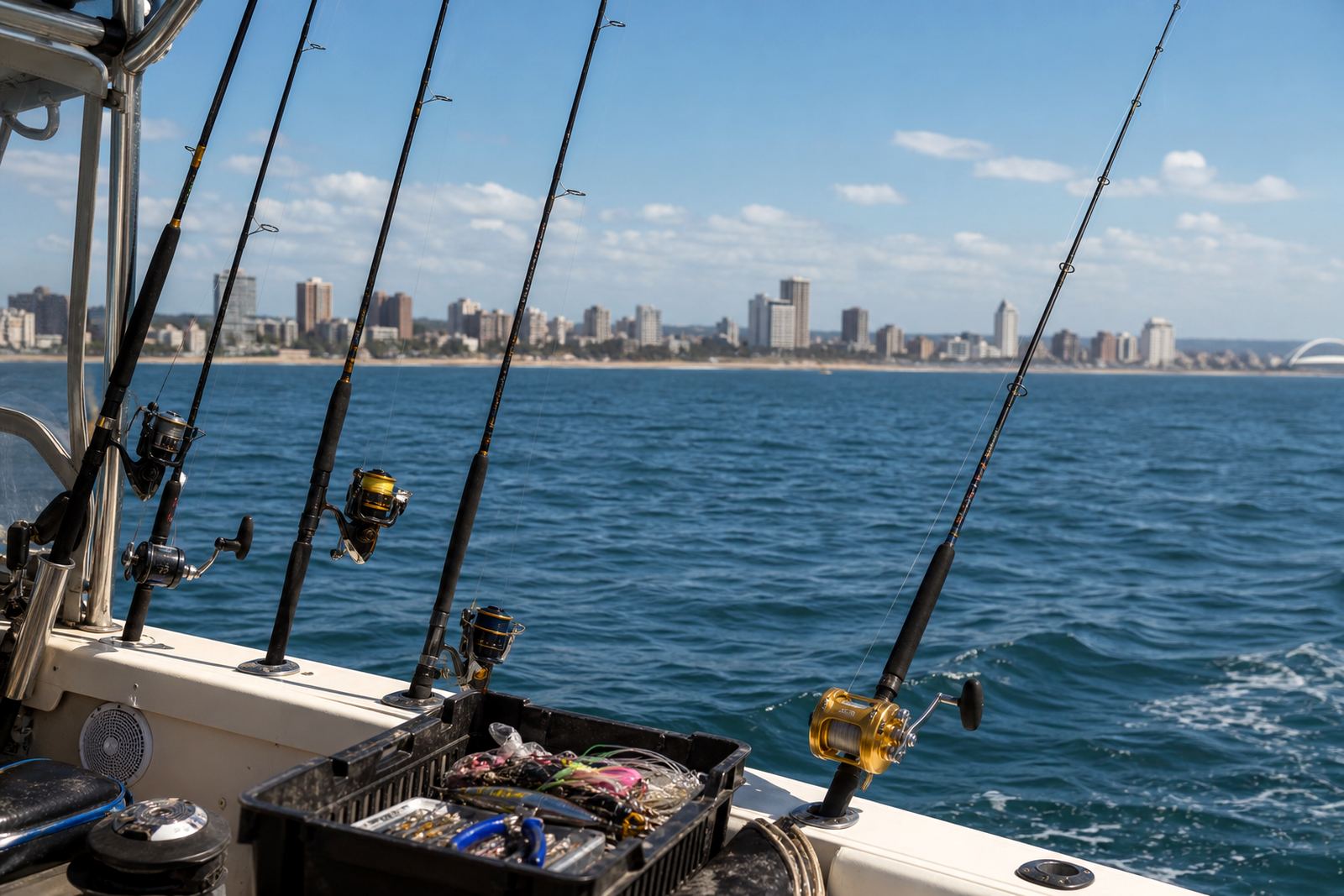
A practical offshore kit usually starts with two rods, one for bottom work and one for trolling or bait presentations. Heavier glass or composite rods are common for the boat because they take knocks better and cope with strain from the holder or rail. Reel choice depends on the trip, but most anglers want smooth drag, decent line capacity and a body that rinses well after use.
- Bottom fishing rod around 7 to 8 ft with a strong backbone for sinkers and red bait rigs
- Trolling rod with a firmer butt section for bait fish or lures
- Conventional or spinning reel with saltwater drag and enough line for deep drops
- Main line in braid or monofilament, matched to the target species and depth
- Leader material, swivels, clips, hooks, sinkers, and pre-tied traces
- Knife, pliers, bait elastic, spare sinkers and a small tackle box with extras
For bait, most offshore crews keep a mix of sardine, chokka, pilchard strips and locally relevant bait depending on the area. If you are heading out from Durban or Ballito, ask for bait prep advice before the trip because a clean cut and a sensible bait size can make the difference between a quick pick-up and a missed bite.
How to plan the layout before you launch
Boat space disappears quickly, so planning matters. Put the gear you will use first within arm's reach and keep spare tackle in one dry container. If the trip is for trolling first and bottom fishing later, load the rod bag in that order so you are not climbing over coolers and gaffs when the skipper changes direction. A tidy deck also helps when load shedding at the launch site has delayed your prep and you are rushing to get sorted before sunrise.
We usually advise anglers to separate tackle by task. One pouch for hooks and swivels, one for traces, one for sinkers and one for line tools. If you fish with family or a club, label boxes by angler or by rod length so nobody grabs the wrong set. For crews launching from Durban harbour or heading out from the North Coast, that kind of simple organisation saves time and prevents lost gear.
- Pre-rig two or three traces before the trip
- Check drag washers and line condition the day before
- Carry spare clip swivels, hooks and sinkers in sealed bags
- Keep a rinse bottle or wet cloth for quick salt wipe-downs
- Store bait separately from dry tackle to avoid smell and mess
Common mistakes with offshore boat gear
One common mistake is buying gear that is too light for the water being fished. A reel that works well from a pier can struggle once you add a heavy sinker, current and a fish that runs hard near structure. Another mistake is overloading a rod with too much line or using a reel that is not comfortable in the hand for a full day offshore.
People also forget about corrosion. Salt water gets into screws, guides, reel seats and drag systems very quickly, especially in humid coastal conditions. If the gear is not rinsed, dried and serviced, the reel can feel rough within a few trips. On the rod side, cracked guides and worn tips cause line damage and lost fish, so rod guide replacement and rod tip repair are worth doing early rather than after a breakage.
We also see anglers use the wrong trace length or hook size for the bait and depth. If the trace is too long, it tangles. If it is too short, the bait moves badly and the hookup suffers. Drag tuning matters too, because a drag that starts too stiff can pull hooks on the strike, while one that slips too early gives the fish too much room.
Budget ranges for a serious offshore setup
Offshore boat budgets vary depending on whether you are building a starter kit or replacing a full spread. A basic one-rod setup with reel, line, terminal tackle and a few traces can start from about R1 500 to R3 500. That is usually enough for casual bottom fishing or a first boat outfit if you already have some tools and bait containers.
A more practical two-rod coastal boat kit, including better reels, stronger rods, spare leaders, sinkers and a proper tackle pack, often sits between R4 500 and R12 000. For anglers who fish often, want smoother reels and need a setup that lasts through the season, the budget can go higher, especially if line spooling, rod repairs and servicing are included.
If you are setting up a club boat or buying for regular offshore trips, bulk club orders can reduce the per-item cost on traces, hooks, sinkers and consumables. It is usually better to buy fewer good items than to fill the boat with cheap gear that fails under pressure.
Getting help from a Durban tackle team that knows the coast
At Catches, we help anglers across Durban, Springfield Park, Umhlanga, Ballito, Pietermaritzburg and beyond choose gear that matches the trip they are actually planning. The right offshore setup depends on species, boat size, crew experience and how far offshore you are going, so we keep the advice practical and direct.
Sibusiso Mthembu leads the business, with Ayesha Naidoo overseeing store operations, Lwandle Dlamini handling coastal tackle advice, Pieter van Rooyen guiding freshwater customers, Nokuthula Khumalo managing bait and stock, and Jason Petersen taking care of reel servicing and repairs. If your reels need drag tuning, your line needs spooling or your rods need guide work before a trip, we can sort that out through the enquiry form on our contact page.
Whether you are heading out from Durban for bottom fishing or planning a trolling run up the coast, we will help you build a setup that fits your budget and your fishing style without wasting money on the wrong gear.