Tackle That Stays Put on a Kayak
When you are fishing from a kayak, every item needs a purpose. Loose gear becomes a nuisance very quickly, especially in chop, current or a strong south-wester. The right setup is compact, easy to reach and simple to stow when you need both hands on the paddle or the rod. We usually start by reducing bulk first, then matching the tackle to the water you plan to fish.
For coastal paddling around Durban, Umhlanga or Ballito, anglers often choose shorter rods around 6 to 7 feet, medium-light to medium power and reels that can handle braided line. Freshwater kayak anglers on dams and rivers around Pietermaritzburg, Johannesburg and the Highveld often prefer lighter combos with a softer tip for finesse work. The goal is not to carry everything, it is to carry the right things.
- Shorter rods for easier handling in a seated position
- Reels with smooth drags for fish that run close to the kayak
- Braid with a leader suited to saltwater or freshwater use
- Rust-resistant hooks, clips and swivels for coastal trips
- Compact pliers, cutters and a small landing net or lip grip
A Practical Kayak Fishing Setup
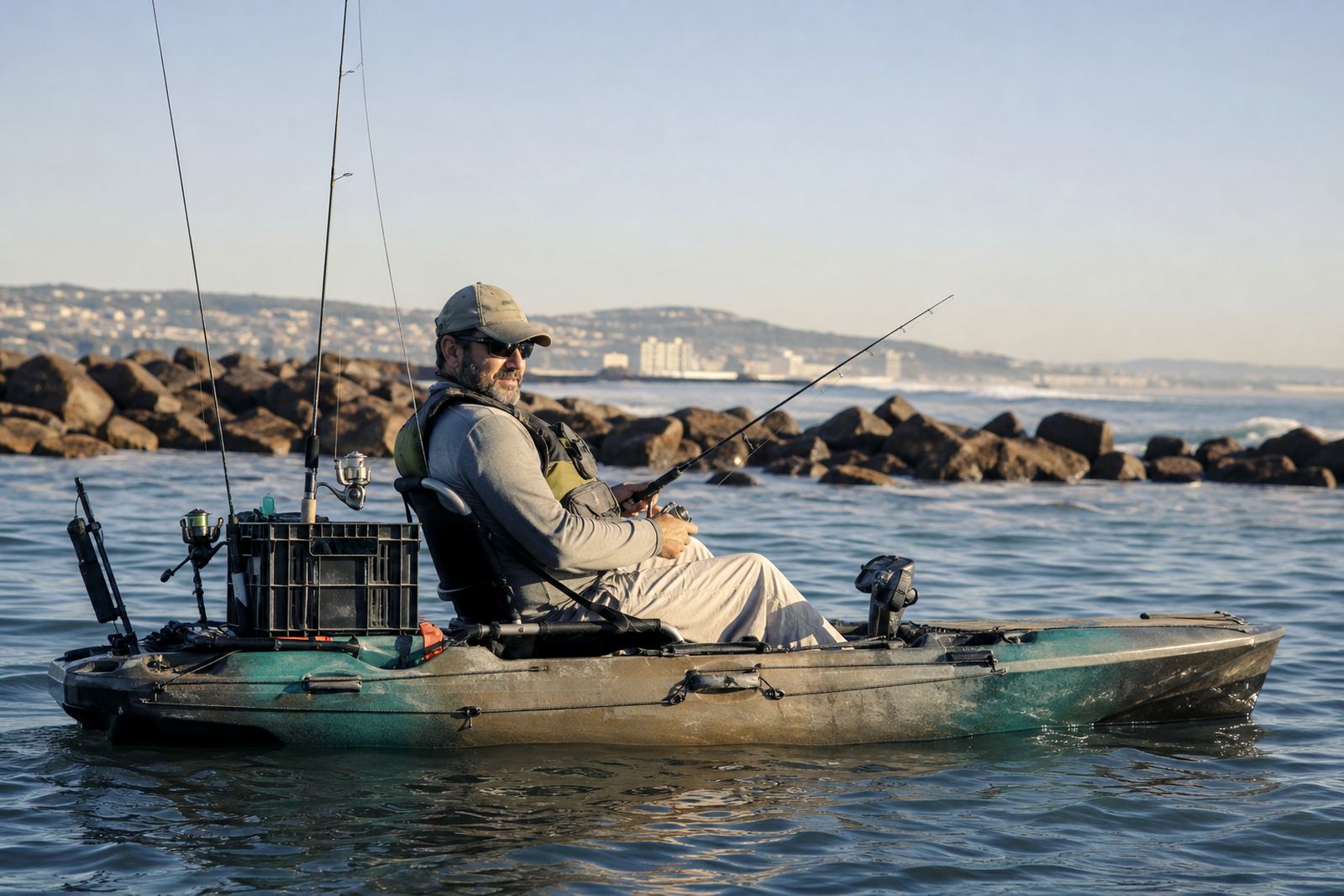
A good kayak fishing bag is built around control and balance. Heavy items should sit low and central, with the most-used tackle within arm's reach. Rods need to be secured before launch and while paddling between spots, not just when you arrive at the mark. On windy days off Durban, one loose rod can mean a lost setup in seconds.
We often put together starter kits that cover the main tasks without crowding the craft. That may include one primary rod and reel, a spare leader spool, a small box of terminal tackle, a few pre-tied traces, sinkers, soft baits or bait rigs, and a dry pouch for phone keys and permits. If you are fishing estuary mouths or shorebreak launch zones, choose gear that can be washed off quickly after the trip.
- One main rod and one spare rod if storage allows
- Small tackle box with hooks, sinkers, beads and clips
- Leader material for abrasion around rocks, pylons and weed beds
- Waterproof pouch for valuables and municipal permits where needed
- Wash-down routine for salt and sand after every outing
Layout and Planning for Safe Paddling
Layout matters almost as much as tackle selection. Before you launch, decide where the rod will sit, where the anchor or stake-out pole will be, and which side you will work from when landing a fish. Many anglers make the mistake of overloading the front hatch or stacking gear behind the seat where it is hard to reach. That can upset trim and make the kayak harder to paddle, especially if wind or swell picks up.
Think about the whole session, not only the cast. If you plan to change baits often, keep bait prep items in one accessible container. If you are using lures, store them by depth range or target species so you are not searching through a mixed box while drifting. For night fishing or early starts, pack a headlamp, spare batteries and a simple first aid kit. It sounds basic, but on a quiet waterway it saves hassle.
- Place heavier tackle low and near the centre line
- Secure rods with leashes or holders before launching
- Keep hook boxes closed and clipped shut
- Separate wet gear from dry clothing and electronics
- Plan your drift or anchor point before the first cast
Coastal and Freshwater Differences You Should Factor In
Kayak fishing in KwaZulu-Natal saltwater is not the same as paddling a dam in Gauteng or the Free State. Coastal anglers need better corrosion resistance, stronger leaders and tackle that can handle snags, reef and surf wash. Freshwater anglers can often fish lighter, but still need gear that is easy to manage with limited deck space. If you fish both, it helps to keep two separate kits so you are not constantly switching rigs.
For coastal use, braided line with a suitable leader is a common choice because it gives better feel and casting distance. On the freshwater side, anglers often lean toward lighter line and smaller terminal tackle for bass, kurper or yellowfish setups. Bait also changes with location. A bait box for estuary work is not the same as a freshwater kit for lure fishing or worm sessions. Salt and heat in Durban can dry bait out quickly, so cooling and storage matter more than people think.
Jason and the team often help anglers match tackle to the water they fish most. That keeps the kit simpler and prevents wasteful buying. It also helps when weather closes a launch site and you need to shift from coast to inland without rebuilding everything from scratch.
Common Kayak Fishing Mistakes We See
Most mistakes come from carrying too much or choosing gear that is awkward from a seated position. Long rods can be difficult to manage in crosswind. Heavy tackle bags move around and get in the way. Another common issue is underestimating how fast saltwater works on metal fittings and drag systems. If you do not rinse and dry the gear properly, a reel can start feeling rough in a matter of trips, not months.
Another one is overcomplicating the rig. A kayak angler needs a system that can be reset quickly after a snag or missed strike. Too many accessories slow everything down. Keep the kit simple and service the main items often. Reel servicing, line spooling and drag tuning make a real difference when you are paddling a long way to a mark and the day starts to turn breezy.
- Choosing rods that are too long for seated casting
- Ignoring corrosion after coastal sessions
- Overpacking tackle and upsetting balance
- Using knots and clips that are not checked before launch
- Skipping reel service until the drag starts sticking
Budget Ranges for a Kayak Fishing Kit
A sensible kayak fishing budget depends on whether you want a simple starter kit or a more specialised setup for saltwater work. A basic freshwater or estuary starter can begin from about R1 200 to R2 500 for a rod, reel and essential terminal tackle. A stronger coastal setup often sits between R2 500 and R6 500, especially if you want better reel performance and corrosion-resistant fittings. Serious anglers who want a spare rod, quality braid, trace material and accessory storage can easily build a kit above R7 000.
We usually advise buying the core items first, then adding extras after a few trips. That way you can see what you actually use. If you fish the Durban coast on weekends and also want to work dams inland, a mid-range kit with separate leaders and terminal boxes often gives the best value. Bulk club orders and starter setup advice are useful if you are buying for a small group or getting into kayak fishing with mates, because you can standardise the basics and keep costs under control.
For paddling anglers, good value comes from gear that lasts, fits the craft properly and does not need constant replacement. That is far better than buying a big pile of tackle that never gets used.