
What changes when you fish after dark
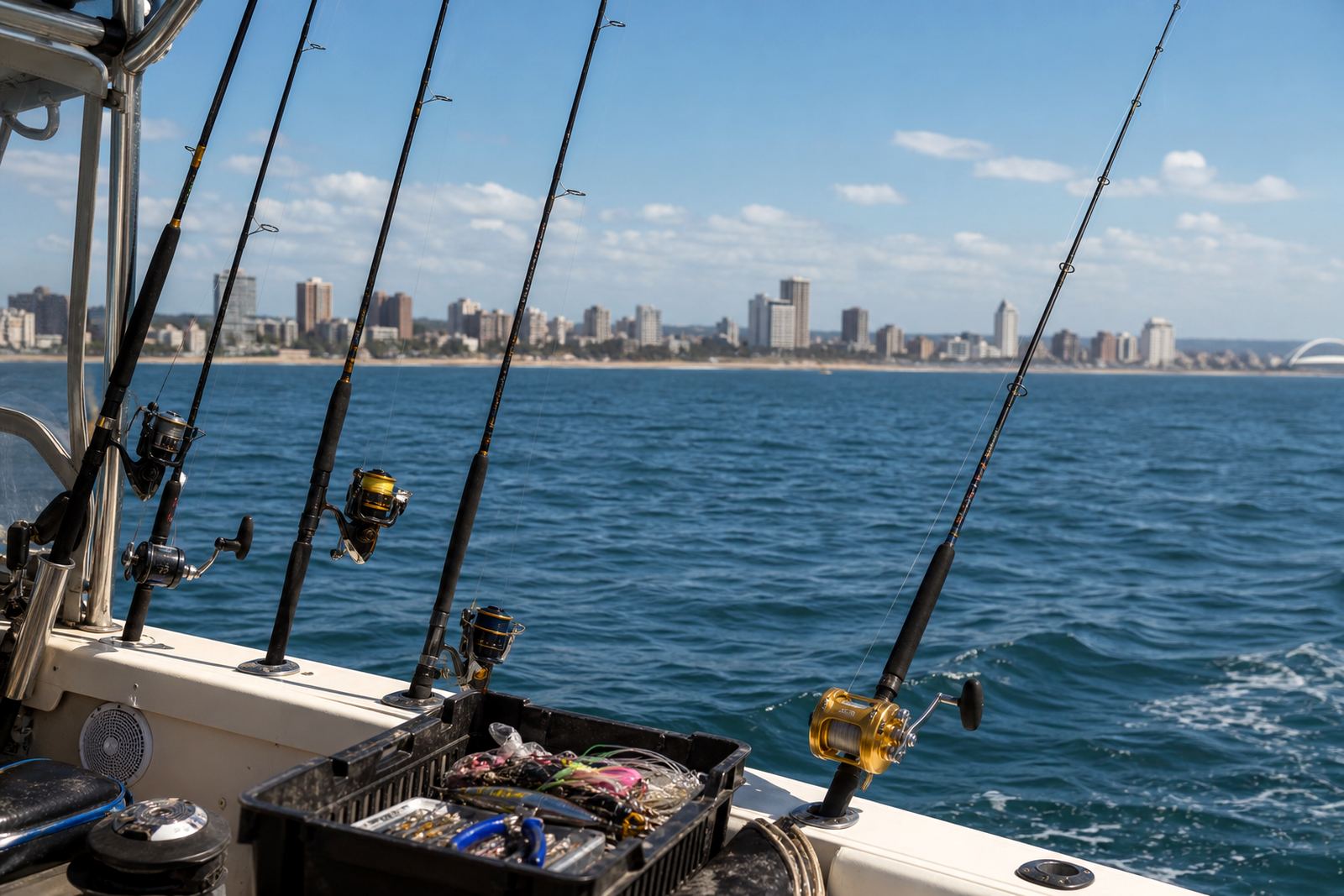
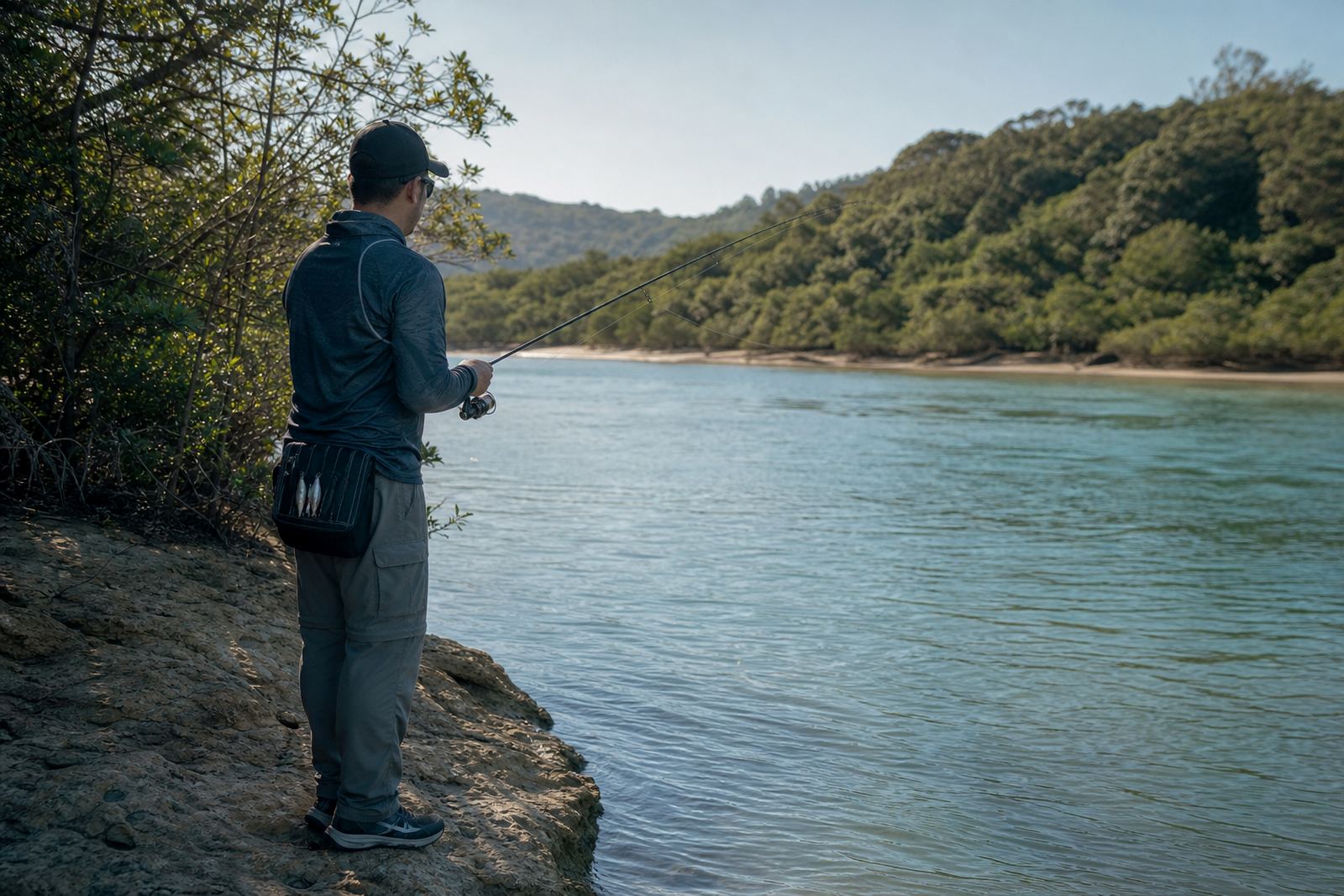
Night fishing changes the whole job. You are relying less on sight and more on feel, sound and a neat layout around your feet. In Durban, many anglers target the last of the outgoing tide or the first push of the incoming tide after sunset, while freshwater anglers often fish quieter edges where fish move up once the light drops. The main aim is to keep everything easy to reach, easy to see and easy to reset when a bite comes through.
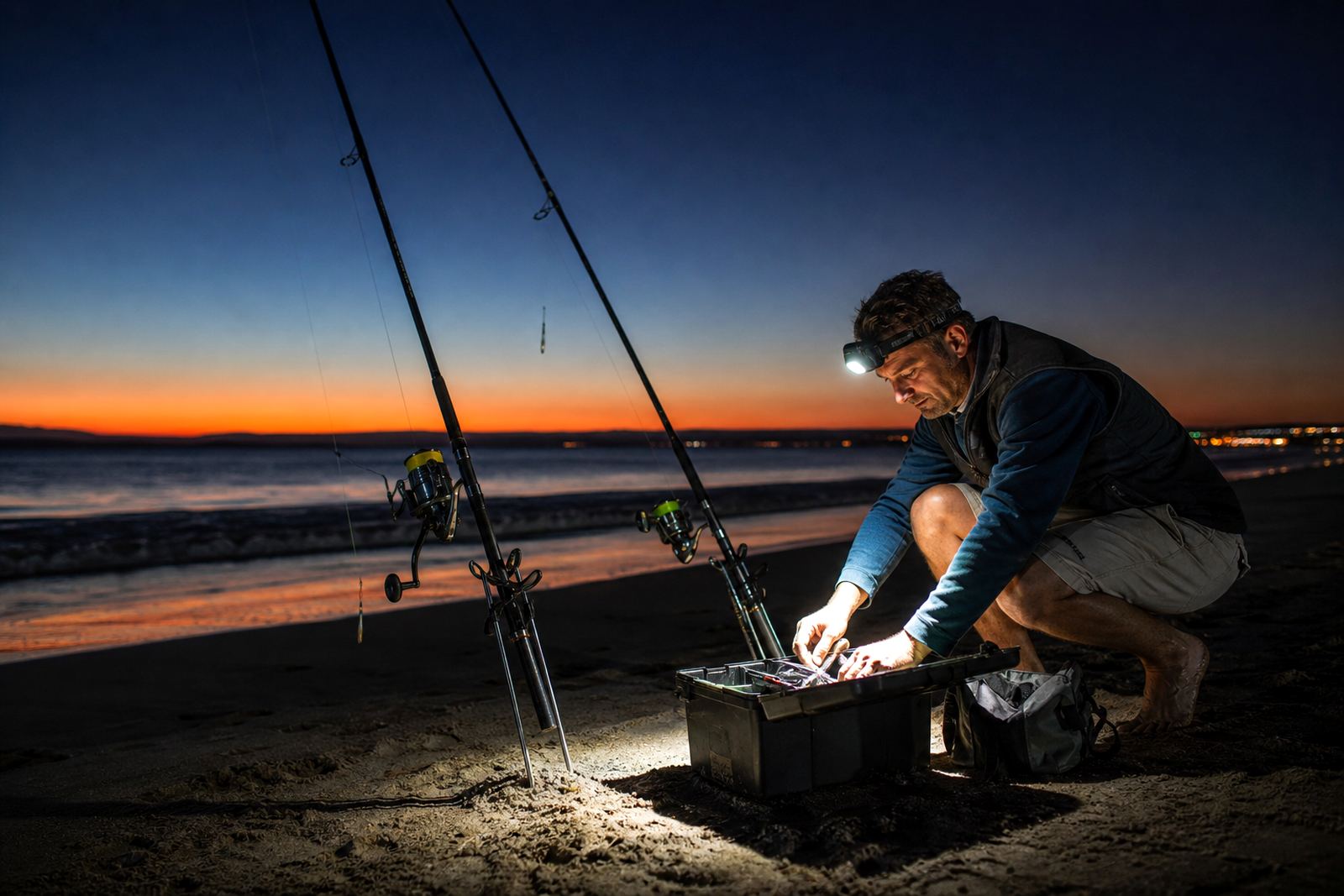
A good night setup is not about carrying more kit, it is about carrying the right kit. A basic spinning outfit, a spare trace, a headlamp with a red light setting and a bait pouch you can close properly will do more for you than a pile of extra tackle. In coastal spots, spray and sand can make a mess fast, so choose gear that can be rinsed and dried without drama.
Typical night fishing kit for coast and inland waters
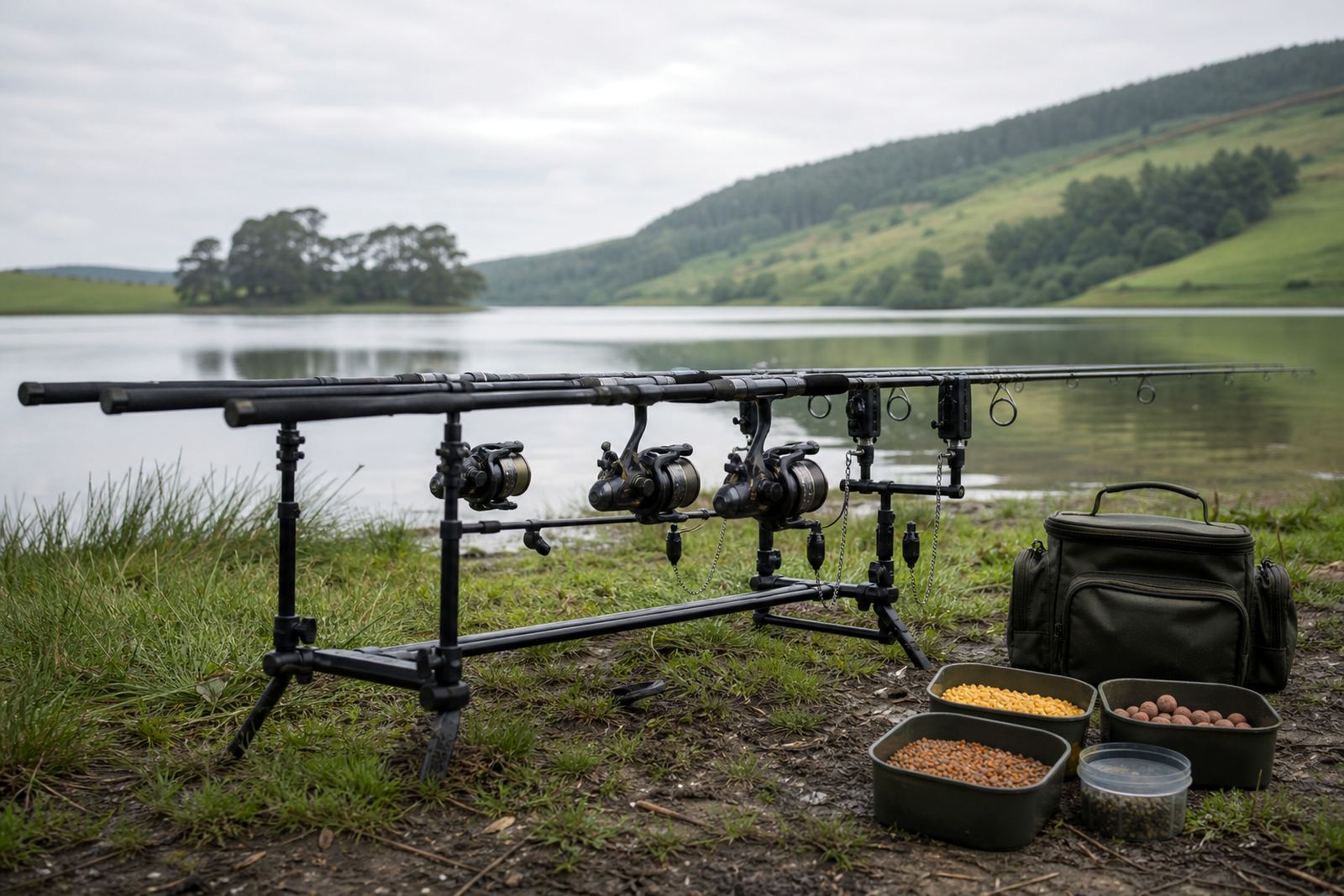
Most anglers do well with one main rod and reel matched to the species and venue, plus a second simple backup setup if they are staying out for long. For the coast, a 10 ft to 12 ft rod with a medium to heavy reel is common, while inland anglers often prefer a lighter rod for carp, barbel or bass work. Line choice matters too, especially when you are trying to feel bites in the dark and keep control near rocks or reeds.
- Headlamp with white and red light settings
- Spare batteries or a charged backup light
- Rod holder or sand spike for beach sessions
- Glow floats or luminous markers for bite detection
- Trace wallets, hooks, swivels and sinkers sorted by size
- Small bait box or cooler bag for pilchards, sardines, prawn, worms or prepared bait
- Hand towel, pliers and line cutter within arm's reach
If you fish from the surf, rocks or a slipway, a wading belt, grippy shoes and a landing net can make a big difference. In humid coastal areas like Durban and Ballito, keep bait and terminal tackle covered so it does not dry out or pick up sand and salt.
Layout and planning that keeps the session calm
Before the first cast, decide where each item will live. Put your tackle box on the same side every time, keep bait on a low table or bucket lid, and leave a clear path behind you in case you need to move fast. If you are fishing rocks around Cape Town or the South Coast, avoid clutter near your feet because one misstep in the dark can end the night. On piers and riverbanks, check where the drop off is and keep your net and pliers in a fixed spot.
Timing is just as important as tackle. Check tide tables for coastal work, and for inland sessions watch wind, rain and dam releases where relevant. If you are fishing in a public area, know the local rules, parking arrangements and closing times, and always keep valuables out of sight. A small torch aimed at the floor is usually better than waving a bright beam across other anglers.
- Rig your traces before dark, then keep 2 or 3 ready spares in a wallet
- Mark rod positions with small glow tape or reflective tabs
- Keep drinks and snacks separate from bait so your hands stay clean
- Charge devices fully before load-shedding can interrupt your preparation
Bait handling after dark
Bait gets overlooked at night, yet it often decides the session. Fresh bait should stay cool, covered and easy to reach. Pilchards, chokka, sardines and prawn all need a tidy system, because once the lid is left open in humid weather they break down faster and start to smell stronger than they should. For freshwater, worms, dough, floaties and prepped meat baits need the same care so they stay usable through the whole session.
Keep a small bait board, paper towels and a rinse bottle in your setup. If you are making traces or baiting up with wet hands, work in stages and close the bait tub between each step. That keeps flies down during warmer months in Durban and helps stop your gear from becoming slippery. A simple bait routine saves time and keeps your rigging cleaner, which matters when the bites are short and you need to recast quickly.
Common mistakes that cost bites and safety
Most night fishing mistakes are simple ones. Anglers leave tools too far away, use a weak light that flattens too quickly, or overcomplicate the setup and spend half the night untangling line. Another common error is casting too hard into darkness without checking what is behind the rod, especially on crowded beaches or river banks. A short, controlled cast is often the better move when you cannot see every landing point clearly.
- Using bright white light continuously and spooking fish
- Leaving bait uncovered so it dries out or gets contaminated
- Fishing with blunt hooks or twisted traces from the start
- Ignoring surf, current or a rising tide because the bites are good
- Trying to carry too much gear in one trip instead of staying organised
For anglers who fish often, reel servicing, line spooling and drag tuning are worth doing before a long night run. A reel that winds unevenly or a drag that sticks can ruin a good fish in seconds.
Budget ranges for a practical night setup
You do not need to spend a fortune to fish well after dark. A practical starter setup for local night sessions can be put together for around R1,500 to R3,500 if you already have a rod and reel. That would usually cover a dependable headlamp, basic terminal tackle, glow markers, a bait bag and a few spare traces. If you are starting from scratch with a new rod and reel, a more complete coastal or freshwater setup can range from about R3,500 to R8,000 depending on the venue and the quality you want.
Anglers who fish often at night usually spend a bit more on better line, stronger hooks, a cooler bag and a second light source. Coastal anglers around Durban and Gqeberha may also want extra sinkers, heavier traces and a rod holder for surf work, while freshwater anglers may put more into floats, hooks, line and bait tubs. The point is to buy once, then keep the setup simple enough that you can use it without thinking twice.
How Catches helps with night sessions
For night fishing, the best advice is practical advice from people who know local conditions. If you are planning a session and are not sure whether to go lighter on line, change trace length or switch bait, the team at Catches can help you choose gear for the venue and the species. That includes starter setup advice, trace making, trip gear checks and bait prep guidance for coastal and freshwater anglers.
Whether you are fishing the Durban coast, heading inland from Pietermaritzburg or ordering gear for Johannesburg, Cape Town, Gqeberha or East London, the goal is the same: keep the setup clean, visible and easy to use when the light drops. A good night session usually starts long before sunset.