What bank carp anglers need on the water
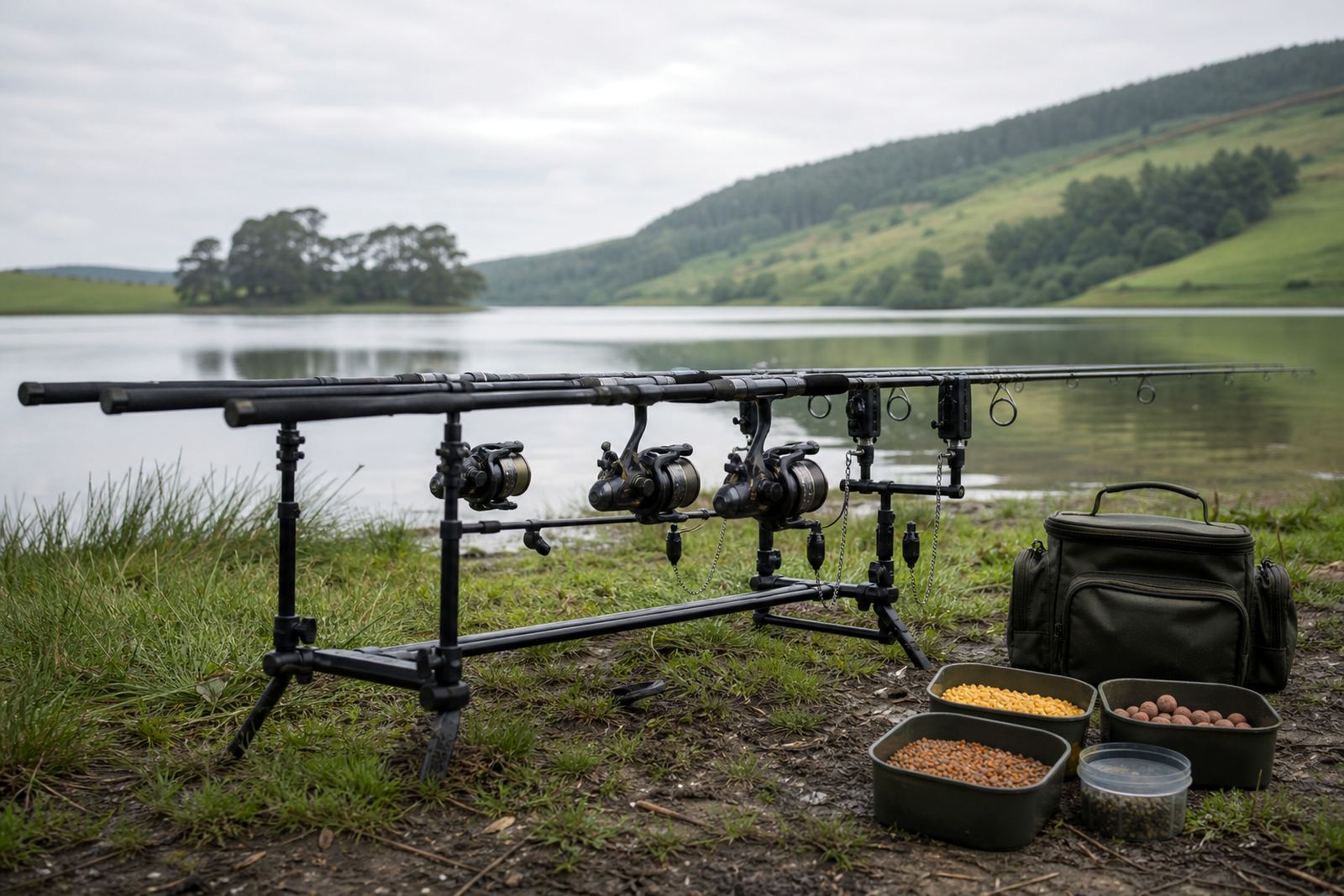
Most carp bank sessions start with a simple but well matched kit. You want gear that can cast neatly, hold bottom in wind or current, and still show careful bites when the fish are shy. For Durban lakes, inland dams around Pietermaritzburg, and quiet waters near Johannesburg, that usually means a medium to heavy rod, a reel with a smooth drag, and line that handles long casts without fraying at the knot.
For bank work, the right terminal tackle matters as much as the rod and reel. Feeders, inline leads, swivels, hooks, hooklinks and bait stops all need to suit the venue and the size of carp you are expecting. If the water has weeds or snags, you may need stronger line and a safer rig setup, rather than just heavier sinkers.
- Rods: 10 to 12 ft for most bank carp sessions
- Reels: smooth drag, solid line lay, enough capacity for 0.25 mm to 0.35 mm line
- Hooks and rigs: size 6 to 12 for common dough and boilie presentations
- Extras: landing net, rod pod or bank sticks, bite indicators, unhooking mat
Feeder, float and dough bait combinations that work
Carp bank angling is usually about matching the bait to the method. Feeder rigs suit anglers who want a tight bait area and regular feed, while float setups work well in calmer water where fish move along the margins. Dough bait remains a favourite for many local sessions because it is easy to mould and can be adjusted to the water depth and feeding pattern.
In coastal areas like Durban and Gqeberha, humidity can affect bait storage and hook baits, so keep dough sealed and dry bait in airtight containers. Inland, where mornings can be cold and afternoons warm, keep an eye on how quickly soft bait breaks down in the water. A bait that is too soft may wash off the hook, while one that is too hard can reduce takes.
- Feeder approach: groundbait or crumb mix packed around a feeder with a short hooklink
- Float approach: clear float, balanced shot pattern, fine hook trace for quiet water
- Dough approach: compact ball around the hook, with a small exposed point for a cleaner strike
How to plan a bank session before you cast
A good carp session starts with planning the swim. Look for signs of fish movement such as rolling, bubbles, reed edges, shaded patches and wind lanes. If you are fishing a municipal dam or public venue, check local access rules and keep your setup neat, especially where space is limited. In many places, a tidy bank station is simply safer and easier to manage when other anglers are nearby.
Before you cast, test depth and bottom feel. A firm, clean patch is often better than a soft silt bed if you are learning, because it makes rig presentation more predictable. If the bottom is full of debris, shorten the hooklink and use a feeder or lead that settles properly. A small change in lead weight or hooklink length can make a real difference when the carp are feeding lightly.
- Start by checking depth with a marker or by careful casting
- Fish the windward side if carp are moving with the chop
- Keep one rod near the edge and one further out if the venue allows
- Set your alarms or indicators so they are sensitive, not over tight
Common mistakes that cost bites
Many bank anglers lose fish because the tackle is mismatched to the venue. A rod that is too stiff can pull hooks out, while line that is too light can fail on the strike or during a run. Another common mistake is overfeeding. Carp will often move on if the swim is packed with too much bait too soon, especially in clear water or during colder months.
Another issue is ignoring the state of the hook and line. After a few casts, hook points blunt and leaders get nicked by rocks or reeds. In saltier air around the coast, metal parts and bearings can also suffer if they are not cleaned properly after use. A quick rinse and a check before the next trip saves trouble later, and yes it is easy to miss this when the session is going well.
- Using rigs that are too heavy for small or skittish carp
- Leaving hooks blunt or bent after snag contact
- Overpacking bait into one spot with no reading of fish movement
- Not adjusting for wind, depth or bottom type
Budget ranges for a proper bank angling setup
You do not need to spend a fortune to start bank angling for carp, but it helps to buy gear that will last. A basic starter setup for one rod can begin around R1 500 to R3 000 if you are keeping things simple, with a rod, reel, line and a small selection of terminal tackle. For more comfortable sessions, especially if you want better casting and bite control, many anglers move into the R3 500 to R7 500 range.
If you want a fuller setup for regular weekend fishing, including a second rod, proper bank support, landing net, bait equipment and spare rig parts, R8 000 to R15 000 is a more practical band for many South African anglers. The final cost depends on whether you fish dams, rivers or mixed venues, and how often you replace consumables like line, hooks and bait. It is better to buy the right thing once than keep replacing cheaper parts every few trips.
- Starter kit: R1 500 to R3 000
- Mid-range bank setup: R3 500 to R7 500
- Full regular angling kit: R8 000 to R15 000
How Catches supports carp bank anglers
At Catches, we help anglers choose tackle for local conditions, from Durban bank sessions to inland stillwaters and long weekend trips. Our team can assist with reel servicing, line spooling, drag tuning, rig advice and starter setups, so your gear is ready before you get to the water. We also help with bulk club orders for teams and regular groups who need matched kit and bait supplies.
Whether you need feeder gear, float items, dough bait basics or a full bank angling reload, we can guide you on what suits your fishing style and your budget. If you are unsure between two rod lengths or wondering which reel size will balance properly, ask before you buy. Small setup choices make a big difference once the rods are out and the fish start moving.
From Springfield Park in Durban, we supply anglers across South Africa including Cape Town, Johannesburg, Pietermaritzburg, Gqeberha and East London through our enquiry form.