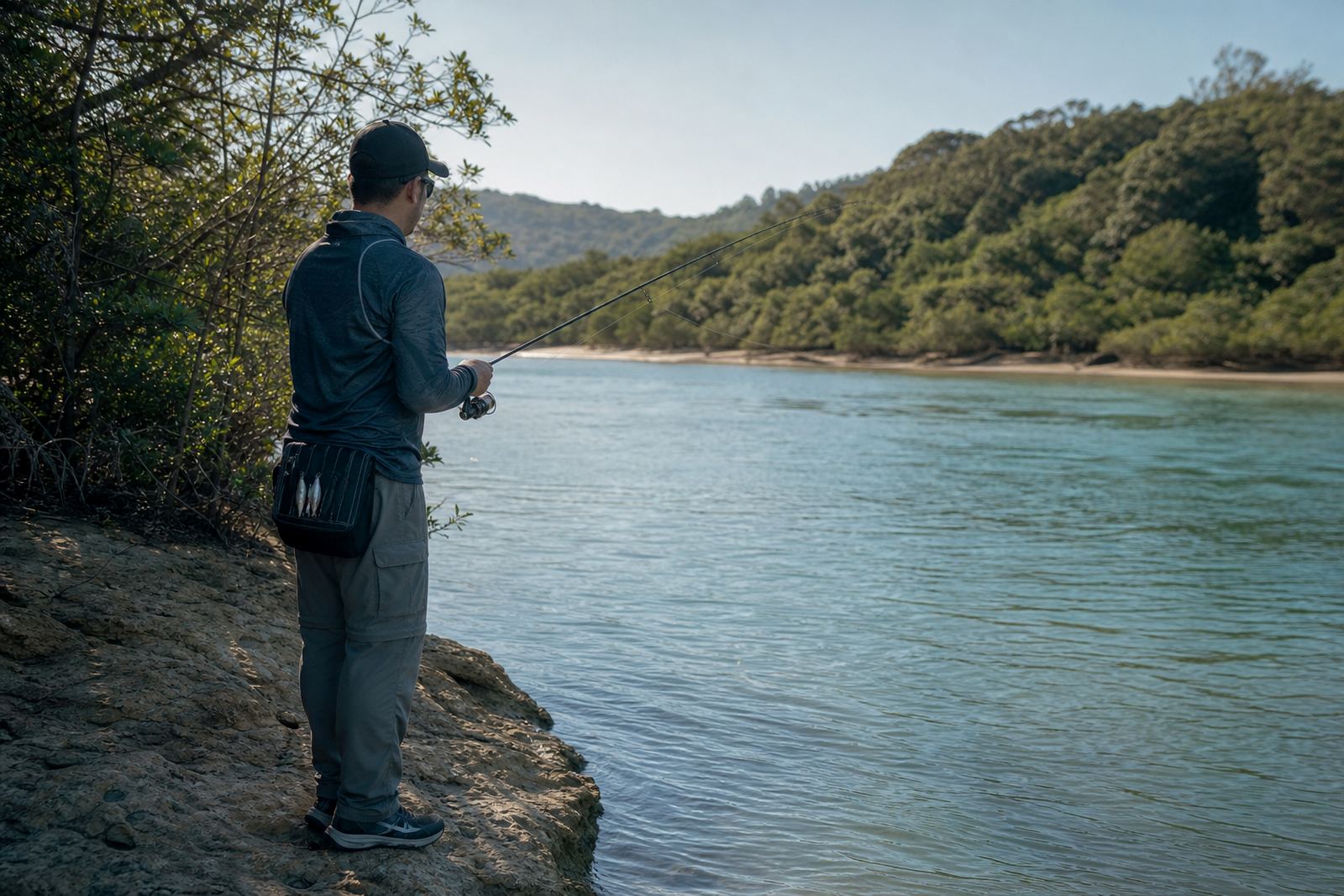
Why estuary fishing asks for a lighter setup
Estuary fishing is about working channels, sandbanks, mangroves and tidal systems with gear that casts well and feels sensitive enough for smaller bites. In Durban and up the coast, that often means targeting grunter, kob, shad, stumpnose and smaller saltwater species in water that changes fast with the tide. A heavy surf outfit can do the job in a pinch, but it usually makes bait presentation poorer and tiring work on long sessions.
For most anglers, the sweet spot is a light to medium rod around 7 to 10 feet, matched to a reel that lays line evenly and holds enough for a longer run. Line choice matters too. Thin braid gives better feel around drop-offs and snags, while mono is still a sensible option for those who want a bit more stretch. In warm KwaZulu-Natal estuaries, salt build-up and sand get into moving parts quickly, so regular cleaning is not optional.
Typical tackle that covers most estuary sessions
A good estuary kit does not need to be complicated. You want enough variety to handle bait fishing near structure, light spooning, and a spare trace or two for changing conditions. For anglers starting out, the focus should be on dependable basics first, then extras later.
- 7 to 10 foot spinning rod with a medium light to medium action
- Reel in a size that balances the rod and holds enough 10 to 20 lb line
- Braid or mono main line, plus fluorocarbon or mono leader
- Small hooks in the right sizes for sardine, prawn and chokka baits
- Running sinkers, split shot, swivels and clips
- Trace material, floats and a small selection of lures or spoons
- Landing net, pliers and a simple tackle pouch
If you fish around Durban Bay, the Tongaat area, Knysna style systems or the calmer estuary mouths near East London, keep a second setup ready with a lighter sinker and smaller hook. That flexibility saves time when fish move off the deeper holes and into the shallows on the push tide.
How to plan your layout before the tide turns
Good estuary fishing starts before the first cast. Look at where fresh water meets salt, where channels narrow, and where sandbanks create a current edge. Fish often sit on the side of the flow, not in the fastest water itself. If you are fishing from the bank, choose a position that gives you room to move when the tide changes, especially in narrow mangrove systems or around mud banks that can cut off access.
Timing is usually the biggest factor. Many anglers do best on the push tide and the first part of the run-out, when bait gets carried past holding areas. Clear water can help sight fishing, but slightly coloured water after rain is often productive too, as long as it is not filthy. In places like Pietermaritzburg anglers head to estuary systems further afield on weekends, while Cape Town and Gqeberha anglers often work around wind, swell and river flow before deciding whether to bait fish or throw lures.
- Arrive early and check access, mud depth and parking rules
- Match bait size to the species and water clarity
- Keep rigs simple so changing sinker weight is quick
- Fish the pressure edge, drop-offs and points first
- Carry water, a torch and a dry cloth for hands and reels
Bait choices that work in channels and tidal edges
Estuary bait selection should suit the species and the size of the fish you expect. Small bait often outperforms a bulky offering, especially when fish are feeding cautiously. Sardine strips, prawn, chokka and sandworm are common choices, and fresh bait usually gets more takes than frozen bait that has been left too long in the sun. In Durban humidity, bait softens quickly so keep it cool and tidy in sealed containers.
For grunter and stumpnose, neat presentations matter. A smaller hook, a tidy bait wrap and enough weight to hold the bottom without dragging works better than overloading the rig. For kob in deeper channels, a slightly bigger trace with a stronger hook is a safer option. If you are trying lures, keep them light enough to work around weed and not sink into soft mud. A few extra traces in the tackle bag saves a lot of frustration when one gets rubbed off on oysters or rock edges.
- Sardine for scent and quick interest
- Prawn for finicky fish in shallower water
- Chokka for durability on longer sessions
- Sandworm where legal and effective in your area
- Small spoons and soft plastics for active fish
Common mistakes that cost fish and money
Most estuary mistakes are simple to avoid. Anglers often fish too heavy, use hooks that are too large, or ignore the tide and set up in dead water. Another common issue is rushing the cast and letting the rig land with too much slack, which leaves the bait poorly placed or tangled around the leader. In tidal systems that can mean the difference between a bite and a blank morning.
Reel care is another weak point. Sand and salt creep into the drag system, especially after a windy session at the mouth or a long day on the mudbanks. If the drag starts sticking, or the line lays badly, get it checked before the next trip. A small service can save a reel that might otherwise wear out early. We also see anglers overlook local rules on access, bag limits and no-take areas, which is a costly way to learn.
- Using one sinker weight for every current speed
- Fishing bait that is too big for the venue
- Ignoring reel rinse and line wear after a salty session
- Standing in unsafe mud or blocking access paths
- Not carrying a spare trace, hook and sinker
Budget ranges for estuary fishing in Rand
Budget depends on whether you are starting from scratch or replacing a few parts. A basic estuary starter setup usually sits in the lower range if you are buying one rod, one reel, line and a small tackle kit. If you want better balance, smoother drag and extra traces for regular fishing in Durban, Ballito or Cape Town, the cost climbs, but not by much if you buy carefully.
As a rough guide, a beginner package can start from around R1 200 to R2 500. A more comfortable mid-range setup often sits between R2 500 and R5 500. Anglers who want a lighter second outfit for specific estuary work, plus spare line, bait traces and repair work, may spend from R5 500 upward. If you already own a reel that only needs spooling, drag tuning or guide repair, you can keep costs down and still improve your results. For bulk club orders or group trips, the unit cost often drops when the basics are ordered together.
If you are not sure what to buy, bring your target venue, usual bait and budget to us and we will help you match the tackle to the water rather than overspend on gear you will not use.