What dam bank fishing asks of your tackle
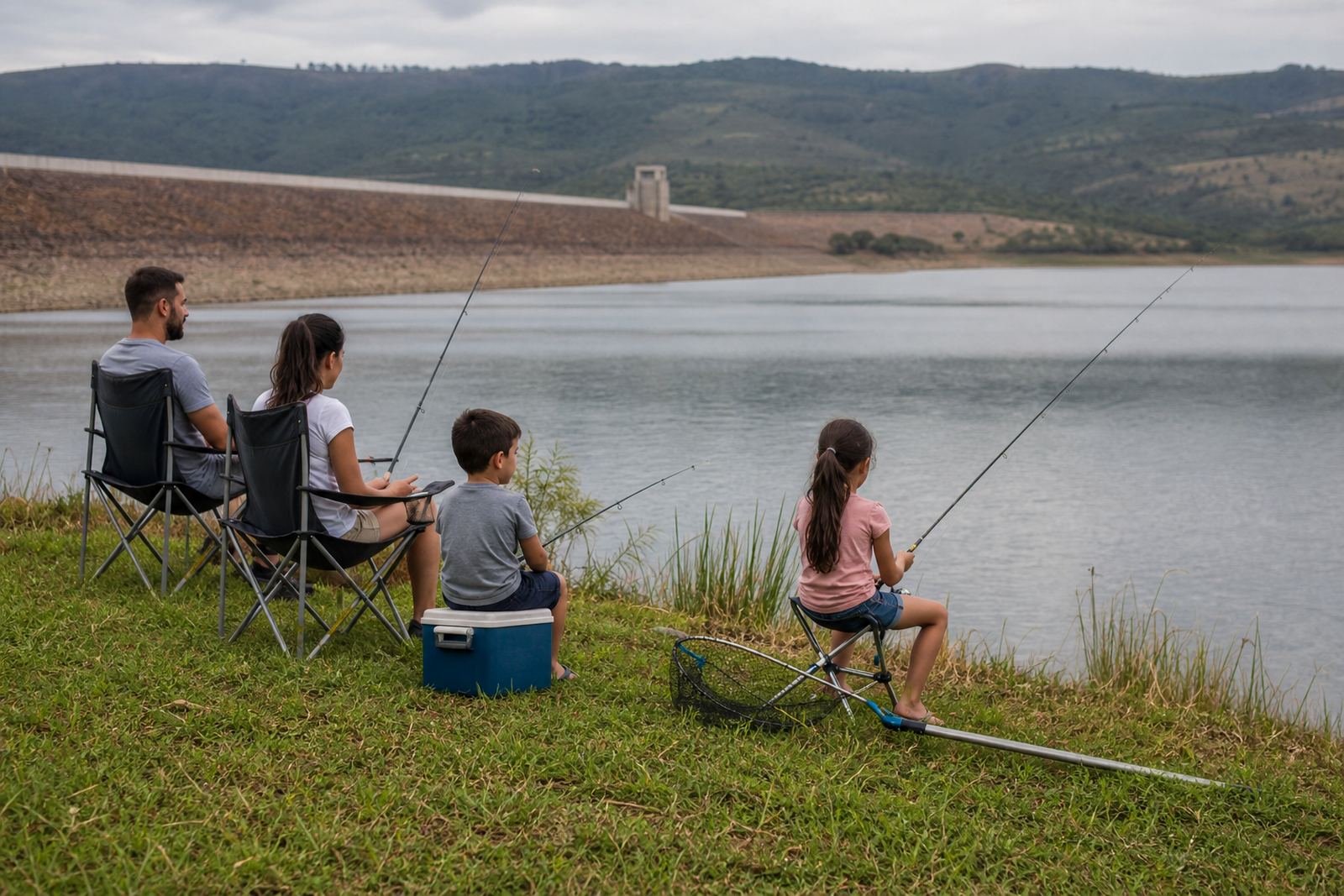
Bank fishing looks simple, but the right setup makes a big difference when you are casting from uneven ground, moving around the shoreline, or fishing a long session with the family. You need tackle that can cast accurately, handle a range of sinker weights, and stay comfortable when you are holding rod after rod for hours at a time.
For still water dams around Durban, Pietermaritzburg, Johannesburg and the inland Free State, the main factors are cast distance, bite detection and fish control. In windy conditions or when fishing a broad bank, a slightly longer rod helps. On smaller municipal dams or tighter spots, a lighter setup is often easier to manage and less tiring.
Coastal humidity in KwaZulu-Natal can be hard on reels and hooks, so basic care matters. Rinse gear after use, dry it properly and keep terminal tackle sorted so you are not tying knots with cold fingers at first light.
A practical bank fishing kit for beginners and regular anglers
A sensible dam bank kit does not need to be complicated. It should give you enough range to target carp, barbel and other freshwater species without overbuying items you will not use. If you are starting out, a mid-range rod and reel combo with a few useful traces is usually the best place to begin.
- 1.8m to 3.0m rods for short to medium casts, depending on the bank and target species
- Spinning or baitrunner-style reels with smooth drag for controlled line release
- Main line matched to the rod and the fish you expect, often 10lb to 20lb for general bank work
- Hooks, swivels, sinkers, beads and clips for basic rigs and quick changes
- Baits such as dough, maize, worms, boilies and prepared scent options for different water conditions
- Landing net, unhooking mat and bait tub for cleaner handling on the bank
If you are targeting bigger fish, step up to stronger line and sturdier terminal tackle. For casual family fishing, lighter tackle can be fine if the water is not heavily snagged and you are not casting into thick reed beds.
How to plan your spot on the dam bank
Good bank angling starts before the cast. Walk the edge of the water and look for drop-offs, cleared patches, reed lines, shallow shelves and places where the wind pushes food into one area. Fish often patrol the same edges, especially where there is natural shade or a change in bottom depth.
If you arrive early, take time to map the bank. Decide where you will sit, where the rods will rest, and how you will move if the bite comes on. That planning helps with safety too, especially when fishing with children or in public areas where the ground can be uneven.
- Keep rods spaced out so lines do not cross on a take
- Place bait and tackle within arm’s reach, not behind your chair
- Set up away from steep edges, slippery clay and loose grass banks
- Use a bite alarm or simple visual indicator if you are fishing more than one rod
- Check local rules on bag limits, access times and whether a permit is needed at the dam
A small umbrella or shelter helps when the sun is strong, and in summer it can make the difference between packing up early and staying through the afternoon. During load-shedding at home, charge torches and alarms before the trip so your evening pack-down is not a scramble.
Common mistakes that cost bites and money
One of the most common mistakes is buying tackle that is too heavy for the water. Heavy rods and thick line can work, but they are not always needed at a calm bank dam and may reduce how naturally your bait presents. Another problem is poor trace choice. If the hook sits awkwardly or the sinker digs in too hard, you may get taps but no proper runs.
Rushing the setup is another issue. Knots need to be checked, hook points must be sharp and the drag should be set before the rod goes into the rest. A loose knot can cost you a fish, and a poorly tuned reel can leave you fighting line twists all morning.
- Do not use hooks that are too big for the bait you are presenting
- Do not overcast and drag your rig into weed or sticks every second throw
- Do not leave bait in the sun until it dries out and loses scent
- Do not forget a spare line spool, especially on longer sessions
- Do not fish with blunt hooks and expect clean hook-ups
If you are fishing in Cape Town or Gqeberha where weather can change fast, keep a wind plan. A side wind changes casting direction and can move your line across other anglers, so a little adjustment goes a long way.
Budget ranges for a dam bank setup in Rand
For most anglers, budget depends on how often you fish and whether you want one all-round setup or a more serious kit for specimen work. You can start small and still fish well if the components are matched properly.
- Starter bank setup: R850 to R1 800 for a basic rod, reel, line and essential terminal tackle
- Mid-range all-round setup: R1 800 to R4 500 for better casting, smoother drag and stronger accessories
- Specimen-focused setup: R4 500 to R10 000+ for upgraded rods, reels, alarms and heavier support gear
- Accessories and bait: R200 to R800 per outing depending on bait choice, feed and trace changes
It is often better to spend on the reel and line first, then build up the rest of the kit over time. If you fish regularly around Durban or inland on weekends, that approach keeps costs sensible while still giving you dependable gear. A cheap setup that fails on the bank usually ends up costing more in the long run.
How Catches helps with freshwater bank sessions
Our Springfield Park team helps anglers choose tackle for local conditions, from casual dam afternoons to more focused specimen trips. Sibusiso Mthembu oversees the shop, while Ayesha Naidoo, Lwandle Dlamini and Pieter van Rooyen help with practical gear choices for coastal and freshwater waters. Nokuthula Khumalo keeps bait and stock organised, and Jason Petersen handles reel servicing, repairs and line work when equipment needs attention.
If you need a starter setup, trace advice, bait prep guidance or a bulk order for a club day, we can help you match the kit to the kind of dam bank fishing you plan to do. Clients across Durban, Umhlanga, Ballito, Pietermaritzburg, Johannesburg, Cape Town, Gqeberha and East London reach us through the enquiry form on our contact page. That way you can ask the right questions before you spend your Rand.
When the setup is right, dam bank fishing becomes less about guesswork and more about steady, repeatable results. Good tackle, tidy planning and the right bait make the day easier and the fishing more enjoyable.