When bass want a lure, not bait
Bass lure fishing suits anglers who want to cover water, work structure and trigger reaction bites. In Durban, Pietermaritzburg and inland dams around Johannesburg, the usual pattern is the same: fish hold tight to cover, then move a short distance to feed. That means your setup must cast cleanly, work a lure with feel, and pull a fish out before it wraps in reeds or timber.
A good lure-focused outfit is not about piling on lots of gear. It is about choosing a rod action, reel ratio and line type that match the water. A lighter setup helps on smaller dams and clear water, while a stronger stick is better when you are fishing heavy grass or flooded timber. If you are new to bass lures, start with one reliable setup and learn how it feels before buying too much tackle.
The most common mistake is fishing a bass lure setup like a general spinning rig. That usually leads to poor casting distance, weak hook sets or line twist. Another issue is using the wrong line for the water. In warm coastal areas with humidity, line memory and storage matter more than people expect, so reels and spools need care between trips.
Typical bass lure setup for South African waters
For most anglers, a sensible starting point is a medium-heavy rod around 6'6" to 7'2", matched with a low-profile baitcasting reel or a strong spinning reel, depending on comfort and budget. Around reeds and timber, braid is popular because it gives direct contact and strong hook-setting power. In clearer water or around shy fish, a fluorocarbon leader can help reduce visibility.
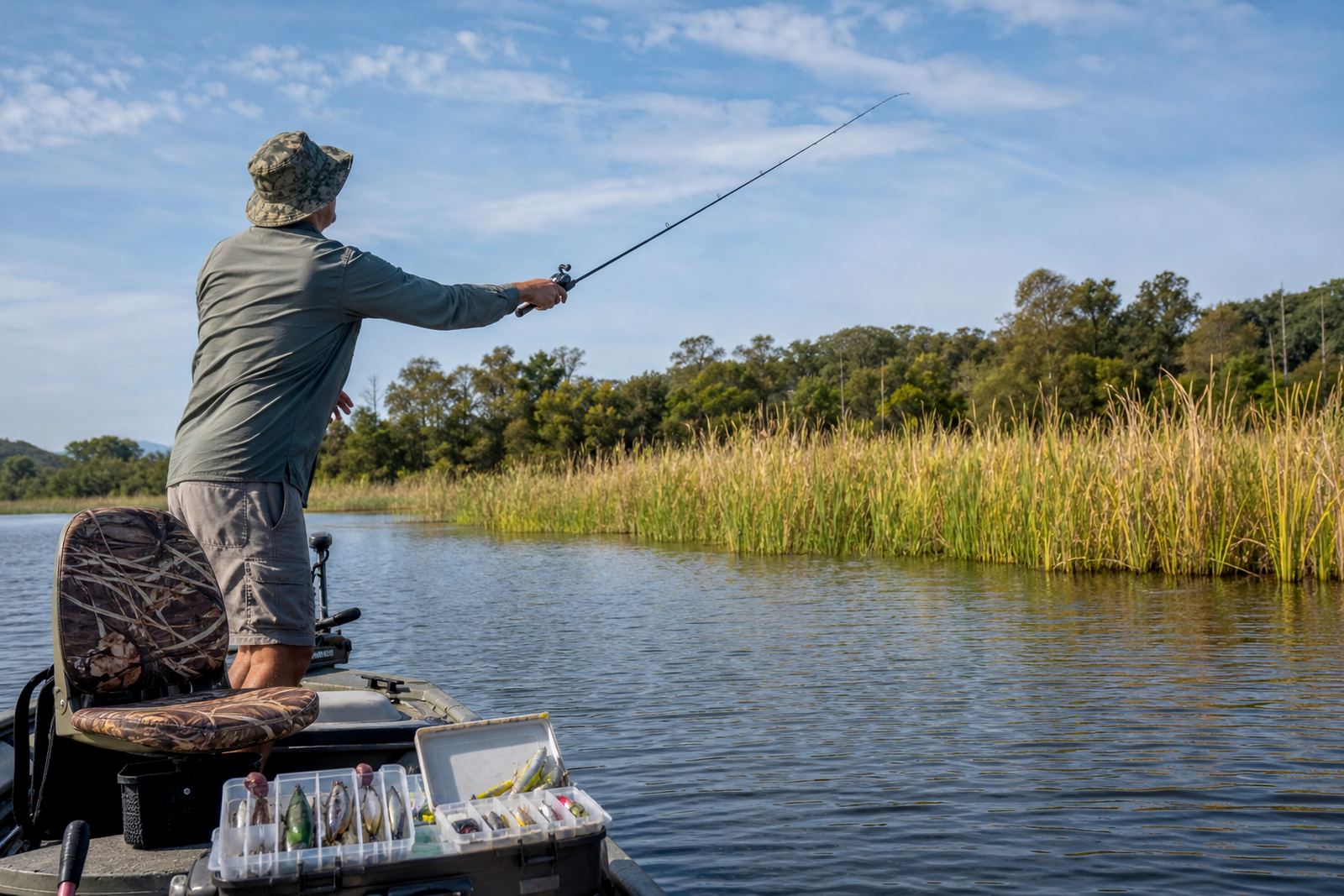
If you fish from the bank in KZN or at farm dams inland, choose gear that casts accurately and does not tire your arm after an hour. If you fish from a boat, you can move a little lighter because you are working the bank and points from different angles. Our team often recommends keeping one outfit for moving lures and one for bottom work, so you are not changing rigs every ten minutes.
- Rod: medium-heavy power for general lure work, heavier action for dense cover
- Reel: smooth drag, steady retrieve, suitable gear ratio for spinnerbaits, cranks or soft plastics
- Line: braid for cover, fluorocarbon for clearer water, mono for budget starters
- Lures: soft plastics, frogs, crankbaits, spinnerbaits and jerkbaits
- Terminal tackle: hooks, weights, swivels, snaps and leaders matched to lure size
Jason Petersen can help with drag tuning and spool setup if the reel feels rough or the line lays unevenly. That small adjustment often makes a bigger difference than people think, specially when you are casting repeatedly to the same target zone.
How to plan a bass session around cover and depth
Good bass fishing starts before the first cast. Look at the bank line, weed beds, submerged timber, rock edges and any depth change near the shore. Reeds and lilies suit weedless rigs. Timber calls for stronger hooks and a rod with enough backbone to turn fish quickly. Drop-offs, drains and points often hold fish moving between shallow and deeper water.
At Springfield Park, we often talk through three questions before suggesting gear: where are you fishing, how deep is the water, and what kind of cover will the lure pass through. That gives you a clean starting point for tackle choice. For example, a small dam in the Midlands may need a finesse approach, while a windy bank on a larger venue can call for a heavier lure with more casting weight.
- Work shallow first in the morning, then move deeper as the sun rises
- Cast past the target and bring the lure back through the strike zone
- Pause near cover, especially around reed gaps and timber shade
- Keep a landing net ready if the bank is high or muddy
- Carry pliers, spare leaders and a small tackle pouch for quick changes
For anglers ordering from Cape Town, Gqeberha or East London, planning also means thinking about wind and salt air. Coastal humidity can shorten the life of poorly stored tackle, so rinse gear after use and dry it before packing away.
Common mistakes with bass lure gear
Many anglers overbuy lures and underbuy the basics. You do not need every colour in the tray to catch bass. Start with a few proven profiles and sizes, then learn when to switch. In murky water, darker or louder presentations often help. In clearer water, more natural tones may work better. The better approach is to match the lure to the place and season, not just the latest trend.
Another common mistake is using line that is too light for the cover. If a bass dives into reeds or roots, thin line may cost you the fish. On the other hand, line that is too heavy can kill lure action. It is worth checking knot strength as well, because a poor knot is a fast way to lose a good fish, and that is never fun after a long drive to the water.
Starter anglers also rush their retrieve. Bass often react to pauses, lifts and changes in speed. A lure that works slowly through timber on one cast might need a quicker hop on the next. That is why we suggest testing one lure style at a time until you understand how it behaves in real water, not just in a packet.
Budget ranges for bass lure fishing in Rand
There is no single price for a bass lure setup, but it helps to budget by level. If you are starting out and want one dependable outfit for local dams or weekend trips, a practical entry setup usually falls around R900 to R2,000. That can cover a rod, reel, line and a few basic lures if you choose carefully.
A more balanced mid-range outfit for regular anglers often sits between R2,500 and R5,500. This range gives you better reel smoothness, stronger rod blanks and more consistent line performance. It is a sensible bracket for anglers fishing from Durban to Johannesburg who want one outfit that can handle both soft plastics and moving lures.
If you fish often, chase bigger fish, or spend time in heavy cover, higher-end combinations can move beyond R6,000 depending on reel choice and rod spec. That is where servicing matters too. Reel servicing, drag tuning and line spooling can keep the setup performing well, which saves money over time.
- Starter kit: rod, reel, line, basic hooks and a few lures
- Regular angler kit: better drag, improved rod sensitivity, extra terminal tackle
- Cover fishing kit: stronger braid, heavier hooks, leaders and weedless rigs
- Maintenance: servicing and repairs for reels used in salt and freshwater
Nokuthula Khumalo can also help with bait prep advice when anglers want to mix lure fishing with live bait or backup bait options for the same trip.
What Catches supplies for bass lure anglers
We stock rods, reels, terminal tackle and bait for anglers across South Africa, with practical support from Durban to Cape Town and the inland orders we pack daily. If you need a lure setup for reeds, timber or drop-offs, we can help you choose the right combination for the way you fish and the water you visit most often.
Our team includes Sibusiso Mthembu, Ayesha Naidoo, Lwandle Dlamini, Pieter van Rooyen, Nokuthula Khumalo and Jason Petersen, so you get advice from people who understand coastal and freshwater conditions. Lwandle handles coastal tackle questions, Pieter helps with freshwater gear, and Jason sorts reel servicing, repairs and line work when your setup needs attention.
Anglers in Durban, Springfield Park, Umhlanga, Ballito, Pietermaritzburg, Johannesburg, Cape Town, Gqeberha and East London can reach us through the enquiry form on our contact page. Whether you need a first bass lure setup or a tuned outfit for regular trips, we will help you build something practical that suits local waters.