Read the wind before you rig up
Start by standing still for a minute and watching where the wind is coming from and how it affects the water. On the Durban beachfront, an onshore wind can turn a clear cast into a spray-filled effort, while a side wind may push your line into the wash and drag your bait off line. If you arrive at a harbour wall, beach, or rock ledge without checking this first, you will waste time and bait very quickly.
Look for gullies, points, sandbanks, and darker water where the wind is pushing food. In many spots around KwaZulu-Natal, the best fishing is not in the calmest patch but in the area where the water is being worked by wind and current together. That is where you can often find eddies, baitfish, and feeding fish holding just out of the worst chop.
Match your tackle to the gusts
In windy conditions, heavy tackle is not about showing off, it is about control. A slightly heavier sinker helps hold bottom better and keeps your bait where you want it. If your line is too light for the wind, the bow in the line will make bite detection harder and can pull a bait across the sand. This is one of the most common mistakes for shore anglers heading out from Durban to Ballito or even further up and down the coast.
Choose a rod that loads smoothly and a reel that lays line evenly. A reel with a poorly filled spool can put extra loops into the cast and make things worse in a head wind. Keep your leader neat and check knots carefully because wind can expose any weak point fast, and once a knot slips you are done for the session.
- Use a sinker weight that holds bottom in the wash, not just the lightest option you have.
- Shorten your trace if the wind is tangling your rig before it lands.
- Keep your hook snood tidy and free of twists.
- Pack spare sinkers, hooks, swivels, and a few pre-tied traces.
Casting lower and cleaner beats forcing distance
When the wind is blowing into your face, do not chase distance at the cost of accuracy. A lower side cast or punch cast often works better than a high overhead throw because it keeps the rig under the strongest gusts for less time. If you launch too high, the wind catches the trace, the bait tumbles, and the cast loses both range and direction.
Pick a target before you swing. That can be a sand channel, the end of a gutter, or the edge of a reef patch. On windy days, the best cast is often the one that lands exactly where the fish are feeding, not the one that goes furthest. If you are fishing around a busy public beach, be extra careful with people, swimmers, and loose line drifting down the shore.
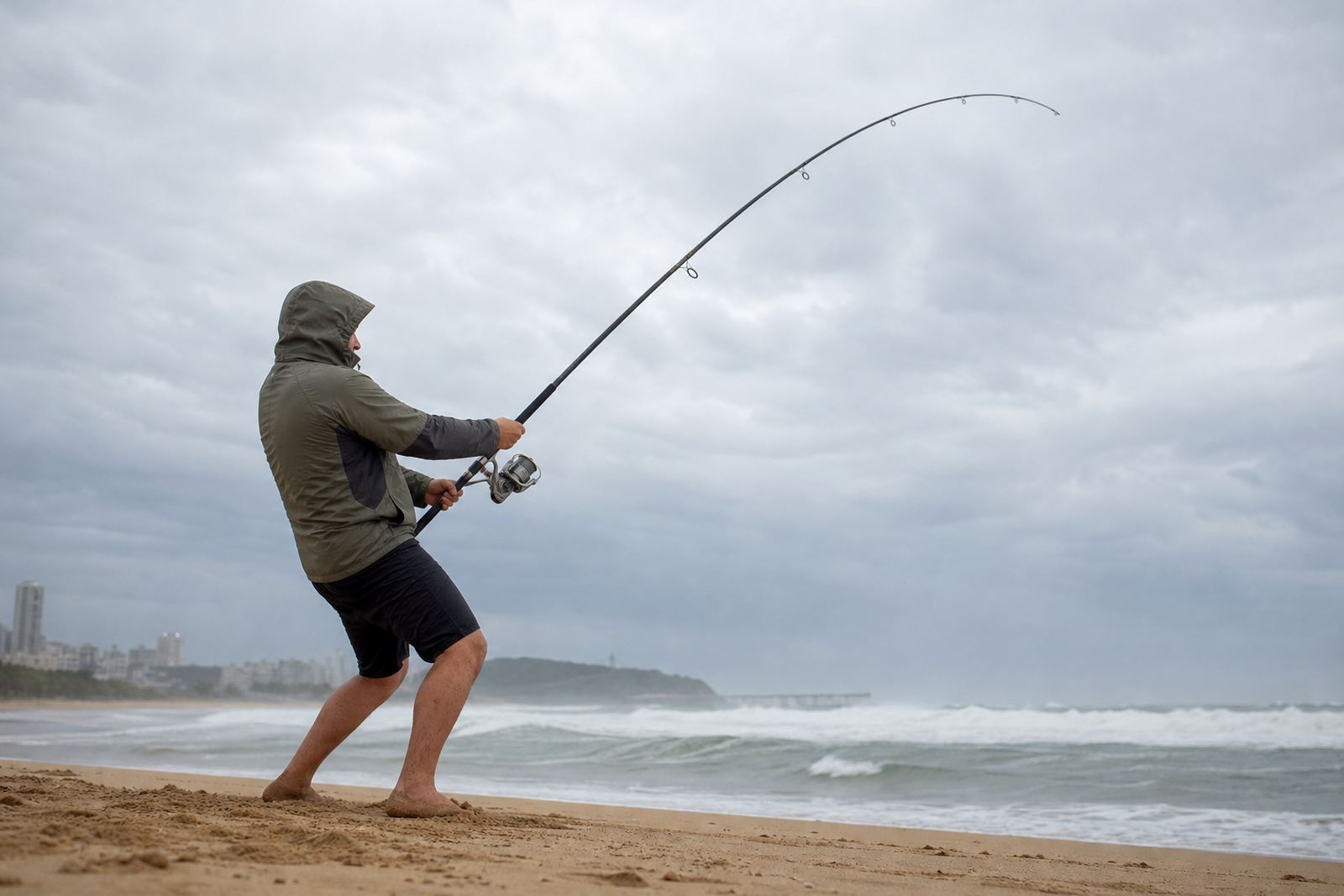
A good habit is to keep your stance side-on to the wind, plant your feet firmly, and let the rod do the work. If you are leaning back or overreaching, your release point changes and the cast goes all over the place.
Use bait and trace choices that stay put
Windy water usually means more movement on the bottom, so your bait must stay presentable. Tougher bait baits better in rough conditions because it lasts longer in wash and does not spin off so easily. If you are on a shore where smaller fish are pecking at every cast, a neater, firmer bait can outfish a larger messy one.
Trace style matters too. A trace that is too long may drift and twist in strong wind, while a shorter, cleaner setup can fish more consistently. If you are using natural bait, make sure it is tied down neatly and not hanging in a way that creates drag. For freshwater spots around Pietermaritzburg or inland dams, the same rule applies when the wind comes up across open water, though the sinker and hook choice may differ.
- Choose bait that grips the hook well in wash and surf.
- Keep trace lengths practical for the conditions, not just standard.
- Check for bait spin after every cast.
- Carry a bait knife and keep bait prep tidy so you are not rushed at the water.
Watch line control and bite detection
Wind makes line management just as important as the cast itself. After the sinker lands, lower the rod tip, take the slack out slowly, and set the line angle so the wind has less surface to catch. If you leave a big belly in the line, you will struggle to feel taps and bumps. That is especially true when fishing surf zones near Durban harbour mouth or exposed beaches where the line is pulled across choppy water.
If the breeze is strong enough to move your tip around, tighten your drag enough to stay in control but not so tight that a sudden run rips the hook out. The right setting gives you a cleaner strike and better control when a fish takes off sideways. Small adjustments here make a bigger difference than most anglers expect.
During load-shedding or late evening sessions, use a head torch or lamp setup that lets you see your line and rod tip clearly. Poor light and wind together are a bad combination, so keep your station organised and avoid loose items blowing about.
Durban conditions: a local example that saves the session
Picture a windy afternoon in Durban, with the sea chopped up and the beach spray moving sideways. Many anglers would pack up too early, but that is often when the fish shift into the edges of the wash. Instead of trying to fish the roughest water, move to a slightly protected section near a gutter, pier side, or a feature that breaks the wind. There is usually a more workable pocket if you walk 50 or 100 metres and look carefully.
That small move can change everything. You may find a calmer pocket with better bottom contact, less line bow, and a cleaner strike zone. The important thing is to adapt quickly rather than keep throwing into the same bad angle. On windy days, success often comes from reading the shore properly and making smaller smarter choices, not bigger casts.
For anglers heading out from Springfield Park, Umhlanga, Ballito, or further afield, the same idea holds whether you are chasing coastal species or fishing freshwater waters inland. Conditions change, but the method stays the same: keep the rig simple, keep the line straight, and fish the best piece of water you can reach.