Why a rod holder matters on the beach or rocks
A good rod holder takes strain off your arms and hands, especially on long sessions where you may be waiting for a bite through changing tides, wind and surf. On a Durban beachfront or a rocky point near East London, that extra stability matters because your rod stays positioned the same way each time, which makes it easier to notice a tap, a slow pull or a sudden run.
It also helps when you are fishing with two rods and need to stay organised. Instead of laying a rod on the sand, propping it against a cooler box or leaning it on a rock, you keep the outfit safe and ready. That matters in fine sand, wet grass or wet rocks where a rod can slip over and pick up grit in the guides or reel seat.
For many anglers, a holder is less about comfort only and more about keeping the whole setup under control. If you are using a circle hook or waiting on live or cut bait, your rod position can affect how well you spot movement and how quickly you respond.
Choosing the right holder for your fishing spot
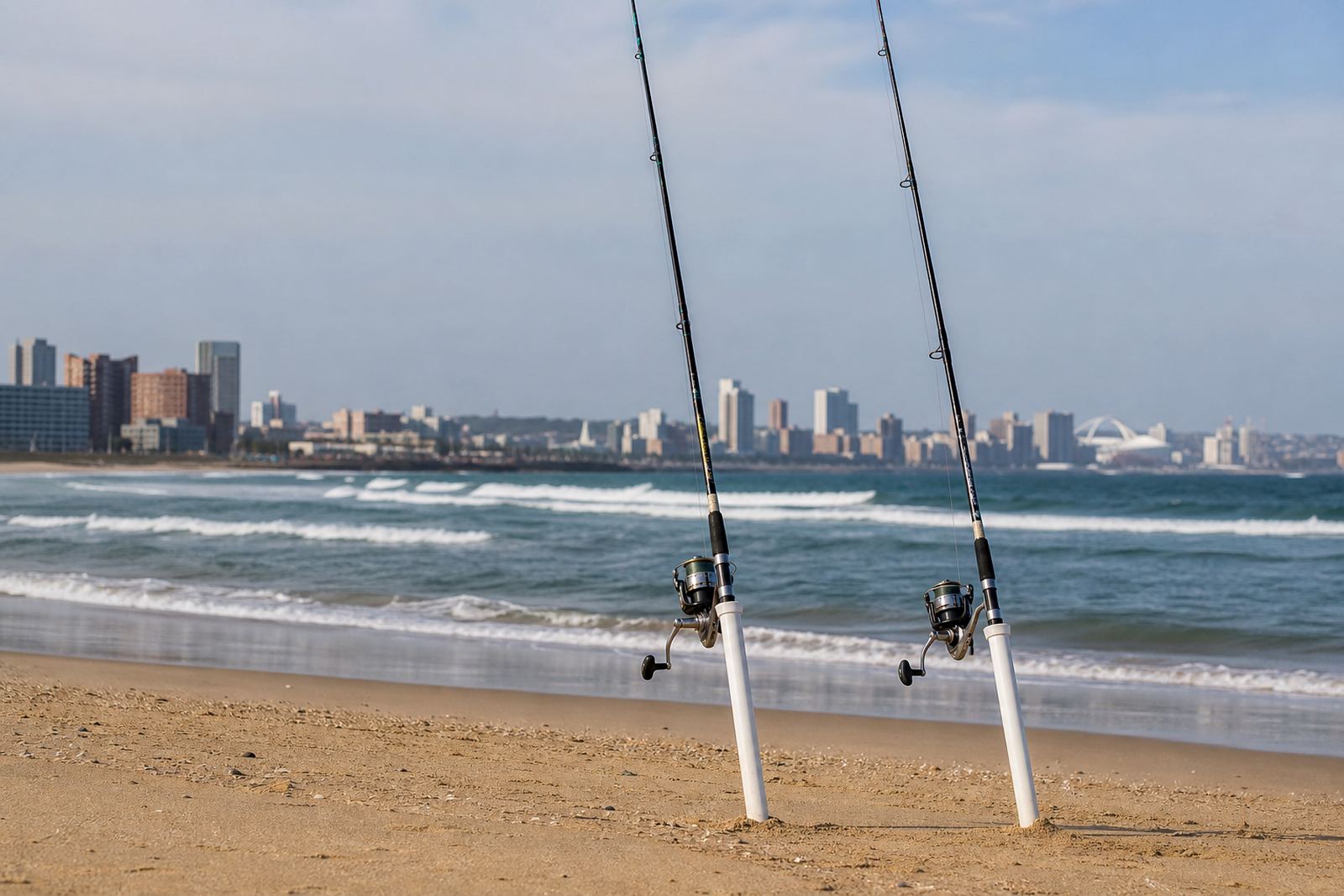
Not every rod holder suits every place. Shore anglers need to think about ground type, rod length, surf strength and how often they move spots. A sand spike works well on open beaches around Umhlanga or Ballito, while a sturdier metal spike or rock stand is better when you are fishing from a hard-packed ledge or reef edge.
If you fish freshwater dams or riverbanks inland, you may want a holder with a wider base or a design that grips soft bank edges without sinking too deep. The key is matching the holder to the ground and to the style of fishing. A heavy outfit with a bait runner reel needs more support than a light spinning rod used for smaller species.
- Sand spikes suit beaches and soft ground
- Rock holders suit reefs and uneven rock ledges
- Adjustable stands help on mixed ground and riverbanks
- Longer spikes give better hold in loose sand
- Wider frames help when using heavier rods and surf tackle
In coastal areas with strong wind and spray, choose a holder that will not wobble every time a wave pushes in. On the inland side, think about soil firmness and whether you need a holder that can be moved quickly between spots.
Getting the angle right for bite detection
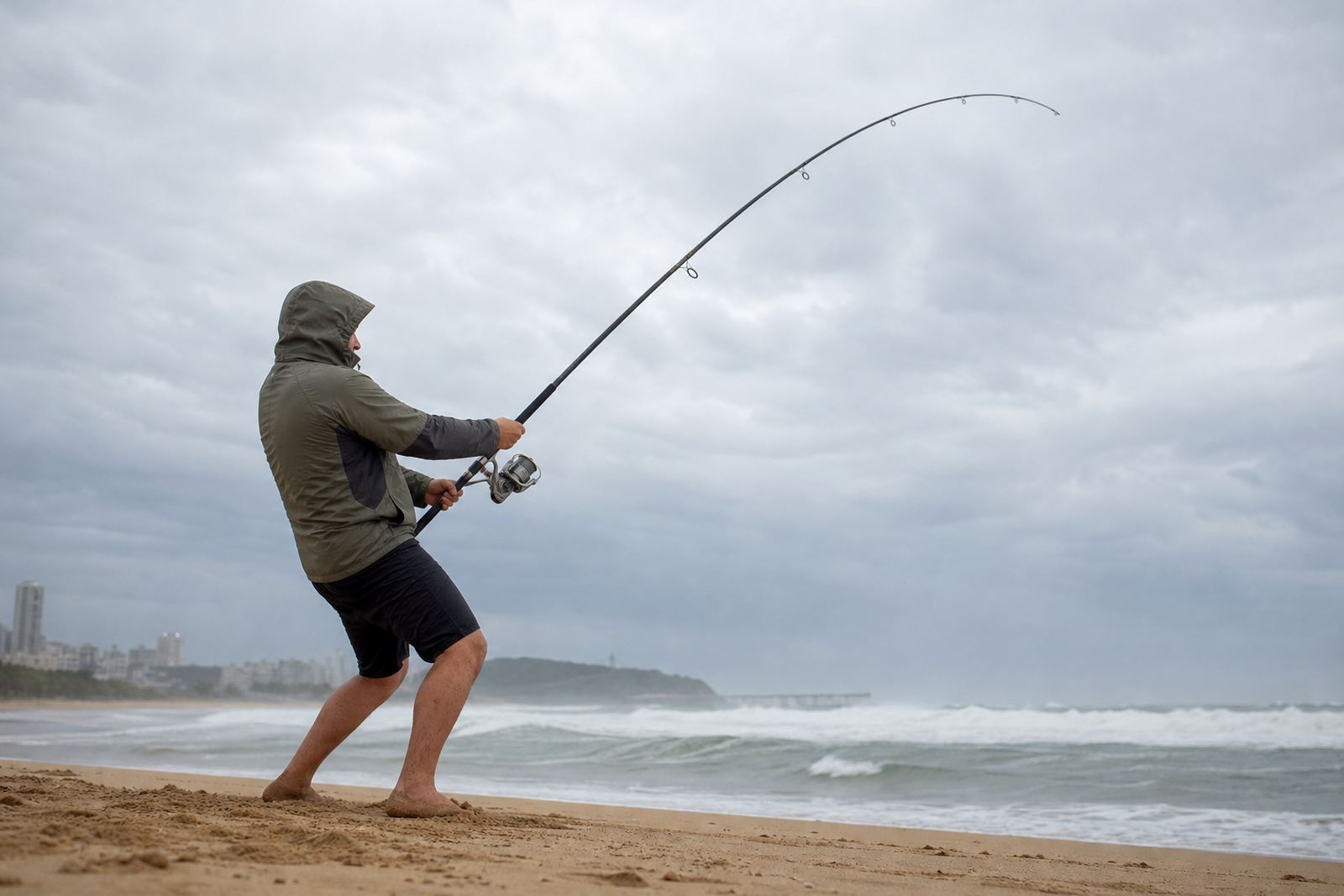
The angle of the rod in the holder can change how you fish. A rod set too high can catch the wind and make line control messy, while one set too low may drag line through the water or over rocks. For most shore fishing, a steady angled position keeps the tip visible and the line clear without putting too much pressure on the blank.
When fishing bait on the seabank, a slightly higher tip can help in surf because it reduces line drag from small waves. If the wind is strong, drop the angle a bit and keep the line as straight as possible from the rod tip to the water. That gives you better bait monitoring and reduces the chance of the line being pushed into kelp or wash rocks.
It helps to test the position before you cast out. Set the rod, watch how the line sits and adjust the holder if needed. A small change in height or tilt can make the difference between a rod that sits neatly and one that keeps moving about in the gusts.
How to keep bait and line under control while the rod rests
Using a holder is not only about taking a break. It is also a useful way to check whether your bait is still presenting well. If the rod is secure, you can inspect the tip, feel for tension and decide whether the bait has washed out or been picked clean. That is very useful when fishing for species that mouth bait first before committing.
Line management matters too. A rod in a holder should not have slack that loops around the butt, the reel or nearby tackle. Keep the line clear of stones, weed and foot traffic. If you are fishing with two people, place the holders far enough apart so lines do not cross when a fish runs or when one angler lifts a rod.
- Check for slack after every cast
- Keep spare line away from feet and bait boxes
- Use a clear path so the line does not rub on rocks
- Watch the tip for small movements, not only hard bites
- Reset the rod if the holder shifts in sand or mud
At busy spots, especially on public beaches over weekends, simple organisation saves time and reduces tangles. A neat setup is easier to work with when you need to strike quickly.
Safety and stability in windy coastal conditions
Coastal fishing around Durban, Cape Town or Gqeberha can bring strong side wind, crashing surf and spray that wets everything. In those conditions, a poorly placed holder can move, tilt or pull out of the ground. If the rod falls, you may lose the line angle or damage a guide, tip or reel handle.
To keep things stable, push the holder in firmly and test it before loading the rod. If the sand is soft, press it deeper and angle it slightly against the wind. On rocks, make sure the base sits flat and does not rest on loose pebbles. On some spots, it helps to turn the rod butt so the wind pushes against the holder rather than lifting the outfit.
Also keep people in mind. Never place the rod where walkers, children or other anglers can trip over the line. A holder should support fishing, not create a hazard. In tight areas, choose a setup that keeps the rod and line contained within your own space.
Practical setup habits that make rod holders work better
Good habits make a holder more useful. Before fishing, check that the holder is clean, the spike or base is free of sand and the rod butt fits properly. Make sure the reel drag is set for the target species and the line is spooled correctly, because a holder will not fix poor line lay or a drag that is too tight.
Keep a small routine. Set the rod, check the tip, watch the bait, then check again after a few minutes. If the rod is taking on spray or sand, lift it out, wipe it down and reset it. That is especially important in coastal humidity where salt build-up can start quickly on metal fittings and reel seats.
It also helps to carry the right extras with your rod holder kit:
- small towel for wiping sand and spray off fittings
- spare holder or backup spike for softer ground
- headlamp for early starts or late sessions
- pliers for hook changes and line adjustments
- spare trace gear in case you need to reset quickly
If you fish often, a holder becomes part of the whole rhythm of the session. Used well, it gives you more control, less strain and a cleaner view of what the bait is doing.