Why hook pattern matters before you even bait up
A hook is not just a sharp bit of metal. Its curve, gape, shank length and point style all affect how a bait presents and how quickly the hook finds purchase. A small change in pattern can mean the difference between a clean hookup and a missed pull, especially when you are fishing different species and conditions in South Africa.
Coastal anglers often need hooks that hold bait well in moving water and can handle tough mouths, while freshwater anglers may want a pattern that suits worms, dough baits or small live baits. If you are fishing in Durban with strong current or around structure, a hook with the right gap gives your bait space to move naturally without blocking the point. That extra space matters more than people realise.
Match the hook to the bait you plan to use
Start with the bait, then choose the hook. A bulky bait needs a pattern with enough gape so the point stays exposed. A fine bait needs a slimmer shape that will not tear it apart or make it look unnatural. This is one of the simplest ways to improve your fishing without buying more gear.
- Small bait: choose a fine wire hook with a shorter shank for worms, small strips or compact sardine pieces.
- Chunky bait: use a wider gape for prawns, squid strips, pillies or bait fish baits.
- Soft bait: look for a shape that holds the bait without splitting it too quickly.
- Hard bait: a stronger wire and a point that sits open helps with tougher rigging.
For example, if you are fishing a neat bait for kob near Durban harbour edges, a hook with a decent gape can help the bait sit straight rather than bunching up. In freshwater, a smaller, neater pattern is often better for species that inspect the bait closely.
Shank length changes how the bait sits and how fish are hooked
Shank length affects everything from baiting to hook removal. Long shanks are useful when you want easier baiting and a bit more reach, while short shanks can keep the presentation compact. The choice also changes how the hook moves when a fish takes the bait.
Longer shanks are handy for beginners and for baits that need tying on or wrapping neatly. Shorter shanks suit compact rigs and can be a better pick when fish are cautious. In waters around Ballito or Umhlanga, where you may be fishing mixed ground and changing tides, a shorter shank can keep a bait more natural on the drop. In dams around Pietermaritzburg, a longer shank may be easier when you are fishing with worms or preparing a starter setup.
- Long shank: easier baiting, good for some beginner rigs, useful with longer bait profiles.
- Short shank: compact presentation, better for subtle takes, often neater around small baits.
Wide gape, circle or J pattern: what each one is doing
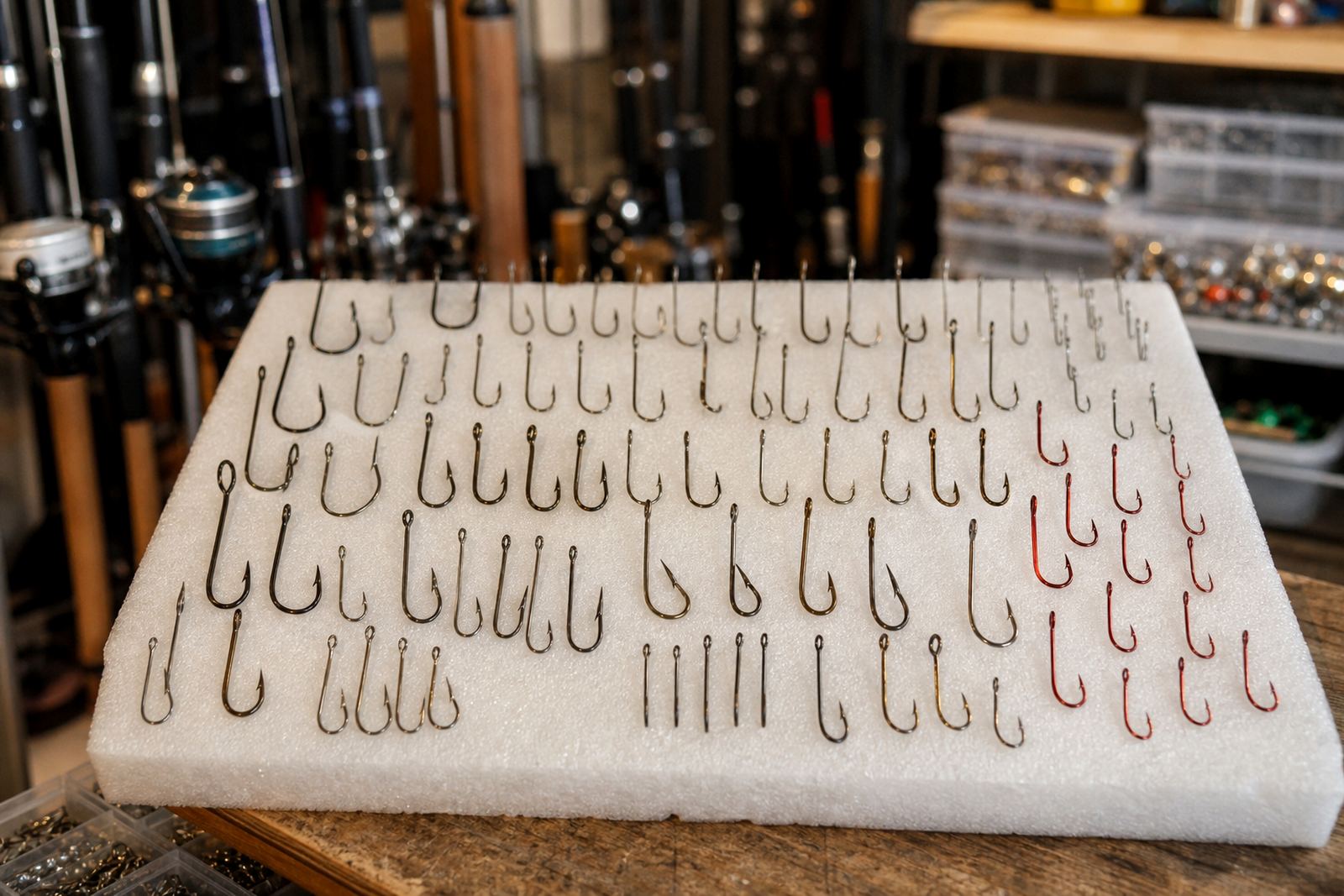
There is no single best hook pattern for every trip. A wide gape hook gives more room between shank and point, so it suits thicker baits and can improve hookup chances when fish suck in a bait and turn away. Circle patterns are usually chosen for corner-of-mouth hook ups when the fish moves off with the bait. J patterns give you a more traditional strike style and suit anglers who like to set the hook themselves.
For coastal fishing, circle hooks can be very practical on baits that sit in the water for longer and where you want a cleaner hold. For freshwater, a J pattern still works well where you need to strike quickly on a small bite. If you are fishing in strong wind around Cape Town or working a busy estuary line in East London, the pattern you choose should suit how quickly you can respond to the take. A pattern that fights your style only makes things harder.
- Wide gape: good for larger bait and better point exposure.
- Circle: useful for steady takes and cleaner hook placement.
- J pattern: suits active striking and many general-purpose rigs.
Point style and wire thickness are worth checking closely
The sharpness of the point and the thickness of the wire can make or break a session. Thin wire hooks penetrate quickly and suit lighter tackle, but they may not be ideal for bigger fish or rough ground. Thicker wire holds up better, though it may need more force to set and can be harder to use with very soft mouths or delicate bait.
Point style also matters. Needle points and slightly turned-in points can bite quickly, while some patterns are better at holding once the fish is on. On rocky marks or around heavier snags, a stronger wire can save you from opening out the hook too fast. In warm coastal water and humid conditions, it also pays to check for rust early and rinse your tackle after use. Salt gets in everywhere, even if you think you kept your gear dry.
A Durban example: choosing hooks for mixed coastal conditions
Picture a Durban angler heading out before work with two goals. First, a quick bait session off the coast; second, a stop later in the week at a freshwater venue. The best hook choice is not the same for both, so carrying a small range is the smart move. One packet with a wider gape for bait fish or squid strips, another with a finer pattern for smaller baits, and a stronger option for rougher ground gives you far more flexibility.
At Catches in Springfield Park, we see anglers often split their tackle by situation rather than by species. That approach saves time. If you already know the bait, the spot and the likely size of fish, you can choose a pattern that gives you better presentation and a cleaner strike. For club anglers making bulk orders or beginners building a starter setup, a mixed hook selection is usually better than buying only one type.
- Pack a compact hook range for coastal and freshwater trips.
- Keep stronger wire hooks for rough ground and heavier fish.
- Use finer hooks when presentation matters more than brute strength.
- Check the point before each session and replace any dull hooks.
Simple rules for buying the right hook pattern first time
If you want to keep it practical, ask three questions before you buy: what bait am I using, where am I fishing, and how do I want the fish hooked? Those answers narrow the choice quickly. A hook that works on a Durban rock ledge may not be the best pick for a light freshwater rig near Johannesburg or a bait session in Gqeberha.
Good hook selection is about matching shape to job, not chasing the biggest pack on the shelf. Once you learn how pattern affects presentation, hookup style and bait choice, your tackle box becomes easier to manage. That means less second guessing on the bank or on the shore, and more time actually fishing.
If you are unsure, start with a small, sensible mix and test them on your regular spots. After a few trips, the patterns that suit your style will stand out clearly. Hook choice is one of those small details that keeps paying off, trip after trip.