Start With the Right Container and Cooler Plan
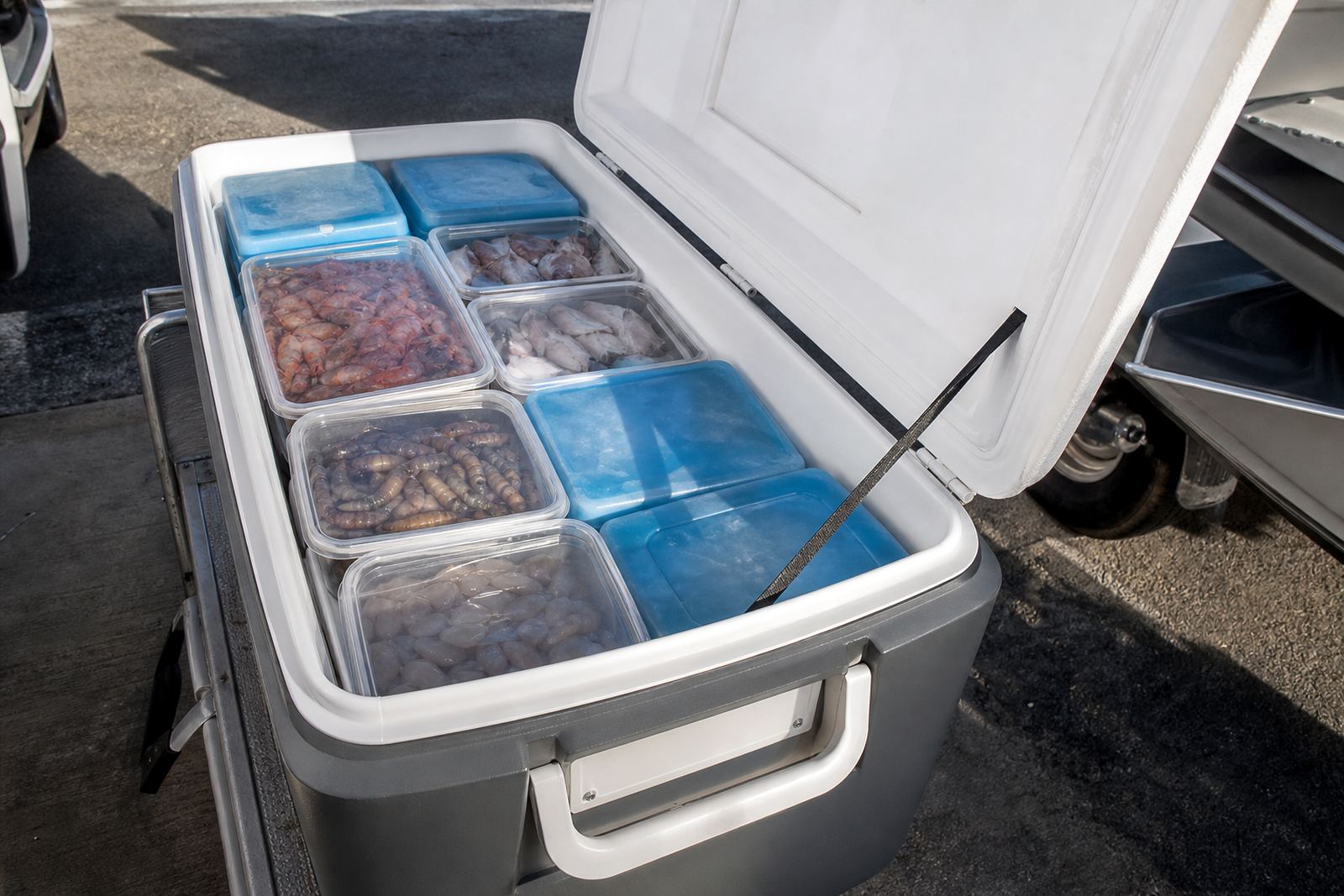
Fresh bait goes off quickly if it is left in thin bags or open tubs. Use sealed containers that close properly, then place them inside a cooler box with enough ice or cooling packs to hold a steady temperature. If you are travelling from Springfield Park to the North Coast, or running through to Pietermaritzburg on a warm morning, that extra insulation makes a real difference.
Keep bait separated by type. Pilchards, sardines, chokka, prawns and worms each behave differently once chilled, so do not let them sit together in a mixed pile. If liquid from one bait runs through another, you lose texture and smell very quickly.
Keep Moisture Under Control, Not Trapped
Too much water can be just as bad as too little. Bait sitting in melted ice water turns soft, breaks apart on the hook, and starts smelling sour sooner. Drain off excess melt water when you can, then replace wet paper or cloth with dry packing where needed.
- Line the base of the cooler with a towel or dry cloth.
- Use small sealed tubs for cut bait rather than loose packets.
- Keep ice in separate bags so the bait does not sit directly in melt water.
- Open the cooler only when necessary to hold the cold inside for longer.
In coastal humidity, especially around Durban and Gqeberha, moisture control is not optional. A bait box that stays too wet for even a few hours can lose bite and become hard to rig cleanly.
Match the Storage Method to the Bait Type
Different bait needs different handling. Soft bait needs cool, steady storage with very little pressure on it. Firmer bait can handle a bit more movement, but still needs clean packing and a cold environment. Worms and live bait need air flow and temperature control, while frozen bait should be kept frozen until you are ready to use it.
- Soft bait: keep flat, chilled and protected from crushing.
- Live bait: store in an aerated container where possible and keep out of direct sun.
- Frozen bait: thaw slowly in the cooler, not on the dashboard or in hot water.
- Cut bait: portion it before the trip so you are not opening the main pack too often.
For anglers heading out early from Johannesburg orders to inland dams, a simple cooler with tidy bait portions saves time on the bank and keeps things manageable when the bite starts.
Handle Bait With Clean Hands and Clean Tools
Contamination shortens bait life. Sand, sunscreen, fuel residue and even old blood from previous bait can affect smell and texture. Wash hands before handling bait, and keep knives, scissors, bait boards and hooks clean. If you are rigging from the tailgate at a launch site, wipe down the area first.
Use separate tools for bait prep where possible. A small bait knife, a pair of scissors and a clean cloth are usually enough for most trips. If bait has been in and out of warm air a few times, do not put it back into the main pack once it has touched the deck or the sand.
Plan for Heat, Travel Time and Load-Shedding
South African fishing trips are not always short or predictable. A trip from Durban to the coast can become a long wait in traffic, and inland trips can involve power cuts at home before you even leave. Freeze what can be frozen the night before, pre-chill the cooler, and pack bait in the order you will use it. That way you are not searching through warm containers at the water.
If load-shedding affects your freezer at home, keep bait frozen as long as possible in the coldest part of the freezer and avoid repeated opening of the lid. Once thawed, use it the same day where you can. Do not refreeze bait that has been left warm for too long, because the texture will usually go poor and the smell changes.
A Simple Durban Routine That Saves Bait
A practical example is a Durban surf angler heading out before sunrise with sardines, chokka and a small live bait container. The bait is packed into three sealed tubs, each placed inside a larger cooler with frozen packs. The angler keeps the cooler in the shade at home, then moves it straight into the vehicle and avoids opening it until the beach is reached. On the sand, only the tub in use is opened and the rest stays cold.
This routine works because it keeps the bait cold, dry and sorted. It also reduces waste, which matters when you are buying bait for a family trip or a club session. A little discipline at the start can save a lot of frustration later on.
- Pack bait in small usable portions.
- Keep the cooler out of direct sun.
- Use the bait you need first and leave the rest sealed.
- Check bait condition before every session, not after.
With the right storage habits, bait stays usable for longer and rigs go in the water looking better. That often means better presentation, fewer break-offs and less money lost to spoiled stock.