Why colour matters when the light drops
When the sun is low, colour contrast matters more than fine detail. In the first and last hour of the day, fish are often feeding close to structure, banks, harbour walls or reef edges, and they react to a lure that they can pick out quickly. In clear water they may still notice subtle shades, but in dirty water or heavy chop they rely more on shape, flash and movement.
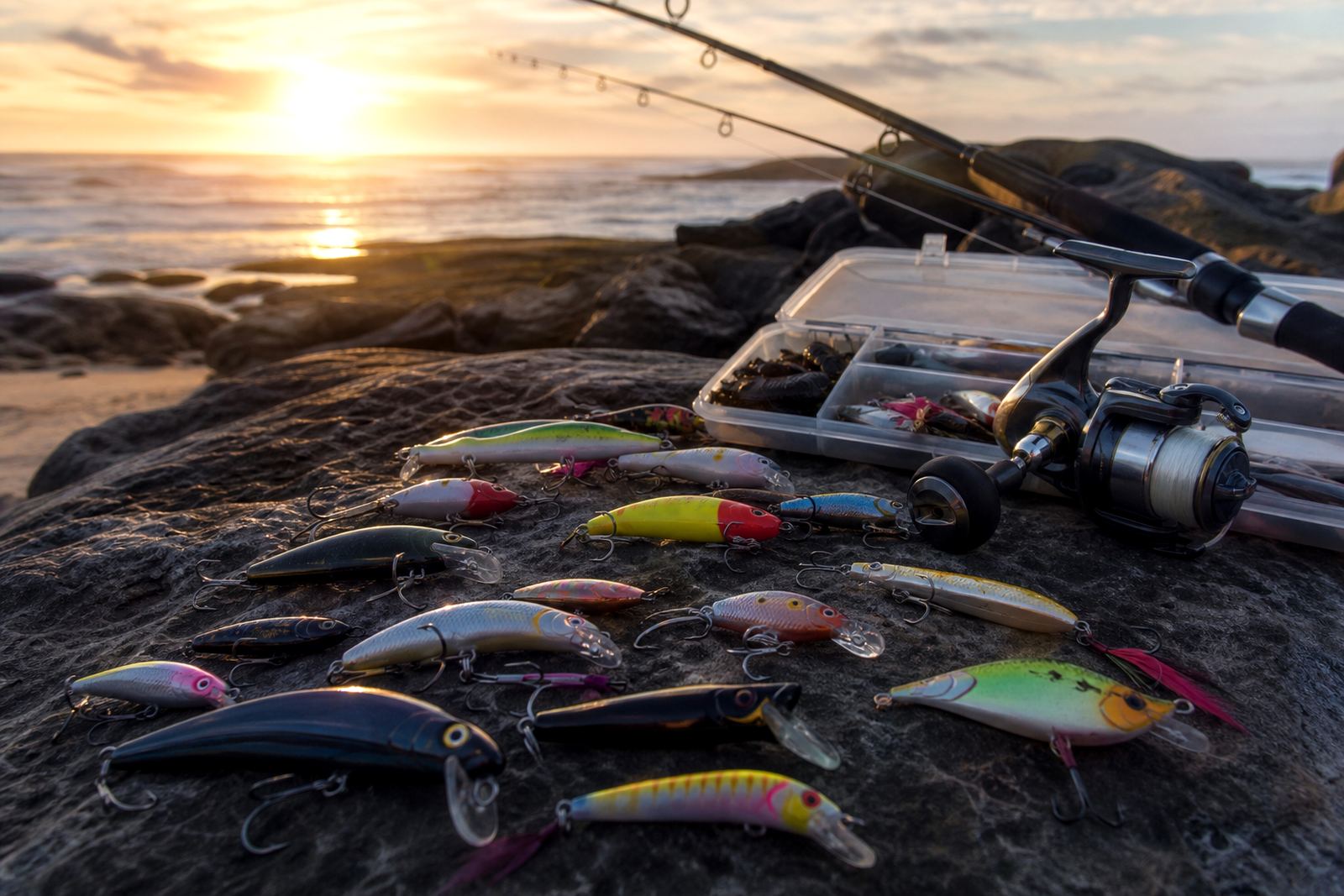
A common mistake is to think there is one perfect colour for all low light fishing. That is not the case. Water colour, cloud cover, depth and the species you are targeting all change how a lure appears. A silver bait in clear dawn water can look lively and natural, while that same bait in tea stained water may disappear too quickly. Sometimes a brighter profile is needed, even if it seems loud on the tray.
Best lure colours for dawn sessions
Dawn is often the easiest low light period to fish because the light is soft but not gone. In these conditions, natural shades usually work well when the water is clear or only slightly coloured. Silver, pearl, white, olive and sardine style patterns are steady choices for surface lures, spoons and soft plastics. They mimic baitfish without shouting too much.
If you are fishing the Durban beachfront or an estuary mouth before sunrise, start with a baitfish colour that has some flash. Add a lure with a dark back if the sky is still dim, because that helps the fish see the outline from below. For species that hit hard and fast, a lure with a small amount of glow on the belly can be a useful extra cue.
- Clear water: pearl, silver, light blue and white
- Slightly coloured water: sardine, chrome and translucent grey
- Very early light: dark back with bright sides for better silhouette
- Topwater: natural baitfish patterns with a little flash, not too much
What works at dusk and after overcast weather
Dusk is different from dawn. By the late afternoon, the light angle changes and shadows become stronger. That is when contrast can help more than realism. Fish still feed, but they may be looking up into a darker sky or pushing in under overhangs, mangroves and pier lines. In these moments, darker colours often stand out better than pale ones.
Black, dark purple, deep green and blue back lures can be very effective when the light fades. These colours give a clear shape against the surface. In overcast weather, many anglers do well by carrying both natural and darker options, then changing after the first few casts if there is no interest. A good rule is simple: if the lure blends in too much, go darker; if it looks too heavy, lighten it up.
- Late afternoon: black, purple, dark green and blue back patterns
- Cloud cover: try darker outlines first, then move to brighter belly colours
- Windy chop: use stronger contrast so the lure is easier to pick out
- Low sun on the water: avoid tiny pale patterns that vanish in glare
Clear water, dirty water and the colour shift
Water clarity changes the game more than many anglers realise. In clean water, fish often have more time to inspect a lure, so a natural finish can look right. In dirty water, after rain or a stirred up surf line, colour washes out quickly and the fish may only see the outline and vibration. That is when strong contrast or brighter tones earn their place.
In brown river water around KwaZulu-Natal, a glow belly or chartreuse accent can make a lure easier to track. On the other hand, in a clear Cape point with light swell, a pale baitfish pattern may get more attention. The trick is to think like the fish. If visibility is poor, make the lure easier to find. If the water is clear, make it look believable. Keep a simple spread in your tackle box so you can change fast.
Matching lure colour to the species you want
Different fish behave differently in low light. Some hunt by sight more than others, and some respond better to flash, while others want a tight, natural profile. For coastal anglers, tailor the colour choice to the likely feed pattern. If baitfish are spraying, a silver lure with a slim body can be a strong option. If fish are hanging deeper or following structure, a darker profile with a steady retrieve may be better.
Freshwater anglers should think the same way. In dams and rivers, overcast mornings often suit natural colours, but a bright accent can help when the water is stained. The best approach is to keep one lure box for low light and build it around contrasts that make sense in the water you fish. Do not overcomplicate it, keep the changes small and purposeful.
- Fast moving surface feeders: silver, white and chrome for quick flashes
- Structure fish: darker backs and solid silhouettes
- Stained water: brighter accents and glow details
- Clear dams: natural baitfish and muted finishes
A Durban example from first light to full sun
On a Durban harbour or beachfront session, the first cast often tells you a lot. At first light, a silver and white lure can get attention fast when baitfish are active near the edges. If the sky stays grey and the water has a bit of colour, shifting to a darker back or a lure with more contrast may produce better follows. By mid morning, once the sun is high, the same lure that worked at dawn might need a deeper running or more natural finish to keep interest.
That is why local anglers should think in stages, not just in one lure choice. Bring a small set of colours and change as the light changes. A good day on the water often comes from making one or two smart adjustments, not from throwing everything at the spot. At Catches in Springfield Park, we see this pattern often, especially from anglers planning quick sessions before work or after school runs. Small changes in colour can save a session, and no one wants to waste the best hour of the day.
A simple low light colour plan for your tackle bag
If you want a practical plan, carry a small low light range rather than every colour on the shelf. Pick options that cover clear water, stained water and fading light. That gives you enough flexibility for coastal and freshwater fishing without overloading your bag. Focus on contrast, flash and silhouette first, then worry about fine detail if the fish are active.
Before a dawn or dusk trip, check your lures under a torch or in dim light. Ask yourself which one is easiest to see at arm’s length. That simple test often shows which colours will work when the sun is low. If you are unsure, start with a natural baitfish shade, then move to a darker pattern or brighter accent if you do not get follows. It is a practical way to fish the light, not fight it.
- Pack one natural colour, one dark colour and one high contrast option
- Use flash in clear water, stronger contrast in dirty water
- Change colour with the light, not only with the tide
- Keep your go to lures ready before the first cast