Start With the Water You Are Fishing
In an estuary, the rig should suit the place before it suits the fish. A shallow mangrove edge near Durban needs a lighter setup than a deep channel mouth at high tide, and a sandbank with moving water calls for less lead than a deep, slow basin. Keep your terminal tackle simple so the bait behaves naturally and does not spin or drag across the bottom.
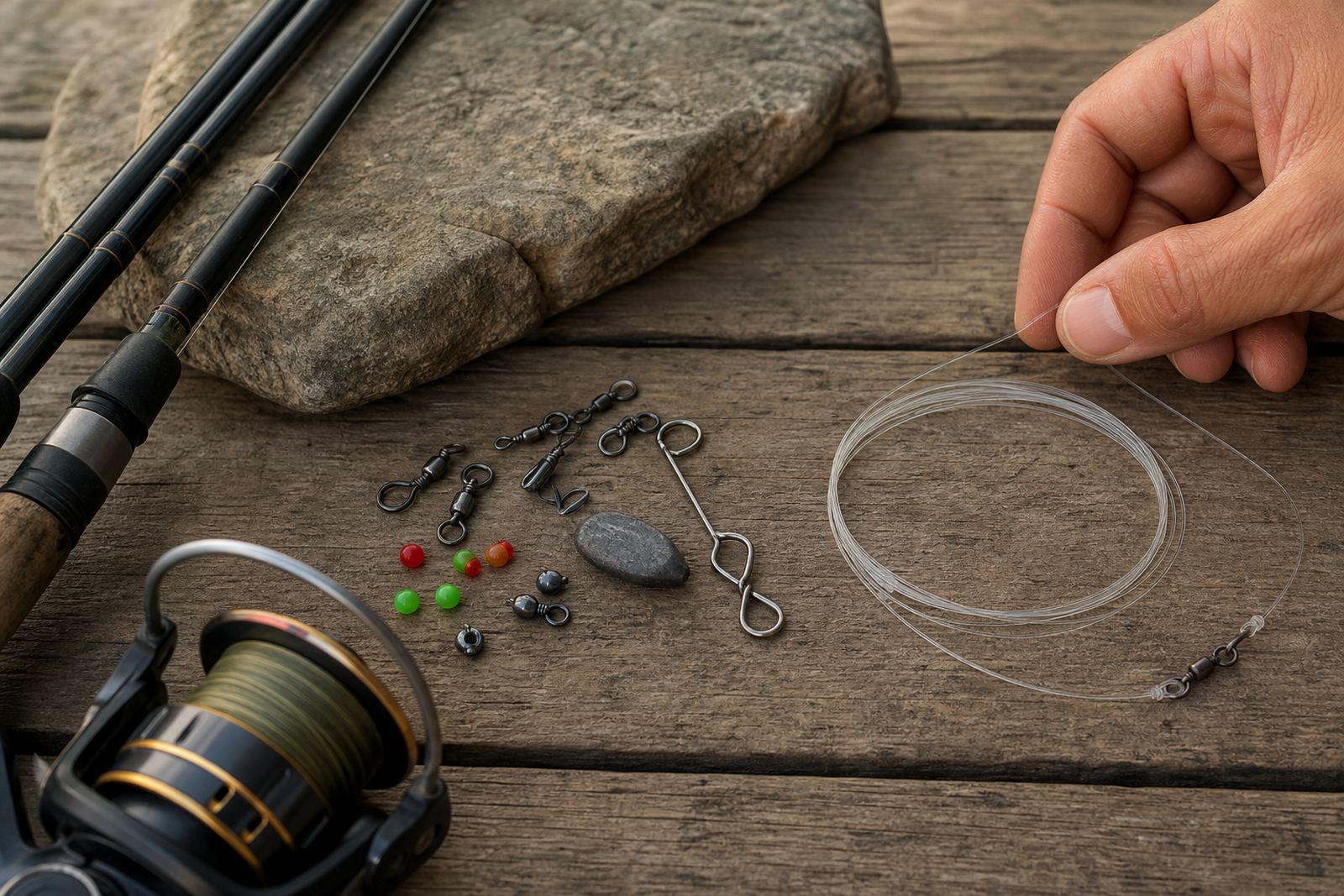
For most local estuaries, carry a small selection of sinkers, swivels, hooks and trace material rather than one heavy rig for everything. If the water is clear and calm, go lighter. If the tide is pushing hard or the bottom is snaggy, step up a size or two and shorten the trace a bit. That small adjustment often makes the difference between a bait sitting properly and one that never gets noticed.
The Basic Sliding Sinker Rig for Natural Bait
The most useful estuary rig is a sliding sinker setup. It lets a fish pick up the bait with less resistance, which is handy for kob, grunter and stumpnose in many South African estuaries. Thread the sinker onto the main line, add a bead if needed, then tie on a swivel. From the swivel, add a short trace and a sharp hook matched to the bait size.
This rig works well with worm, prawn, mussel and small strip baits. It is also easy to reset after a cast, which matters when you are fishing through changing tides. Keep the trace neat and avoid overloading the bait. A thin strip of bait on a small hook is often better than a bulky offering that keeps twisting in the current.
- Use a light sinker when the current is slow and the water is shallow.
- Use a slightly heavier sinker if the bait keeps drifting into weed or oyster shell.
- Keep the trace short, usually around 30 to 60 cm for most estuary work.
Running Trace for Muddy Banks and Deeper Channels
A running trace is useful when you are fishing deeper edges, drainage points or muddy banks where fish feed along the bottom. The sinker sits below the hook trace and helps the bait stay where you want it. This rig is simple, but it needs tidy knots and a clean hook link so the bait settles naturally.
In places like the South Coast estuaries or the warmer bays near East London, the bottom can change from sand to mud to broken shell in a few metres. A running trace lets you adapt without rebuilding the whole rig. If you are getting taps without hook-ups, shorten the trace a little or size down the bait. Many missed bites come from a bait that is just too much for the fish to inhale cleanly.
Small Lure Presentations for Tight Sections
Not every estuary session needs bait. Small lure presentations can be very effective around bridge pylons, deeper holes and wash channels, especially when the water is moving and fish are active. Soft plastics, small paddle tails and compact hard lures all work, provided they are matched to the depth and the fish feeding style.
Cast slightly upstream or across the current, then work the lure back with short pauses. In clearer water, use natural colours and keep the retrieve steady. In coloured water after rain, a bit of vibration or flash can help. The key is not to overwork the lure. In estuaries, fish often respond better to a lure that moves like a baitfish drifting with the tide than one that is ripped through the water.
- Choose a lure that matches local baitfish size, not the biggest lure in the packet.
- Use a light jig head so the lure sinks naturally and does not plough into the bottom.
- Check hook points after every few casts, especially if you have been around shell beds.
Bait Choices That Hold Up in South African Estuaries
Good bait selection makes simple rigs much more effective. Worms are a reliable choice when the fish are cautious, while prawn and chokka strips can cover a wider range of conditions. In warmer coastal estuaries, mullet strip, sardine and small baitfish pieces also get results, but they should be cut neatly and tied on if needed so they stay on the hook.
Fresh bait matters more than fancy rigging. Keep bait cool, clean and separated from sand. If you are heading out from Springfield Park early and fishing after work, plan bait prep the night before so you are not rushing in the dark. Load-shedding can make bait storage awkward, so use an insulated cooler bag and enough ice packs to keep things firm until you leave.
A simple bait checklist helps on the day:
- Fresh bait cut to hook size
- Extra leader material and swivels
- Small sinkers for shallow water
- One heavier option for stronger tide
- Pliers, bait knife and spare hooks
Common Mistakes That Waste Good Water
The most common estuary mistake is using too much tackle. A heavy sinker, long trace and oversized hook can kill the natural movement of the bait. Another problem is ignoring the bottom. If you are fishing over shell or rock, a thin trace may get cut quickly, while too much weight can wedge into the bottom and cost you fish and gear.
Keep your setup practical and make one change at a time. If the bait keeps spinning, shorten the trace. If the sinker drags, go heavier. If bites are shy, step down the hook size or trim the bait. Small changes usually tell you more than a full rig overhaul.
For estuary fishing, consistency matters more than complexity. Once your rig is neat and your bait is fresh, you can focus on tide, position and timing, which is where most South African estuary fish are actually won.