Read the water before you cast a line
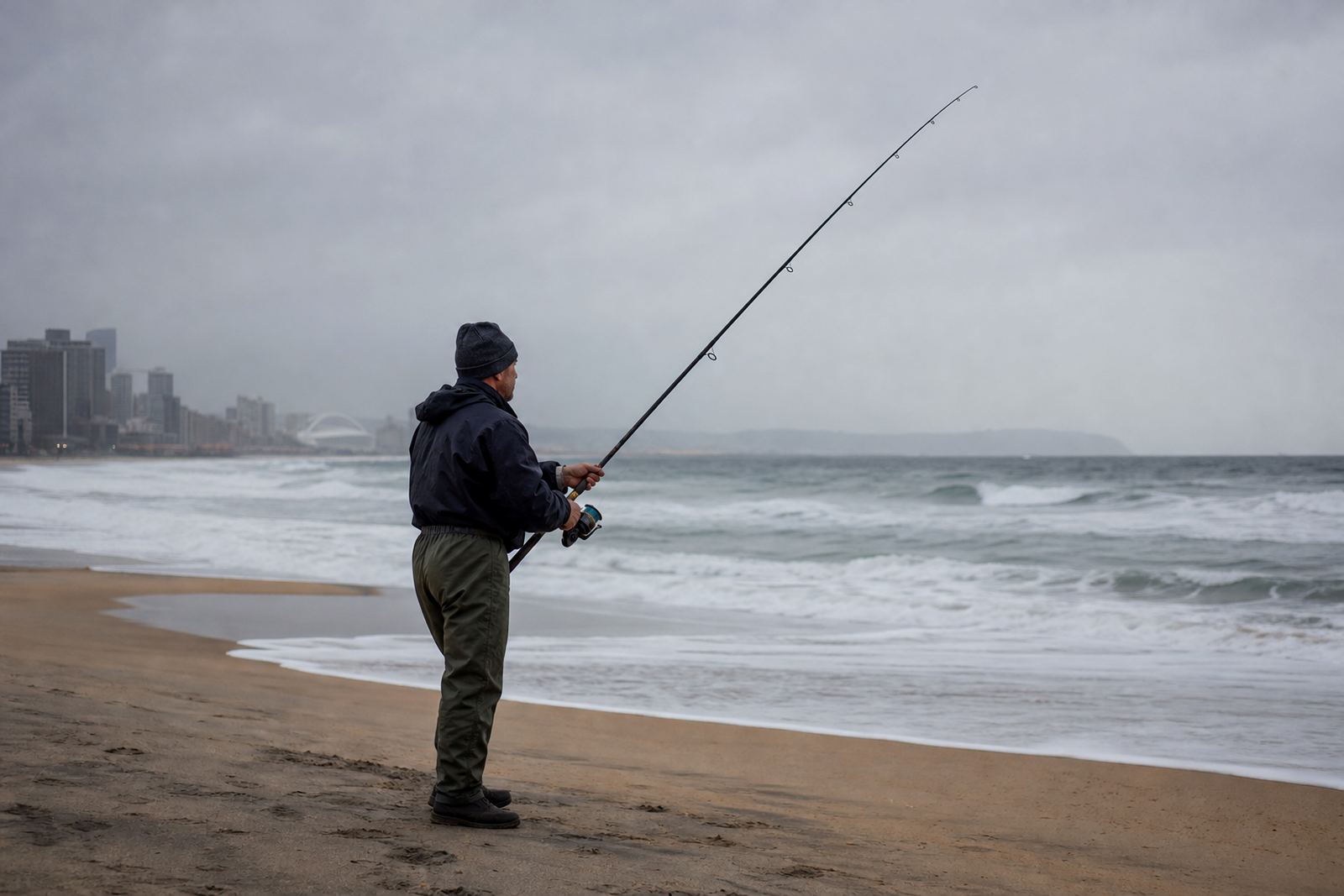
Before tackle comes out of the rod tube, take five minutes to study the water. Check the swell, the wind direction, the tide stage, and how fast the water is moving around points, gullies and harbour walls. In Durban, a calm morning can change quickly when the wind swings and the backwash starts pushing hard across the rocks.
Do not fish a spot just because others are standing there. If the sea is washing over the ledges, if white water is breaking further in than usual, or if the current is pulling you off balance, move higher ground or choose a safer area. It is better to lose a cast than a footing.
- Look for a safe route in and out before carrying gear.
- Check for slippery algae, loose stones and hidden drop-offs.
- Keep an eye on swell sets, not just the smaller waves between them.
- If you cannot see the exit path in low light, do not push deeper onto the rocks.
Choose footwear and clothing that work on wet ground
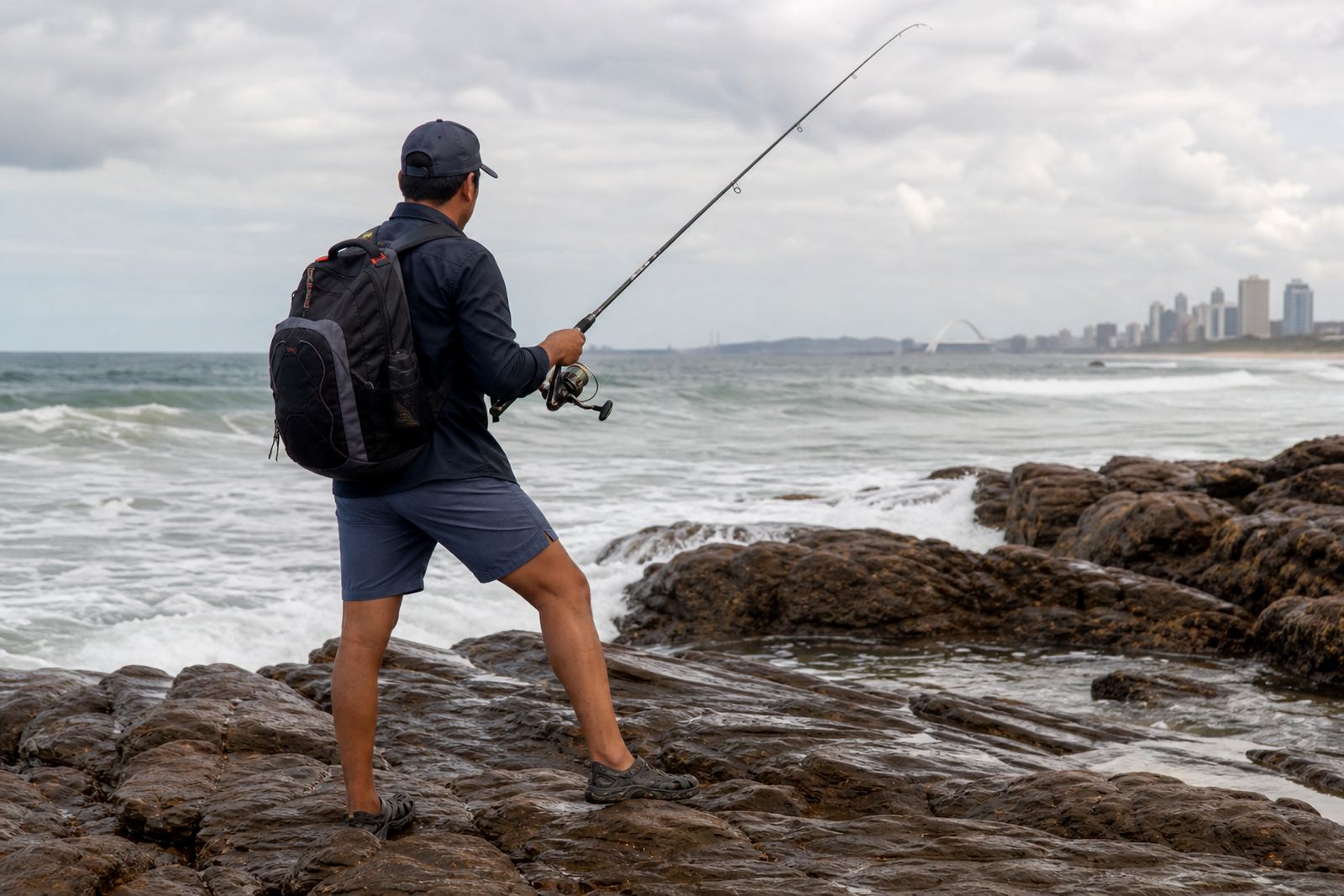
Good fishing shoes are not optional on the shore. You need grip on wet rock, protection for your toes, and enough support for uneven ground. Light sandals or smooth-soled shoes can turn a short walk into a nasty fall. Around coastal areas like Umhlanga and Ballito, damp rock and spray make proper footwear even more important.
Clothing should help you move and protect you from sun, wind and spray. Long sleeves, a cap with a strap, and polarised sunglasses can make a big difference. In strong sun, anglers often forget that a cool wind still burns skin quickly. Pack a light jacket too, because a still morning can turn chilly once the wind picks up.
- Wear shoes with non-slip soles and good ankle support.
- Avoid loose clothing that can snag on hooks or rocks.
- Bring a dry towel or spare top in case you get soaked.
- Use gloves if you are handling fish, trace wire or sharp hooks for long periods.
Keep your gear tidy so it does not become a hazard
Untidy tackle causes more trouble than most anglers admit. Open bait knives, loose sinkers, traces, and hooks on the ground can injure you or someone standing nearby. On busy beach stretches and harbour edges, space is often tight, so your setup needs to stay compact and controlled.
Use a bucket, tackle bag or tray to keep small items together. Store hooks in a secure box and keep knives covered when they are not in use. If you are surf fishing in a group, make sure everyone knows where the casting zone is before anyone starts throwing. A quick call out saves a lot of stress.
- Lay rods down safely when rebaiting or moving between spots.
- Keep traces, leaders and spare hooks off the walking path.
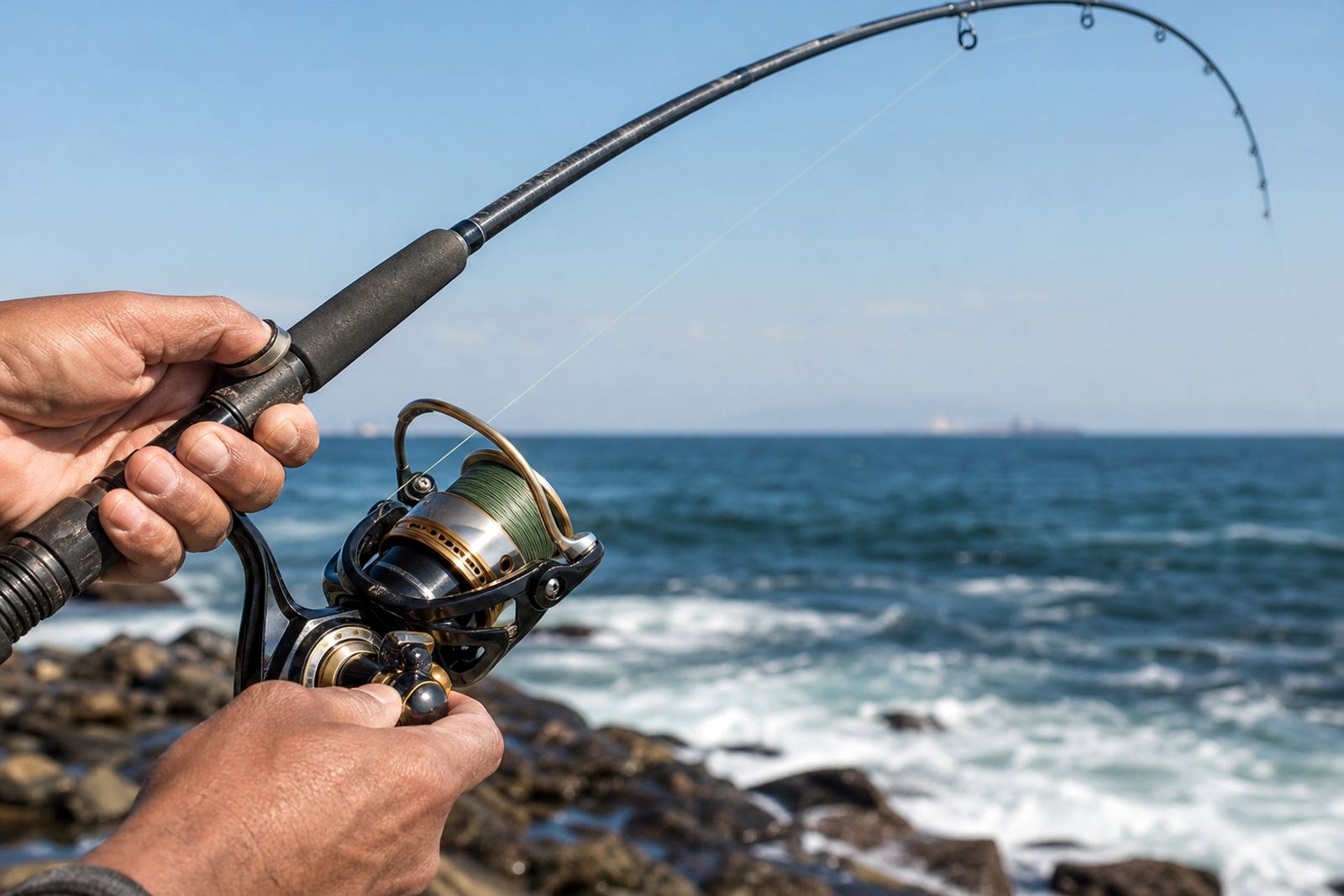
- Check that the drag is set before casting, especially on heavy sinker rigs.
- Use a fixed place for pliers, scissors and knives so you can find them fast.
Know what the tide and harbour rules are doing
Tides shape your session and your safety. Rising water can cut off paths you used an hour earlier, while a falling tide can expose slippery ledges and hidden holes. In harbour areas, boat traffic and municipal rules matter as much as the fishing itself. Never assume that a quiet corner is safe just because nobody else is around.
If you are fishing near a slipway, channel or working harbour, keep clear of moving vessels and follow local access rules. At some spots, anglers are expected to stay out of marked zones and away from mooring lines. If you are unsure, ask before settling in. A few minutes of checking can stop a fine, or worse a serious incident.
For anglers heading out from Durban to Cape Town, Gqeberha or East London on a trip, learn the local shoreline habits before you arrive. A spot that looks straightforward on a map can behave very differently once tide and swell are on it.
Fish with a partner and keep someone informed
Shore fishing is safer when someone else knows where you are and what time you expect to return. That matters on quiet beaches, early morning rock sessions and after-dark trips when help is farther away. If you are fishing alone, tell a family member or friend where you are going, which access point you are using, and when you expect to be back.
When fishing with a partner, agree on simple signals before you start. One person should know where the first aid kit is, where the torch is kept, and how to reach the nearest road if something goes wrong. It sounds basic, but in wind and spray people often struggle to hear each other clearly.
- Share your exact fishing area and return time with someone off site.
- Keep a charged phone in a waterproof pouch.
- Save emergency numbers before you leave home.
- Do not split up on rough ground unless it is necessary.
Use bait, hooks and fish handling with care
Bait prep and fish handling need the same care as casting. Sharp hooks, bait knives and stiff traces can cause cuts very quickly, especially when your hands are wet. If you are preparing sardine, squid or chokka on the rocks, work slowly and keep your fingers away from the point of the hook. When a fish is landed, control it first before you worry about the photo.
Wet hands help protect the fish, but they also make tools more slippery. Keep pliers ready for hook removal and release fish close to the water where possible. If you are using baited traces for heavier surf conditions, check your knots and snells often, because a snapped rig can whip back unexpectedly.
At our Durban store in Springfield Park, we often remind anglers that safe bait prep and neat rigging go hand in hand. The cleaner your setup, the less chance you have of a rushed mistake when the fish finally arrives.
Plan for heat, storms and load shedding too
South African shore fishing is not only about waves and rocks. Heat, sudden storms and load shedding can change a normal trip fast. High temperatures can leave anglers tired and careless, while a thunderstorm can make exposed beaches and rock ledges dangerous in minutes. If you hear thunder, pack up and move. Do not wait to see where the lightning lands.
Power cuts also matter when you are preparing gear before sunrise or returning after dark. Make sure torches are charged, phone power banks are ready, and any electric items you rely on are not left untested. Keep a spare set of batteries in your bag, and check them before the weekend rush. If you have a long drive from Johannesburg or Pietermaritzburg to the coast, prepare the vehicle as carefully as the tackle.
- Pack water and a simple snack for longer sessions.
- Carry a torch or headlamp with spare batteries.
- Watch for storm build-up and leave early if needed.
- Keep basic first aid items in your fishing bag.