Why salt water needs same-day attention
Salt is hard on metal, bearings and line. A quick rinse is not just about keeping things neat, it helps stop corrosion before it starts. On the Durban coast, where spray and humidity hang around even after the tide drops, gear can start to mark up by the next morning if it is packed away wet.
Freshwater anglers sometimes think this only matters after surf or rock sessions, but any rod or reel that has picked up salt spray needs attention. That includes landing nets, pliers, bait knives and even the clips on your tackle bag. If you fish from a ski, harbour wall or off the beach, make cleaning part of the trip finish, not an optional extra.
- Salt crystals pull moisture from the air and keep working long after the trip is over.
- Sand mixed with salt can wear down reel parts and line rollers.
- Wet braid and mono stored under tension can leave marks on spools and guides.
The first rinse: keep it gentle and controlled
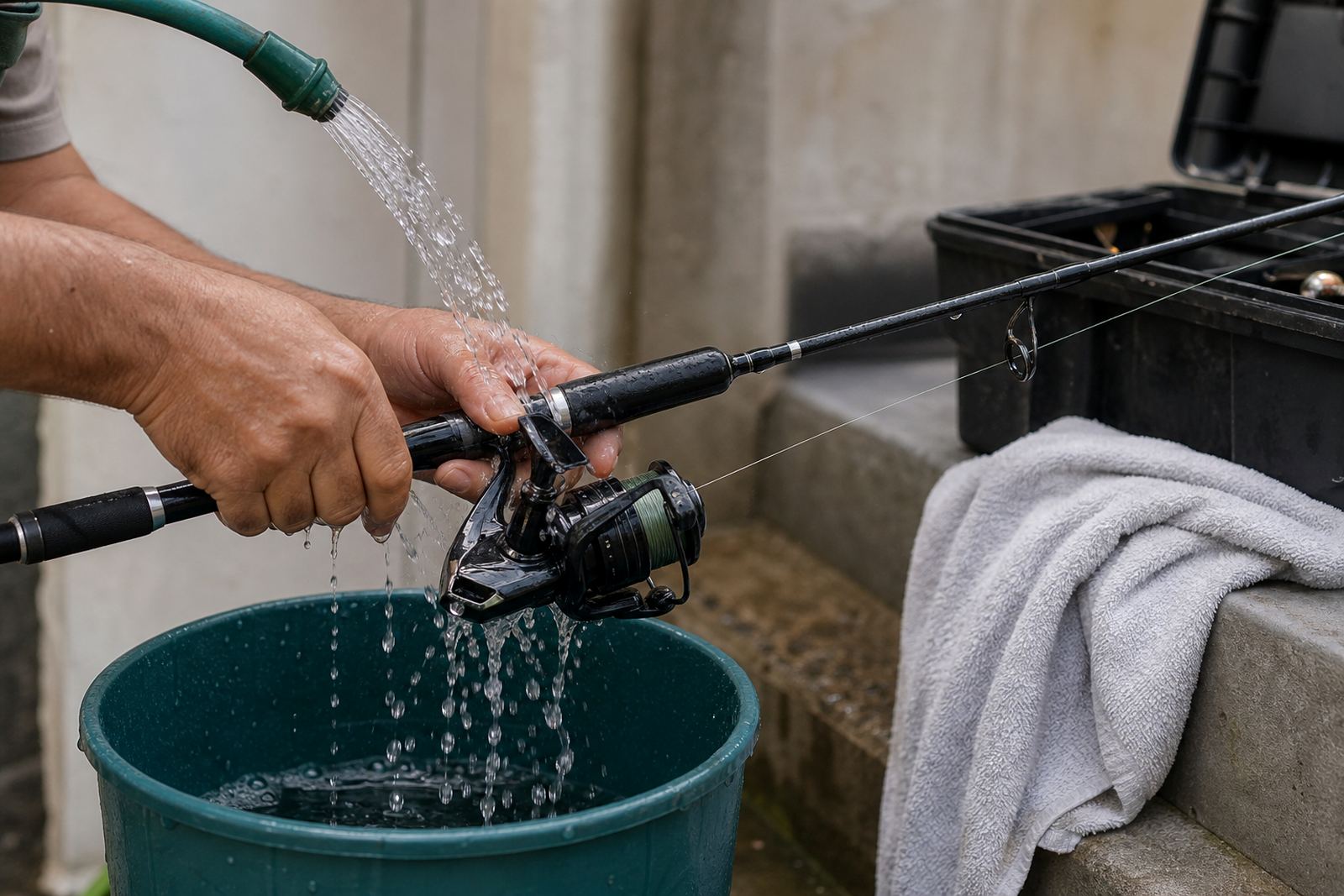
The aim is to remove salt, not force water into places it should not go. Use a low pressure hose or a bucket of clean water and a soft cloth. Do not blast reels, drag knobs or guide wraps. High pressure can push salt deeper into the internals and strip grease from moving parts. A gentle rinse is enough if you do it soon after the session.
Start with the rod, then the reel, then any tools. If you have been fishing a harbour wall in East London or working surf on the North Coast, pay attention to the reel seat, line roller and handle threads. Wipe down surfaces as you rinse so salt water does not dry back onto the tackle.
- Do not soak reels unless they are designed for that and the maker states it is safe.
- Keep the drag tight enough to stop water creeping in under the spool lip.
- Open lure boxes and tackle trays once home so damp air can escape.
Drying matters as much as washing
After rinsing, dry the gear fully before it goes back into a bag or cupboard. A clean cloth will remove most water, but you still need a bit of air drying. In coastal towns, that last layer of moisture can hang around longer than you expect, especially on closed balconies and in garages with poor airflow.
Lay rods flat or stand them where the guides can drain. Remove the reel and dry the seat, hood and thread area. If you store tackle in the car between trips, remember that the heat in a parked vehicle can make salt and moisture bond harder to fittings. That is when small problems become costly repairs.
- Open tackle bags and let them air out before storage.
- Remove wet bait trays and wash them separately.
- Check zip sliders, clips and buckles for gritty build-up.
Reel care after a saltwater session
Reels need more than a rinse, especially if you fish surf or estuary mouths often. Once the exterior is dry, back off the drag slightly for storage unless the reel maker recommends otherwise. This reduces pressure on washers and helps the drag stay consistent. Check the handle, bail arm and line roller for salt marks or stiffness.
If you hear grinding, feel a rough turn or see white residue around moving parts, the reel may need servicing. Do not wait for it to fail on the bank. A little preventative care is cheaper than replacing bearings, washers or corroded screws. In humid areas such as Springfield Park and Umhlanga, small amounts of trapped salt can cause ongoing trouble even if the reel looks fine at first glance.
- Wipe the line roller and bail arm after every trip.
- Check the anti-reverse and handle screws for looseness.
- Store reels in a dry cupboard, not under a damp boat cover or in a closed kit bag.
Rods, guides and line need a close look
Rod guides take a fair amount of abuse from salt spray, especially when casting into wind. Run a cloth around each guide ring and check for pits, cracks or rough edges. A damaged guide can fray braid or mono and spoil a good trip very quickly. Rod butts and grips also need wiping down because salt can build under shrink wrap, cork or EVA handles.
Line deserves attention too. If the outer layers of braid feel stiff or gritty, the salt has started to settle in. Mono can take on a cloudy look or hold a curve if it has been left wet and tightly wound. If you fish often from Gqeberha or Cape Town where wind and spray are part of the day, regular line checks save a lot of hassle.
- Inspect each guide ring with a cotton bud or soft cloth.
- Look for chips on the tip guide and first three runners.
- Replace badly worn line before the next trip, not after it fails.
When cleaning is not enough and repairs are due
Some issues need more than home care. If a reel starts making noise, if the drag jerks, or if the handle has play in it, the inside may already have salt contamination. The same goes for rod tips with loose inserts or damaged guides. For anglers in Johannesburg or inland areas who fish salt trips only now and then, storage can be just as important as the actual clean because gear may sit for weeks before the next outing.
At that point, proper servicing helps keep the tackle usable for longer. Reel servicing, line spooling, drag tuning, rod guide replacement and rod tip repair all play a part in getting gear back into working order. If you are planning a weekend trip or a club outing, sort these jobs early so you are not packing the night before and finding a fault at the last minute.
- Do not keep using a reel that feels rough under load.
- Fix bent guides before they damage your line.
- Book repairs early before peak holiday periods and long weekends.
A simple post-trip routine that fits South African conditions
A sensible routine is usually enough to keep saltwater gear in good shape. Rinse lightly, dry fully, check the moving parts and store everything in a dry place. If you fish across different areas, from Durban beaches to inland dams, the same habits still apply. Salt is the main issue by the coast, but sand, dust and heat all add pressure on tackle if you ignore them.
For a practical example, think of a Saturday surf session in Ballito followed by a Sunday afternoon at the dam near Pietermaritzburg. If the same reel handles both trips, it needs a thorough clean between them. That habit keeps performance steady and helps the gear last longer, which matters when you rely on your kit season after season.
- Build a clean-and-dry routine into your unpacking process.
- Keep a soft cloth, fresh water and a small brush in your tackle bag.
- Check gear before storage and again before the next trip.