Why rod care starts at home, not on the bank
Most rod problems do not begin with a big fish. They start when the rod is leaned against a wall, left in a hot bakkie, or packed away with sand still on the guides. A small bend in the blank, a cracked guide ring or a loose reel seat can be easy to miss until the next trip, then the line frays or the tip fails under load.
For anglers in Durban, coastal humidity adds another layer. Salt in the air settles on tackle even when you have not been near the surf, and that salt holds moisture. In Johannesburg or Pietermaritzburg the risk is often dust, dry heat and rods being stored in garages where they can get knocked over. Good care is simple: clean, dry, inspect and store with support.
Rinse and dry the right way after a day out
If you fish the surf, estuaries or harbour edges, a gentle rinse should happen as soon as you get home. Do not blast the rod with a high pressure hose. That can force grit into the reel seat, joints and guide bindings. Use clean water, a soft cloth and a little patience. Wipe from butt to tip, then pay attention to the guide feet, the tip top and the grip area where sand likes to hide.
- Use fresh water, not a strong spray.
- Wipe the blank and guides with a soft cloth.
- Dry around the reel seat and ferrules before storage.
- Leave the rod out of direct sun until it is fully dry.
If you have fished in heavy spray around Durban North or Ballito, a second wipe later in the day helps. Salt crystals can sit in small corners and keep working long after the trip is finished. That is one of those jobs that takes two minutes but can save a rod section later.
Check the blank, guides and tip before the next trip
A proper home check does not need tools. Hold the rod under good light and slowly turn it in your hands. Look for hairline cracks, chips near the ferrules, and guide rings that look worn, loose or rough. Run a cotton bud or a bit of soft cloth through each guide. If it snags, the ring may be damaged and that can cut braid or mono over time.
Check the rod tip especially carefully. The tip takes a lot of strain during casting and fighting fish, and one missing insert can ruin a session fast. If the rod has been stored in a vehicle boot or against a garage wall, check for impact marks too. A bent or damaged guide foot might not look serious at first but it can create stress on the blank every time the rod flexes.
- Inspect each guide ring under bright light.
- Look for loose thread wraps or lifting varnish.
- Check ferrules for grit before joining sections.
- Test the reel seat and make sure it locks firmly.
Store rods so they do not warp, crush or collect dust
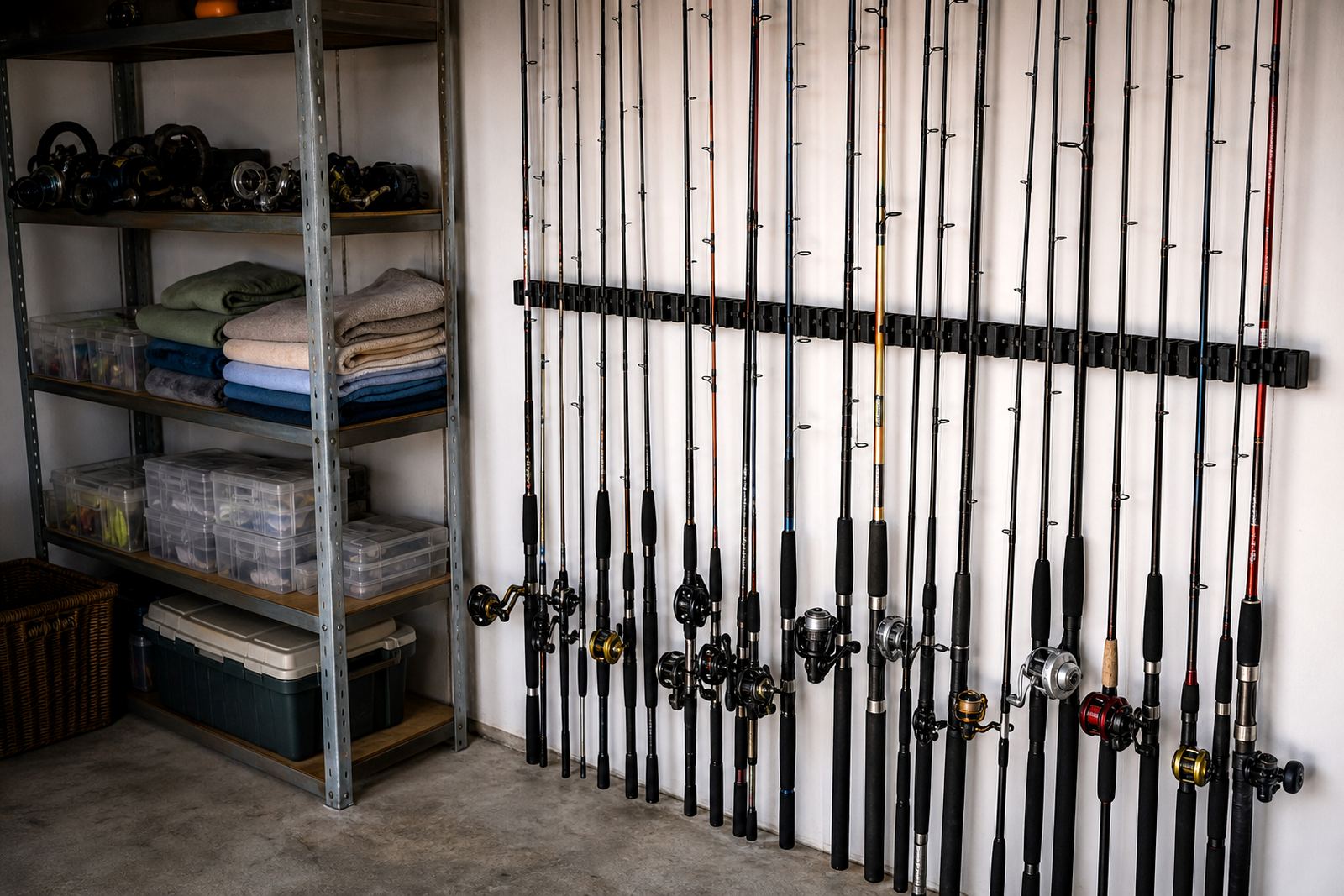
The safest storage is upright in a rack or horizontally on supports that keep pressure off the blank. Never leave rods resting in a corner where they can slide down or take a knock from bags, tools or kids playing nearby. If you must store them in sections, make sure each piece is clean and dry before sliding the joints together. Leaving moisture inside ferrules can lead to sticking, swelling or a gritty feel later.
Long term storage in a garage or storeroom should allow for airflow. Coastal homes in places like Umhlanga or the South Coast can hold humidity for days, so a damp cloth left on a rod sock is not a small thing. Keep rods inside sleeves or tubes if you travel a lot, especially if the rods go in a bakkie with other gear. A sleeve protects the eyes, tip and grip from accidental knocks.
If you store several rods together, separate them so the guides do not rub. A foam divider, rod rack or simple wall mount is better than a pile in the corner. It only takes one heavy box falling onto a tip to turn a good rod into an expensive repair.
Protect reel seats, handles and joints from slow wear
The blank is not the only part that needs attention. Cork, EVA grips, reel seats and ferrules all wear with regular use. Wipe the handle after each trip, especially if bait juice, fish slime or saltwater got onto it. A grimy grip gets slippery and can hold odour for longer than many anglers expect.
Make sure the reel seat is clean before fitting the reel back on. A little grit in the threads can make the seat feel tight and uneven. For two-piece rods, join the sections fully but do not force them. If a ferrule is stiff, a trace of dirt may be the cause. Clean it before trying again, because forcing a dry or dirty joint can crack the blank over time.
- Wipe grips and reel seats after each session.
- Keep ferrules clean and lightly aligned.
- Do not overtighten the reel on the seat.
- Store rod socks dry and free of sand.
A quick at-home routine before weekend fishing
Before a Saturday launch or a Sunday bank session, spend ten minutes on a simple check. This is especially useful if you are heading from Durban to a freshwater dam, or sending rods out with the family while you stay back to sort gear. The aim is to spot problems before they cost time at the water.
Start by assembling the rod and checking the alignment of the guides. Look down the length of the rod to see if anything sits crooked. Then test the line path through each guide and make sure the tip feels smooth. If you notice a rough spot, a cracked ring or a loose wrap, sort it before the trip rather than hoping it will hold.
- Check the rod sections for clean, firm fitment.
- Inspect the tip, guides and line path.
- Test the reel seat and handle grip.
- Pack the rod in a sleeve or tube for travel.
When a small repair now is better than a bigger repair later
Some issues can wait, but some should not. A damaged guide ring, loose guide wrap, cracked tip or worn ferrule needs attention before the next hard session. If you keep fishing with a known fault, the strain spreads to nearby parts and the repair bill grows. It is also worth getting help if the rod feels different in action, because that often means something is not right even when the damage is hard to see.
At Catches in Springfield Park, Durban, we see this often after a busy holiday period. A rod comes in with a small problem that started weeks earlier, usually after a rough rinse, a bad storage spot or one hard knock in transit. The lesson is simple: home care is part of fishing care. Look after the rod between trips and it will be ready when the tide, weather or dam conditions finally line up.
For anglers across Durban, Cape Town, Gqeberha, Johannesburg and East London, that routine matters just as much. A well kept rod saves time, money and frustration, and it gives you more confidence when the fish are biting.