Start with the job the knot must do
Not every knot is meant for the same task. A knot for a bait trace needs to hold under steady pressure and also keep the bait sitting naturally, while a hook knot must keep the hook eye in the correct position for the bait you are using. Leader joins are a different matter again, because they need strength, smooth passage through the guides and enough neatness to avoid snagging when you cast.
In Durban and along the KZN coast, many anglers move between sliding traces, clip-down rigs and simple hook snoods depending on the sea. On inland waters around Pietermaritzburg or Johannesburg, the focus may be on finesse, smaller hooks and lighter line. The knot choice should match the water, the target species and the line you are tying. A strong knot in the wrong place is still the wrong knot.
As a general rule, the fewer turns and twists you use, the more you need to check the knot carefully. If you rush the tie, or wet the knot poorly, even a good pattern can fail under load.
Best knot types for bait traces
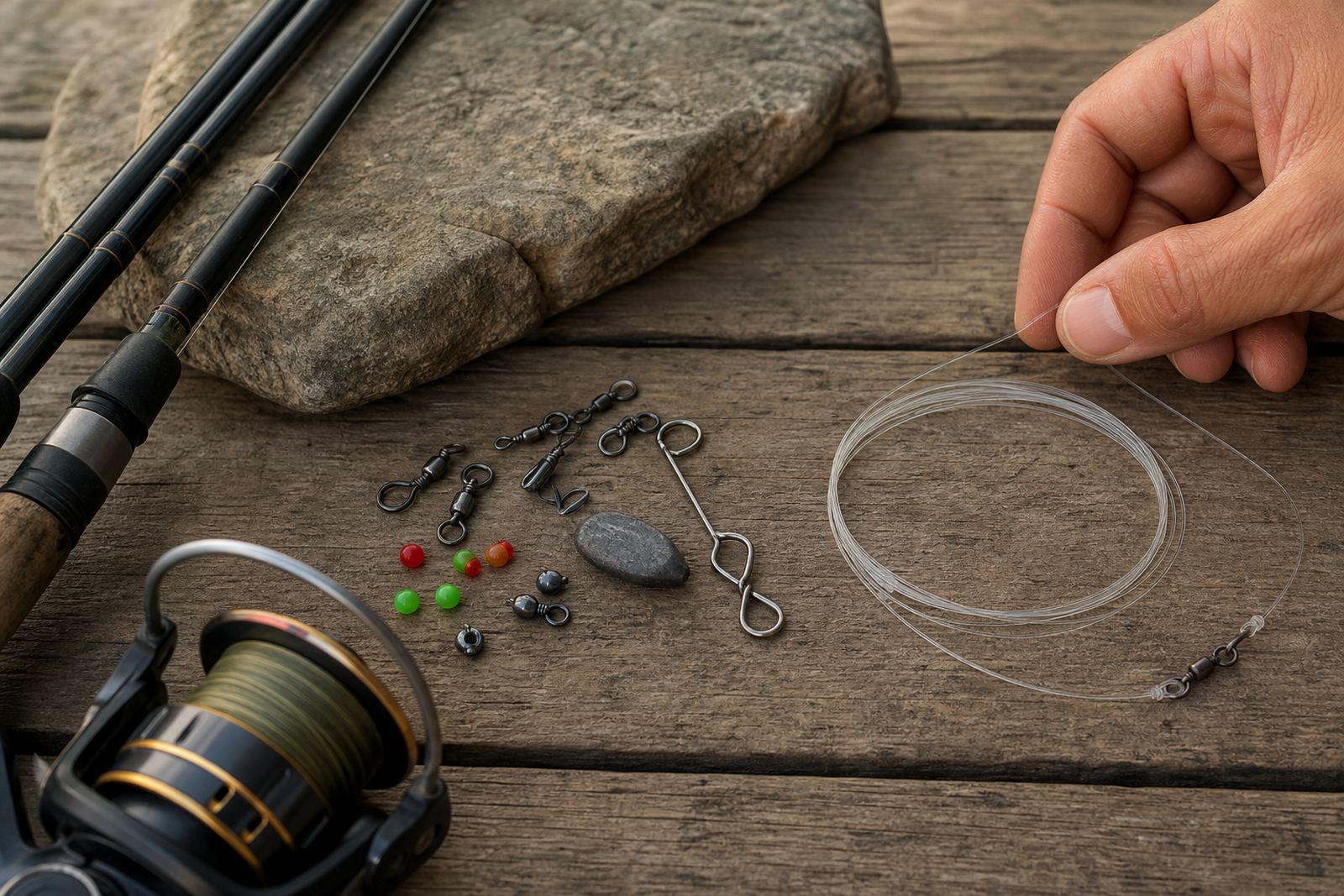
For bait traces, many anglers favour knots that create a tidy loop or a direct hook attachment without bulky wraps. This matters when you are fishing live bait, sardine strips or prawn on a slide trace, because the bait must move in a natural way. A bulky knot can hold the bait off balance and make it spin or sit awkwardly in the current.
Common practical options include:
- A non-slip loop for giving the hook or trace end a little movement.
- A snell-style knot for keeping the hook straight and secure.
- A simple uni knot for general trace work when speed matters.
If you fish from rocky points in the North Coast area, a cleaner trace can also help reduce tangles when casting into wind. For freshwater anglers using bait on dams, a tidy knot often means less fuss when changing hooks or adjusting bait size. Keep the knot compact, test it before use, and trim tag ends neatly. Small details count more than most people think.
Hook knots that suit bait presentation
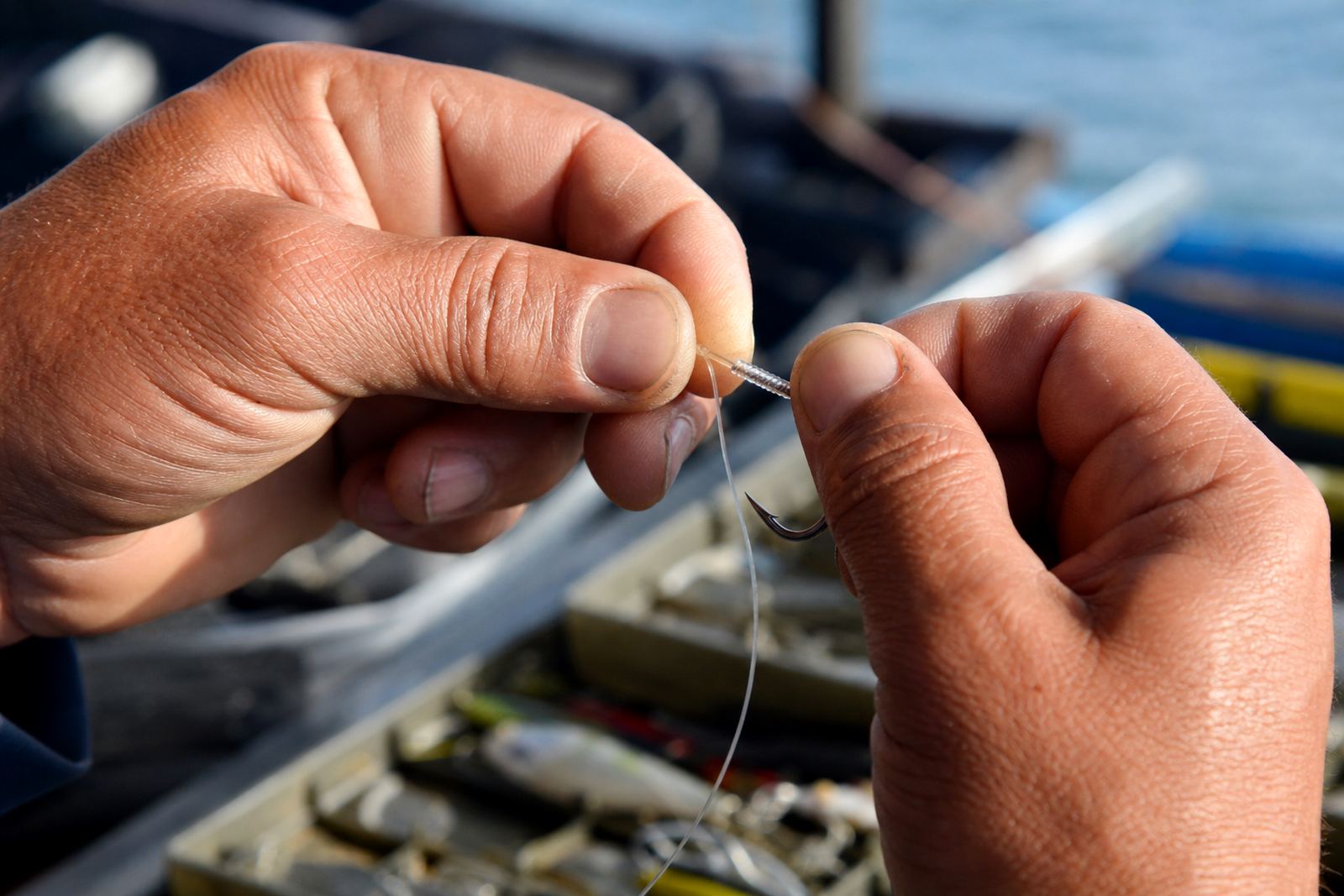
Hook knots need to match the way the bait sits on the hook. A kahle or circle style hook needs a different tie from a straight shank hook, because the angle of pull changes the way the hook holds. With smaller freshwater hooks, too much bulk around the eye can make baiting messy and can also affect how the hook turns when a fish takes line.
For many bait anglers, the main aim is simple: keep the knot strong and the hook eye clear. If the hook is fouled by tag ends or the knot is sitting at the wrong angle, your bait may look unnatural. That can cost you bites, especially on pressured waters where fish are cautious. The knot should support the bait, not fight it.
Good habits when tying hook knots include:
- Moisten the line before tightening to reduce heat and friction.
- Pull the knot down slowly so it beds in evenly.
- Test each knot with a firm pull before you cast.
- Check that the hook point and bait line sit as intended.
Jason Petersen often reminds anglers that a neat hook knot can be the difference between a clean hook-up and a missed bite, especially when you are fishing early morning before the wind comes up.
Leader joins for surf, rock and freshwater use
Leader knots need to handle the join between main line and a heavier leader, and that is where many anglers lose confidence. In surf fishing around Durban, East London or Cape Town, leaders must take abrasion from sand, reef edges and long casting pressure. On the freshwater side, leaders may be used to give extra abrasion resistance near reeds, rocks or timber.
The best leader knot is usually the one you can tie correctly every time. A neat join that passes through the guides cleanly is more useful than a complicated knot that looks clever but slips or catches. If you fish heavier tackle, especially with braid to mono or braid to fluorocarbon, the transition needs to be smooth and secure. That way you can cast without a sudden bump through the guides.
- Use a join that matches the line diameters you are connecting.
- Trim the tag ends carefully to avoid a bulky finish.
- Check the knot after the first few casts and retie if it shifts.
For anglers buying gear in Springfield Park and sending orders to Cape Town or Gqeberha, this is often the point where a proper spool-up and knot check pay for itself. A strong leader join can save a whole spool of line from being wasted.
When to change knots for bait size and species
One knot does not suit every bait. Small baits for shad, bream or carp-style fishing often need lighter hooks and slimmer knots, while bigger marine baits for kob, grunter or geelbek need stronger trace work and a knot that can handle more pull. If the bait is large enough to twist in the water, a looped setup may help. If the bait is compact and the fish are hitting hard, a direct knot may be better.
Weather also affects the choice. In rough sea conditions, a trace that rides correctly can matter more than a fancy knot. In calm inland water, presentation often becomes more important than brute strength. If your line is old, sun-faded or stiff from salt, no knot will perform as well as it should. Replace worn line before you blame the knot.
Local example: a Durban angler fishing a sliding bait for bronze bream off the coast may choose a neat, compact knot and a stronger leader, while a freshwater angler near Pietermaritzburg targeting carp on a calm dam may use a lighter hook knot and a simpler leader join. The fish are different, the water is different, and the knot should be different too.
A simple knot check before you leave home
Before a trip, it helps to run through a quick knot check with the full setup laid out. This is especially useful if you are heading out after load-shedding has interrupted your prep time, or if you are packing for a family trip and sorting gear in a rush. The goal is to avoid discovering a bad knot at the water edge, when the tide is already moving.
- Pull on every bait trace and leader join with steady pressure.
- Look for frayed sections near the knot and cut them off if needed.
- Wet and retighten any knot that feels rough or uneven.
- Carry a small pair of cutters so tag ends can be trimmed cleanly.
At Catches, we often see anglers arrive with good tackle but weak finishing on the knots. A little practice at home makes a big difference and saves time at the beach or dam. If you are unsure which knot suits your line, hook and bait, it is better to keep it plain and dependable than to overcomplicate the setup.