Start with a beach that suits the family, not the whole tackle bag
For a family outing, choose a beach where you can park reasonably close, keep an eye on the water and find a stretch with easy access to the sand. In Durban, that might mean a calmer area on a weekday morning rather than a crowded Saturday afternoon. The same thinking works in Cape Town, Gqeberha and East London too: pick a spot where the walk is short and the fishing ground is simple enough for new anglers to follow.
It helps to fish where the conditions match the family setup. If the wind is pushing hard across the beach, or the surf is rough, the trip can become hard work before the rods are even in the holders. Look for a gap between the waves, a sandbank edge or a gutter where fish tend to move. If you are not sure, keep it local and familiar first. A short session after breakfast often works better than a full day that leaves everyone tired by lunch.
- Choose a beach with toilets, shade or nearby parking if you have children with you.
- Check tide times before you leave, especially on open beaches with strong current.
- Keep the first trip short so the family can leave while everyone still feels positive.
Keep the tackle honest and easy to handle
Family beach fishing does not need heavy rods and oversized reels. A sensible medium surf outfit is easier to cast, lighter to carry and less tiring for a child or beginner. For most family trips, one or two rods are enough. That keeps the setup manageable and means less gear to rinse, pack and sort at the end of the day.
Choose a reel that casts smoothly, holds enough line for surf fishing and can be serviced properly after use. Salt air, sand and repeated rinsing take their toll, especially along the KZN coast where humidity is constant. A simple drag check, fresh line when needed and a clean spool can make a bigger difference than buying more tackle. If the reel feels rough or the drag slips unexpectedly, sort it before the trip, not after.
- Use a rod length that suits the adults and older children who may want a turn.
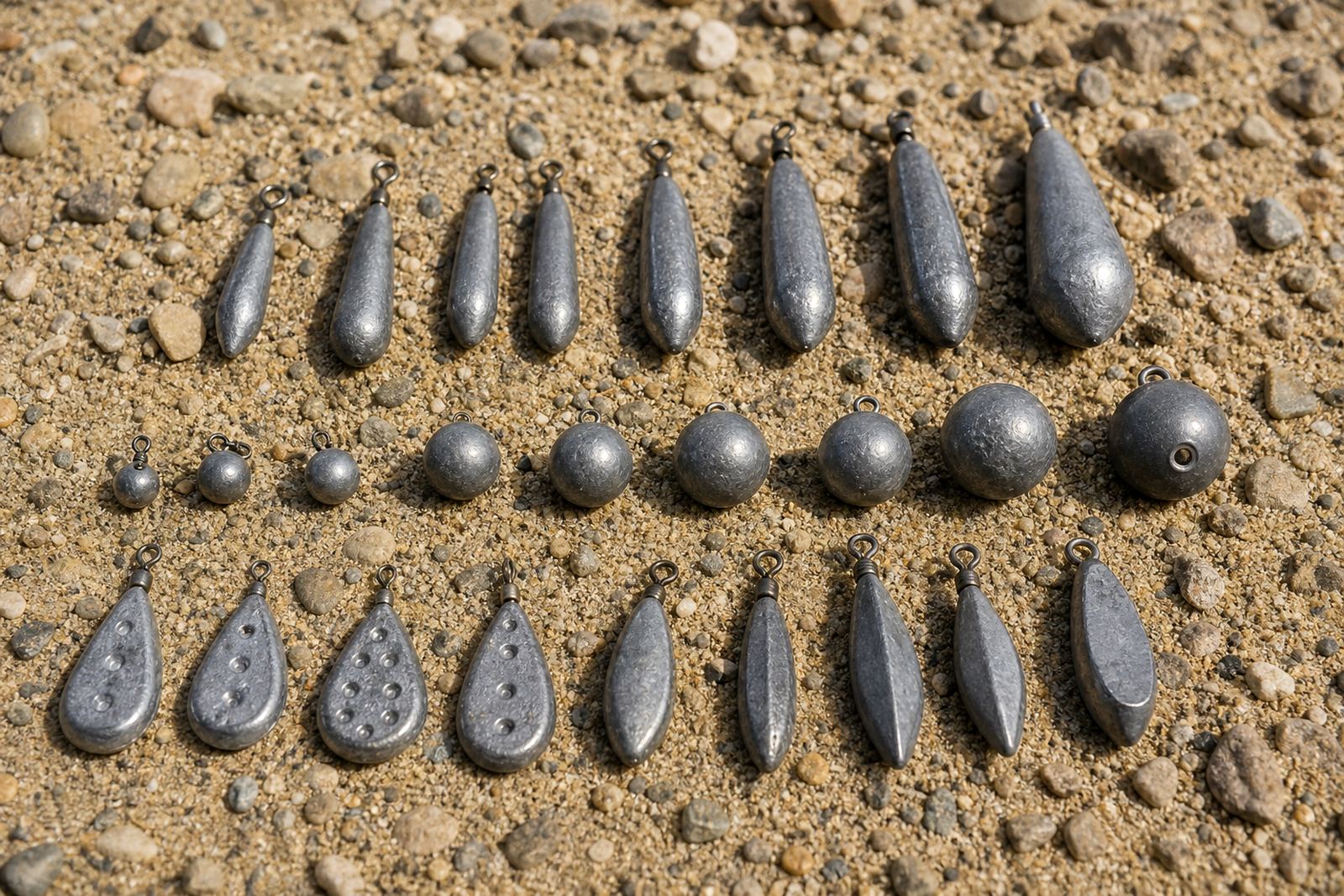
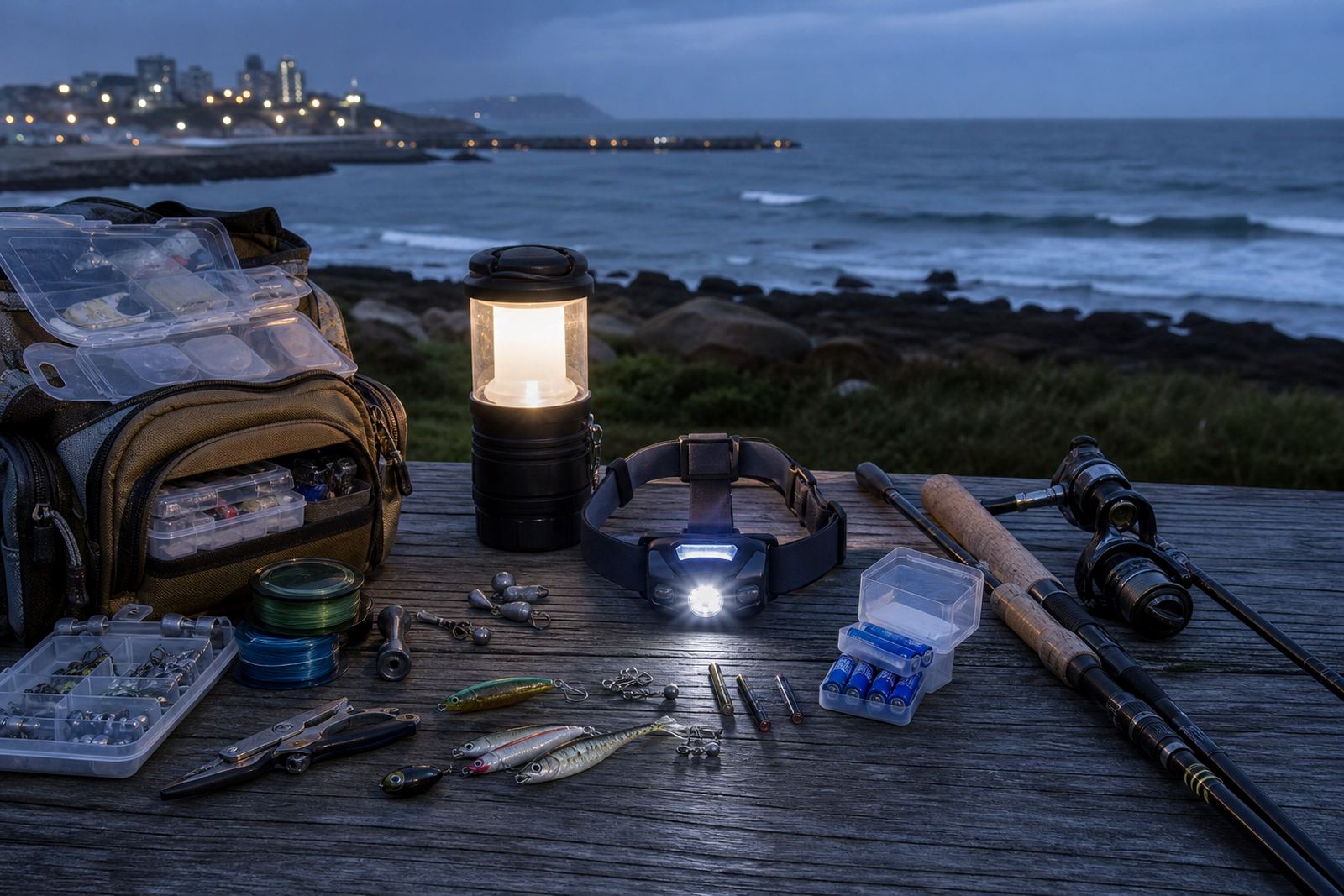
- Carry spare sinkers, hooks, swivels and pre-made traces in a small box.
- Rinse rods and reels in fresh water when you get home, then dry them before storage.
Bait choices that keep children interested and fishy
Family fishing works better when baiting is straightforward. Cut bait, pilchard strips, squid, chokka, or a simple fresh bait presentation can all do the job depending on the target species and the beach conditions. The best bait is often the one you can keep fresh and attach neatly without a lot of fuss. If children are helping, make the process quick so they stay involved rather than bored.
Bait prep matters because messy bait falls off the hook, attracts crabs and wastes time. A tidy bait wrap or a small secured presentation usually lasts longer in the surf. On warmer days, keep bait in a cooler bag or an insulated box so it does not soften too quickly. Around Durban and the north coast, that extra care is worth it. You can lose a whole session to bait that has gone soft in the heat and humidity.
- Keep a separate bag for bait and wash your hands before handling rods or line.
- Prepare a few bait sizes so you can switch if the bites are small.
- Use a simple baiting routine and repeat it, which helps children learn faster.
Teach the kids the useful bits first
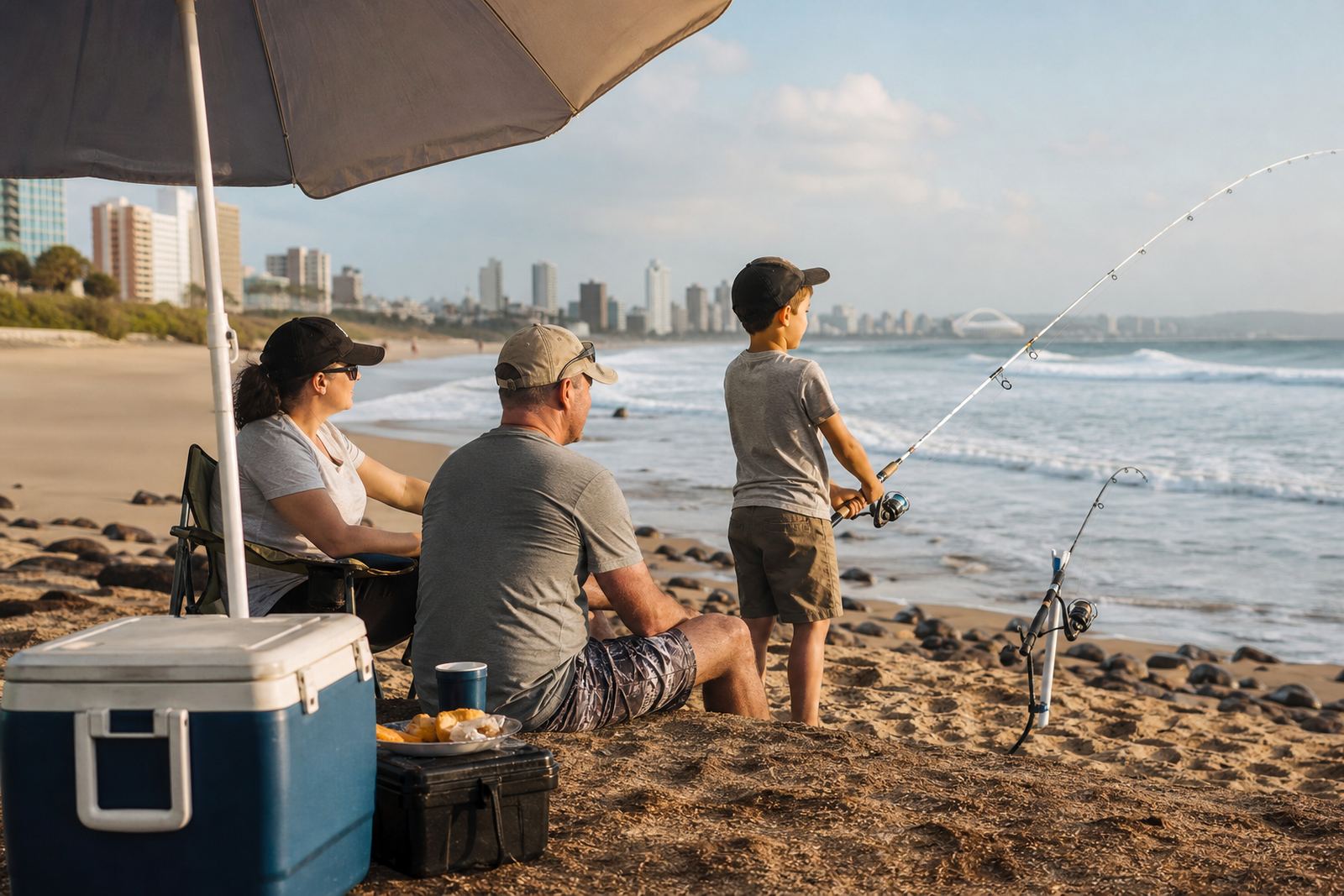
Children usually enjoy fishing more when they are given a clear job. Let them carry the tackle box, watch the rod tip, count the waves or help clip on a sinker under supervision. These small tasks keep them included and build confidence. If they are old enough, show them how to hold the rod safely, where to stand when a cast is made and why hooks should always stay away from bare feet and hands.
It also helps to keep the language simple. Rather than explaining everything at once, talk about one thing at a time: where the fish might move, how to watch the line, or why the tide changes the bite. Families often learn more in one relaxed session than in several rushed ones. A calm pace matters, because a child who feels comfortable is far more likely to stay interested and come again.
- Give each child one job so they feel part of the day.
- Keep pliers, hook removers and bait knives out of reach until needed.
- Remind everyone to shuffle on the sand, not run near the rods and lines.
Realistic fish targets and when to call it a day
For a family beach trip, the goal should not be the biggest fish in the sea. A successful outing may mean a small catch, a few bites, or simply learning how the surf behaves. Depending on the area and season, you may see smaller coastal species, baitfish activity or the occasional proper pull on the rod. Freshwater family anglers who live inland can use the same patient approach at dams and rivers, but the beach adds wind, sand and moving water that need a bit more attention.
Set a finish time before you arrive. That way the trip ends on your terms, not because someone is hungry, sunburnt or over it. If you are fishing with younger children, a two to three hour session is often enough. Bring water, snacks and sun protection, and have a dry change of clothes in the car. A family fishing trip should feel like a good outing, not a test of endurance.
One thing worth remembering is that simple gear choices help everyone. When the tackle is light, the bait is easy and the plan is realistic, the beach becomes a place where people can actually enjoy fishing instead of wrestling with kit all morning.
A Durban example that keeps the day easy
A family from Springfield Park might head out early on a Saturday, stop for a quick bait check and arrive at a Durban beach before the crowds build. One adult handles the casting while the children help with bait prep and watching the rod tips. If the first spot is too busy or the surf looks messy, they move a short distance along the beach rather than forcing the session to work. That small change often saves the day.
This approach suits most South African coastlines. Whether you are heading out from Umhlanga, Ballito, Pietermaritzburg for a coastal day, or planning an order for Johannesburg, Cape Town, Gqeberha or East London, the pattern stays the same: keep the gear simple, check the conditions and avoid overpacking. A family fishing trip should be easy to repeat, because that is usually what gets everyone hooked in the first place.
When the setup is practical and the pace is calm, family beach fishing becomes less about chasing perfection and more about building a routine that everyone can enjoy. That is usually how the good days start.