Why sinker shape changes the way your bait fishes
A sinker is not just weight. Its shape decides how it tracks over sand, settles on rock, grips in current and releases line when a fish picks up the bait. In Durban surf, that can be the difference between a clean presentation and a rig that drags down the beach or rolls into weed. On inland waters, the wrong shape can make a bait sit unnaturally or snag on broken bottom.
Anglers often ask for a heavier sinker when the real fix is the shape. A lighter, better chosen sinker can hold just fine if it has more surface area or a design that digs in. That saves tackle, keeps casts more controlled and often gives a better bite rate.
- Match the sinker to the bottom first, then the current.
- Choose the lightest sinker that still holds position.
- Think about how the sinker will land, sit and move once it is on the bottom.
Ball sinkers for clean sand and simple casting
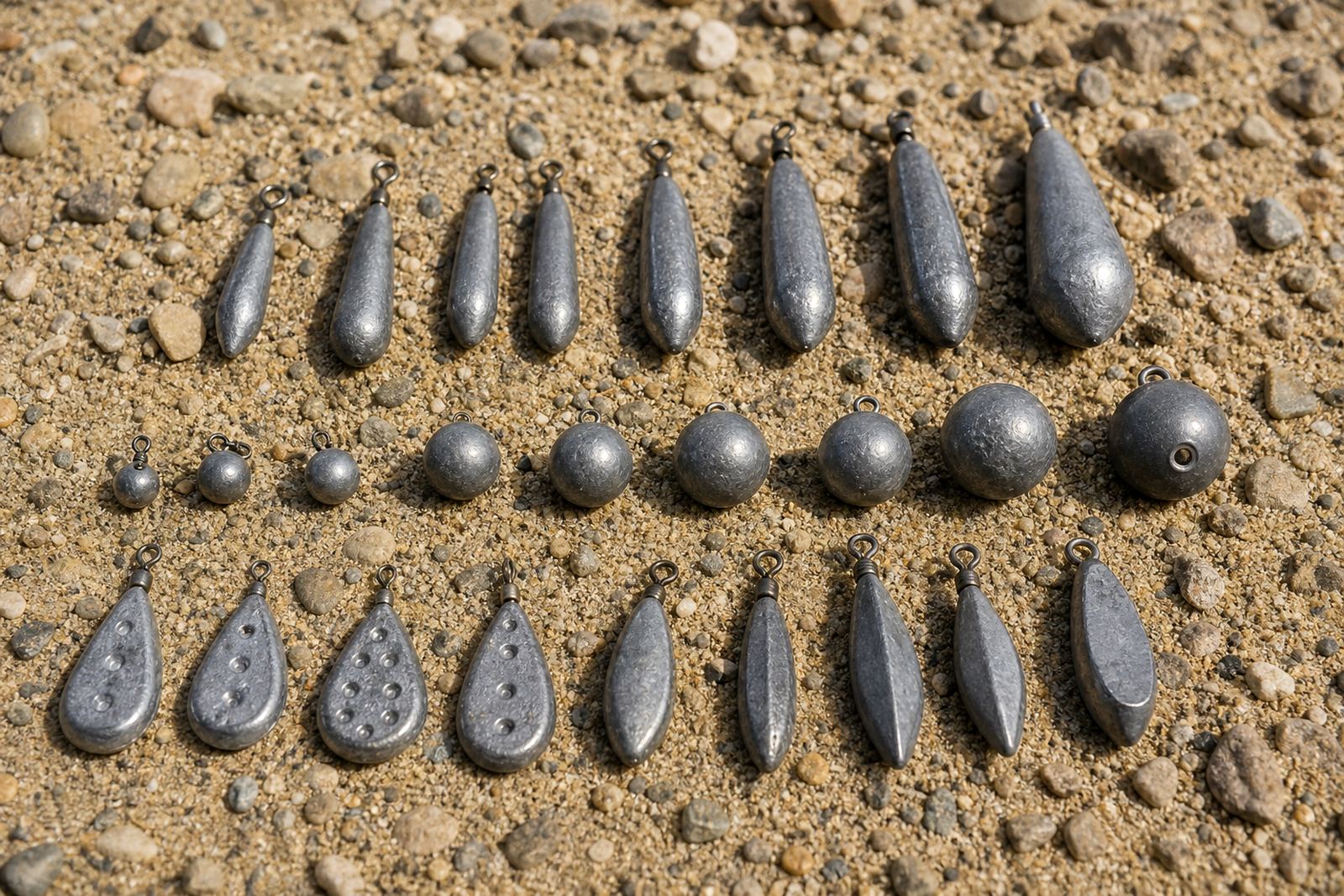
Ball sinkers are a good all round option for sand, mud and softer bottoms where you want an easy cast and a fairly natural drift. They are common for basic bait fishing, especially when a trace needs to sit in a spot without too much drag. Because they are round, they tend to roll more than flatter shapes, so they suit calmer water or areas where you expect the bait to shift a bit.
They are handy for freshwater too. In dams and slow rivers, a ball sinker can keep a baited trace down without making it look overworked. If you are fishing for carp or barbel around gentle slopes, this shape is usually a simple place to start.
- Best on sand, mud and mild current.
- Good for beginner setups and lighter traces.
- Not ideal on steep slopes or rough reef where rolling becomes a problem.
Grip and spider sinkers for Durban surf and strong pull
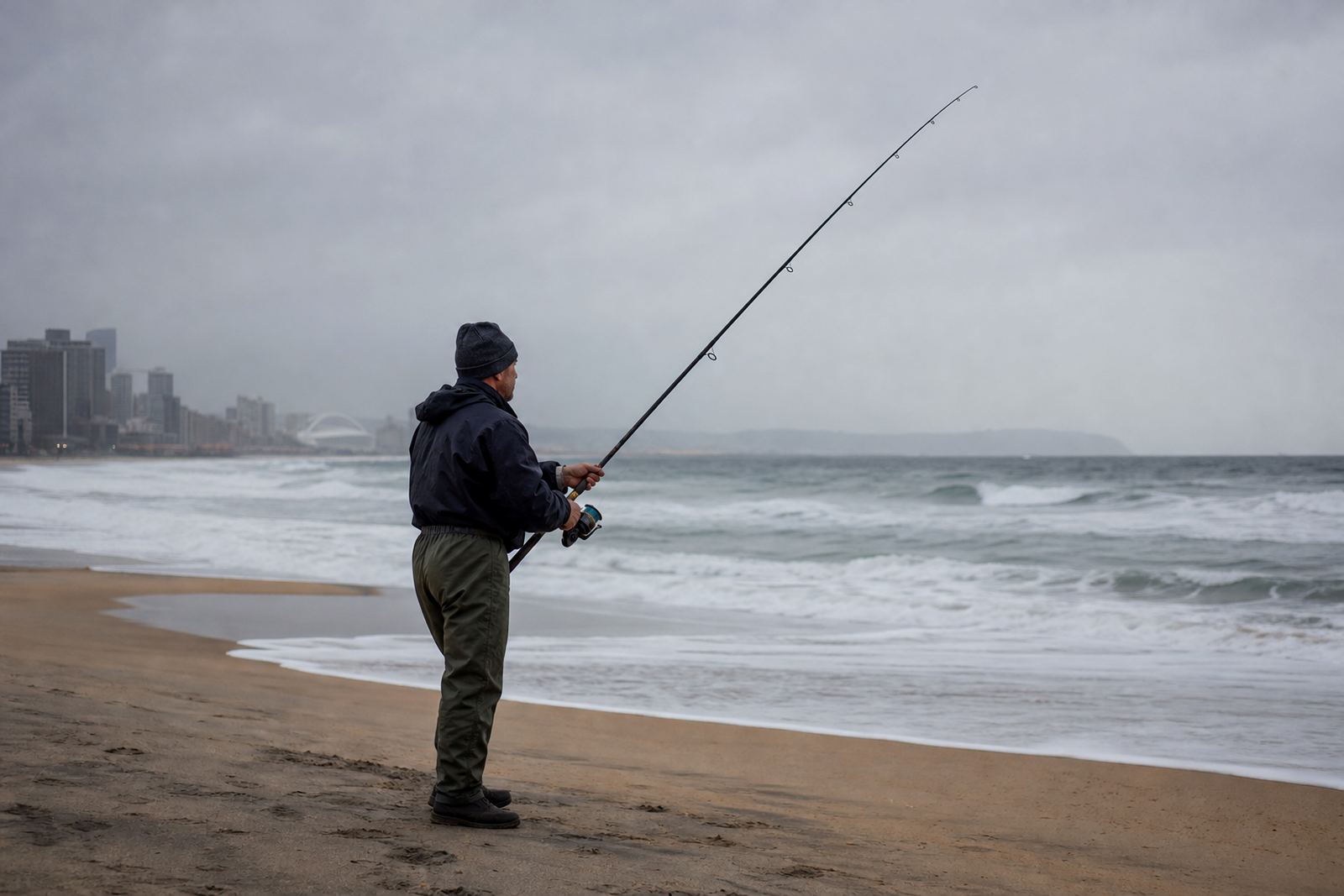
When the sea is moving hard, grip style sinkers are often the best choice. Their legs or prongs bite into sand and help keep the bait in place. On the east coast, especially around Durban and the North Coast, these are useful when swells are pushing through and you need the rig to stay put long enough for fish to find it.
Spider sinkers and similar gripping shapes are useful for bigger surf, channels and deep gutters. They can also help if you are baiting up for predators that work a narrow strike zone. The trade off is that they may not cast as cleanly as rounder sinkers, and if the bottom is foul they can hook up harder on kelp or broken rock. Use them when holding power matters more than easy retrieval.
- Choose these for strong surf, moving water and long holds.
- They work well when fishing a specific gutter or channel.
- Check local beach rules where needed, especially in protected or crowded spots.
Pyramid and wedge sinkers when you need a firm set
Pyramid and wedge sinkers are a good middle ground between a plain ball sinker and a full grip sinker. Their flat edges help them settle and resist movement on firmer sand or mixed bottoms. They are useful when you want stability but do not want the sinker to dig in too aggressively.
On beaches with a firmer seabed, these shapes give a clean drop and decent holding power. They can also work well near river mouths where sand bars, current seams and changing depth make the bottom less predictable. If you are fishing after work and the tide is already turning, this shape can save time because it settles quickly and stays where you put it.
- Good for firmer sand and mixed bottoms.
- Better holding power than a round sinker, with less fuss than a full grip.
- Useful when tide or current is changing through the session.
Breakaway styles for distance and rough surf control
Breakaway sinkers are made for distance and control in rough water. They are designed to hold during the cast, then release or settle in a way that reduces drag once the rig lands. For anglers trying to reach a deeper gutter, a far sandbank or a line beyond heavy wash, this shape can help a lot. They are popular where the surf is punchy and the casting window is tight.
If you fish the coast often, keep a range of sizes. A 3 oz option may be enough on calmer days, while stronger conditions may need 5 oz or more. The trick is not only the weight, but the way the sinker lands and anchors. Too much weight can make casting tiring and may damage lighter traces. Too little and the sinker will skate across the bottom instead of holding.
- Best for long casts and rough water.
- Useful when reaching a far feeding line matters.
- Match the sinker to rod rating and line strength to avoid strain.
Freshwater sinkers for dams, rivers and snaggy banks
Freshwater anglers often need smaller, subtler sinker choices than surf anglers. In dams around KwaZulu-Natal and the interior, lighter shapes help with natural bait presentation. On riverbanks, especially where there are stones, weed or broken timber, a sinker that sits neatly can reduce snagging and wasted time.
For carp and mixed species fishing, many anglers use a simple running rig with a sinker that lets the fish pick up the bait before feeling resistance. In current, a flat or semi flat shape may hold better than a round one. In still water, a smaller ball sinker may be all you need. The goal is to keep the presentation honest, not overcomplicate the rig.
- Use lighter sinkers for still water and cautious fish.
- Choose flatter profiles where current or slope is an issue.
- Keep a few sizes so you can adjust quickly on the bank.
How to choose the right shape before your next trip
A simple way to choose is to ask three questions: what is the bottom like, how hard is the current or surf, and how far do I need to cast. If the answer is soft sand and mild water, start with a ball or pyramid. If the water is strong and you need the bait to stay put, move to a grip or spider shape. If distance is the priority, look at a sinker that flies well and still lands with enough hold.
For Durban anglers fishing after a windy week, a heavier sinker might be needed on the outside banks, while an inland session near Pietermaritzburg may only need a modest rig. Keep a few shapes in the tackle box instead of carrying only one style. That small change can turn a difficult session into a better one, and it usually saves time when the conditions shift mid day.
If you are unsure, start with the most stable shape for the venue and work down to lighter options. A good sinker choice makes bait presentation calmer, sharper and more productive, even before the first bite.