

Home / Journal / Checking Reel Bearings

Journal

Checking Reel Bearings

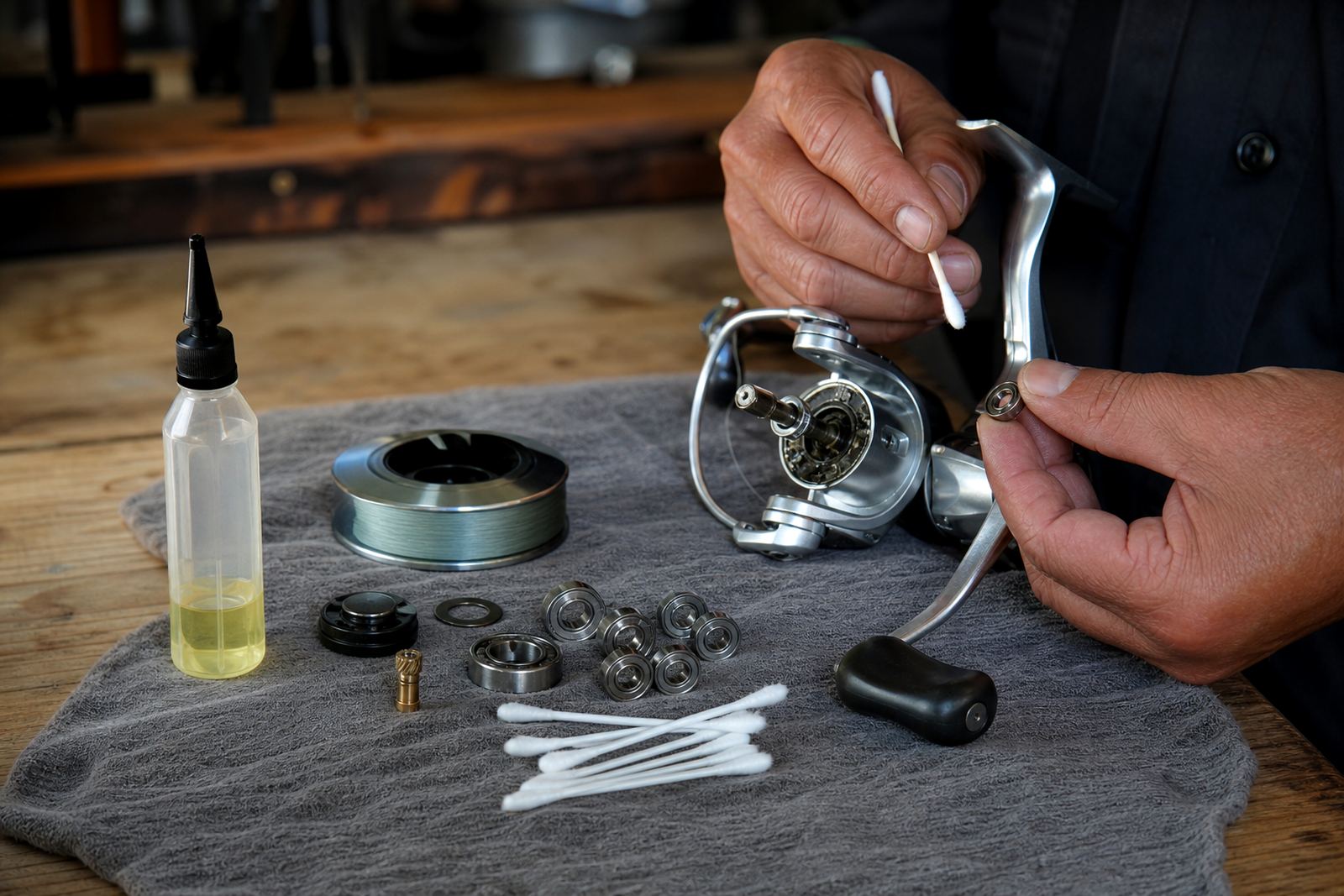
Reel bearings often give warning signs long before a complete failure, and spotting them early can save a trip. If your reel feels rough, sounds different, or starts losing smoothness under load, it is time to check it properly.

Checking Reel Bearings

Why reel bearings matter more than many anglers think

Bearings are what help the spool, handle and other moving parts turn with less friction. When they are clean and in good condition, a reel feels smooth, casts better and retrieves with less effort. Once they start to wear, the reel has to work harder, and that extra strain shows up fast on the water.

For coastal anglers in Durban, bearings often take more punishment than people realise. Salt spray, sand, humid storage and the odd drop onto the jetty can all work their way into the reel. Freshwater anglers are not off the hook either, because dust, wet boat decks and poor after-trip cleaning can cause the same problems over time.

  • More friction means less casting distance and a heavier retrieve.
  • Worn bearings can create noise, heat and uneven rotation.
  • Ignoring early signs can lead to bigger repairs later.

Common signs that the bearings need attention

The first warning is usually feel. A reel that used to spin freely may start to feel gritty, stiff, or slightly lumpy when you turn the handle. Some anglers notice a faint squeal or clicking sound, especially under pressure. Others only pick it up when the reel is under a load, such as when pulling in a heavier sinker, lure or fish.

Another clue is inconsistency. If the reel feels smooth one day and rough the next, moisture or dirt may be getting in. If the spool does not start as freely as before, or the handle feels like it is dragging in one part of the turn, the bearings may be wearing unevenly.

  • Gritty or sandy feel when turning the handle.
  • Noise that was not there before.
  • Uneven spool start-up or slow free spin.
  • Noticeable wobble or vibration during retrieve.

Simple checks you can do before the problem gets worse

You do not need workshop tools to spot trouble early. Start by cleaning the outside of the reel and checking for salt crust, sand or old grease around the handle and spool area. Then turn the handle slowly and listen closely. A healthy reel should feel consistent. If it catches or pulses, something inside needs attention.

You can also remove the spool, if the model allows it, and give the bearing area a close look. Any sign of rust, discolouration or sticky residue is worth taking seriously. Do not flood the reel with oil and hope for the best. That usually masks the problem for a short while, then makes proper servicing harder later.

  • Spin the spool by hand and listen for rough spots.
  • Check for corrosion around exposed metal parts.
  • Look for salt marks, dampness or fine sand near the moving sections.
  • Test the reel after rinsing and drying it properly, not while it is still wet.

What causes bearing wear in Durban conditions

Durban anglers face a mix of salt air, heat and moisture that can be hard on tackle. A reel left in the car boot after a hot session, or stored in a garage near the coast, can trap humidity inside the body. Over time that moisture breaks down lubrication and encourages corrosion. Even small amounts of sand can do damage if they get inside a bearing and stay there.

Boat anglers, surf anglers and rock-and-surf anglers all see different wear patterns. Surf anglers often deal with fine sand and spray, while freshwater anglers may not realise how quickly muddy water and dust can affect a reel after a weekend trip. One Durban customer brought in a spinning reel that felt fine on Saturday morning, then rough by Sunday afternoon after a windy beach session. The bearing had started to pit, and the reel was only just beginning to show the symptoms.

Load-shedding can make storage and maintenance a bit harder too. If you are cleaning gear by torchlight or packing up in a rush after dark, it is easier to miss sand, moisture and residue on the reel.

When servicing is enough and when replacement makes sense

Not every rough bearing needs replacing straight away. Some can be cleaned, dried and re-lubricated if the damage is still light. If the bearing has only picked up dirt or salt, a proper service may bring back most of the smooth feel. But if there is rust, pitting or a noisy grind that keeps coming back, replacement is usually the better option.

The key is not to wait until the reel starts failing on the water. A bearing that is starting to seize can damage nearby parts and make the whole reel less reliable. That is when a simple fix becomes a bigger repair job.

  • Minor dirt or salt build-up may be cleaned out.
  • Rust, pitting and persistent noise usually point to replacement.
  • Repeated bearing failure can mean the reel needs a full inspection.

How to keep bearings in better condition between trips

Good habits make a real difference. After a coastal trip, wipe the reel down with a soft cloth and let it dry fully before storing it. Avoid strong water pressure, because that can push salt and grit deeper into the reel. Keep reels in a dry place, and if you fish often, check them regularly instead of waiting for a major problem.

Freshwater anglers should do the same, especially after muddy banks, rain or long days on the boat. If you travel between Durban, Pietermaritzburg or the coast, remember that temperature changes can bring condensation inside tackle boxes and bags.

  • Wipe the reel after every session.
  • Dry it before placing it in storage.
  • Check for roughness after saltwater use.
  • Book a service at the first sign of grit or noise.

A bearing that feels wrong usually does not improve on its own, it only gets worse. Catch it early, and you protect the rest of the reel as well as your next fishing day.

Questions we get asked

How do I know if my reel bearings are worn?

The most common signs are roughness, noise, stiffness, poor spool spin and a gritty feel when you turn the handle. If the reel no longer feels smooth, the bearings should be checked.

Can I keep fishing with a noisy bearing?

You can, but it is risky. A noisy bearing may keep working for a short time, then fail suddenly or damage other parts of the reel.

Are saltwater reels more likely to need bearing checks?

Yes. Coastal use, spray and humidity can speed up wear, so saltwater reels should be checked more often than reels used only in freshwater.

Planning something? Send the team a message.

Contact form