Start with the water you fish most often
The first decision is where you will use your waders. Coastal anglers in Durban, Gqeberha and East London often face slippery rocks, brackish water, shell grit and sudden swell. Freshwater anglers around Pietermaritzburg, the Midlands and inland dams may deal with mud, reeds and long walks to the bank. If you fish both, choose a pair that handles the tougher of the two conditions.
For warmer summer sessions, lighter waders can be more comfortable. For winter trips or early starts, a heavier pair with room for thermal layers is worth it. Breathable waders suit walking and longer sessions, while neoprene styles hold warmth better in cold water. Think about the season, the river bed and how far you need to carry tackle before you buy.
Get the fit right before you look at extras
Fit matters just as much as the material. Waders that are too tight pull at the seams and make crouching awkward. Waders that are too loose collect water in the legs and can feel clumsy when you move through current. Measure yourself in the clothing you would normally wear underneath, then check the chest, waist, inseam and boot size if the pair comes with attached boots.
- Make sure you can lift your knees without strain.
- Check that the crotch does not sit too low when you walk.
- Leave space for a thermal top or fleece in winter.
- If using separate boots, allow for thick socks without pinching.
- Try a full squat and a step up before you commit.
A good fit should feel snug but not restrictive. You want enough movement for casting, climbing rocks and kneeling beside the water without fighting the gear all day.
Choose the right boot style for grip and comfort
Boot choice affects safety more than many anglers expect. On coastal rocks, deep tread helps with grip on wet algae and uneven ground. On muddy banks, a sole that clears mud quickly is easier to walk in. Felt soles can be useful on some slippery surfaces, but they are not legal everywhere, so check local rules before buying. In many areas, rubber soles with a good lug pattern are the safer all round choice.
Consider ankle support as well. If you step across loose stones or wade in moving water, a boot with firmer support helps keep your footing steady. For longer walks, lighter boots reduce fatigue. If you fish near salt spray or on the beach, choose materials that rinse clean and dry properly after each trip.
Match the waders to your fishing style and season
Not every angler needs the same setup. A bank angler who only steps into ankle deep water has different needs from someone fishing waist deep from a river edge. Start by deciding how deep you plan to go, how often you will move, and whether you fish mostly in cold or warm conditions. That will guide the material and cut that suits you best.
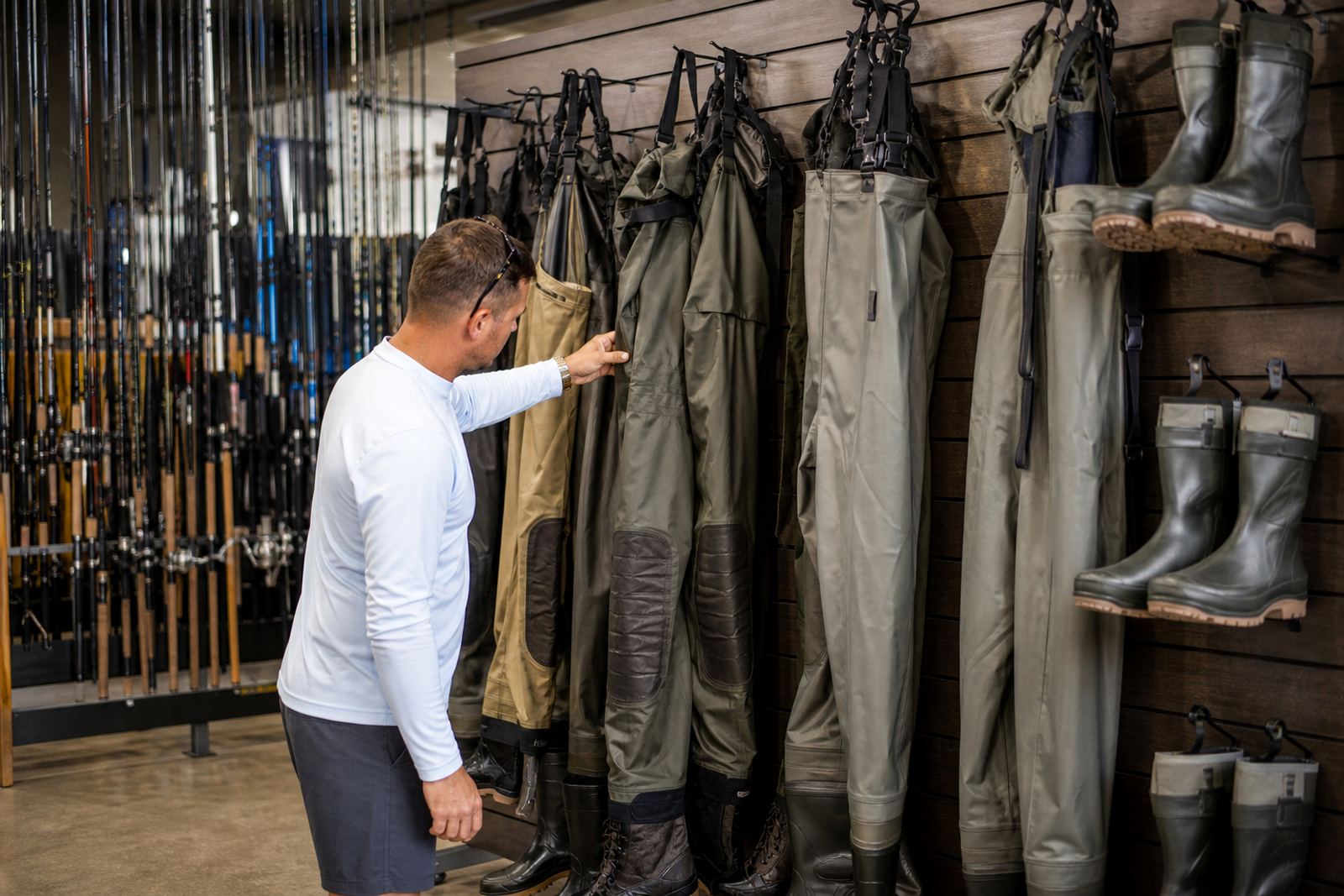
- Lightweight breathable waders suit active anglers and longer walks.
- Neoprene waders are useful in cold water and winter conditions.
- Stocking foot waders give more boot choice and can feel lighter.
- Bootfoot waders are simple to put on and work well for quick sessions.
- Chest waders offer the most coverage for deeper wading.
If you fish in hot weather, ventilation matters. If you fish in winter around still water, warmth matters more. The best pair is the one that matches your normal conditions, not just the one with the most features.
Check the details that affect durability
Look closely at the seams, braces, reinforced knees and gravel guards. These small details make a real difference when you kneel on stones, climb over a bank or spend time in shallow surf. Reinforced panels help at the knees and lower legs, where wear usually starts. Strong suspenders keep the waders sitting correctly through a full day on the water.
Pay attention to the front zip, pockets and seal points if the pair has them. A good pocket layout makes it easier to carry small items like hooks, leaders and forceps without reaching for your tackle bag every time. For saltwater use, rinse the waders after each trip and let them dry fully out of direct sun. Coastal humidity can shorten the life of poor storage habits quite quickly.
- Inspect seams and stitching before the first use.
- Check how the boots fasten or join to the legs.
- Look for patchable material if you fish rough ground.
- Rinse salt off after every coastal outing.
- Store fully dry, not folded wet in a kit bag.
Use a simple buying checklist before you pay
Before choosing a pair, work through a quick checklist. It saves money and helps you avoid buying gear that only suits one trip type. If you are buying for club fishing, family outings or regular weekend sessions, this step is worth the time.
- Where will I fish most often: sea, estuary, river or dam?
- Will I need warmth, breathability or both across the year?
- Do I want attached boots or separate boots?
- Can I move, squat and climb safely in the size I chose?
- Will the sole suit rocks, mud or mixed ground?
- Have I checked local rules on sole type where I fish?
- Do I have a way to dry and store them properly at home?
It also helps to think about transport. If you keep gear in the car for trips from Durban to inland waters, compact waders and easy drying matter. If you fish only now and then, a simpler setup may be the better buy.
Care tips that keep waders serviceable for longer
A good pair of waders should last through many seasons if you treat them properly. After each use, rinse off sand, mud and salt, then hang them upside down to dry in the shade. Avoid leaving them in direct sun for long periods, especially in summer. Heat and UV exposure can harden materials and weaken seams over time. Check zips, seals and boot joins regularly, and repair small leaks before they become a bigger problem.
If you notice rubbing at the heels or knees, inspect those areas first. A small tear caught early is usually easier to fix than a blown seam after a long day on the water. Store them flat or hung up, not crumpled under other kit. With a bit of care, you will get better value and fewer interruptions when you head out for a session, even when load-shedding has you preparing gear by torchlight.