Start with how and where you fish
The first step is not size, it is fishing style. A shore angler walking rocks at Umhlanga or a pier in East London needs something different from a boat angler launching at Durban harbour, and different again from a family heading to a dam outside Johannesburg. Think about how far you carry your gear, how often you change rigs, and whether you fish salt water, fresh water, or both.
Coastal anglers should favour storage that copes with salt, sand and wet hands. Freshwater anglers often want lighter storage with more small compartments for hooks, sinkers and floats. If you fish with children, the best system is usually simple, colour coded and easy to close properly so bait, sharp tackle and spare line stay apart.
- Short walks to the water: compact box, shoulder bag, or soft tackle pouch.
- Long shore sessions: larger organiser with trays, plus a bait container and drinks space.
- Boat fishing: stackable system that stays stable under seats and in hatches.
- Family trips: one main box with labelled trays for easy sharing and quick pack-up.
Shore anglers need speed, grip and salt protection
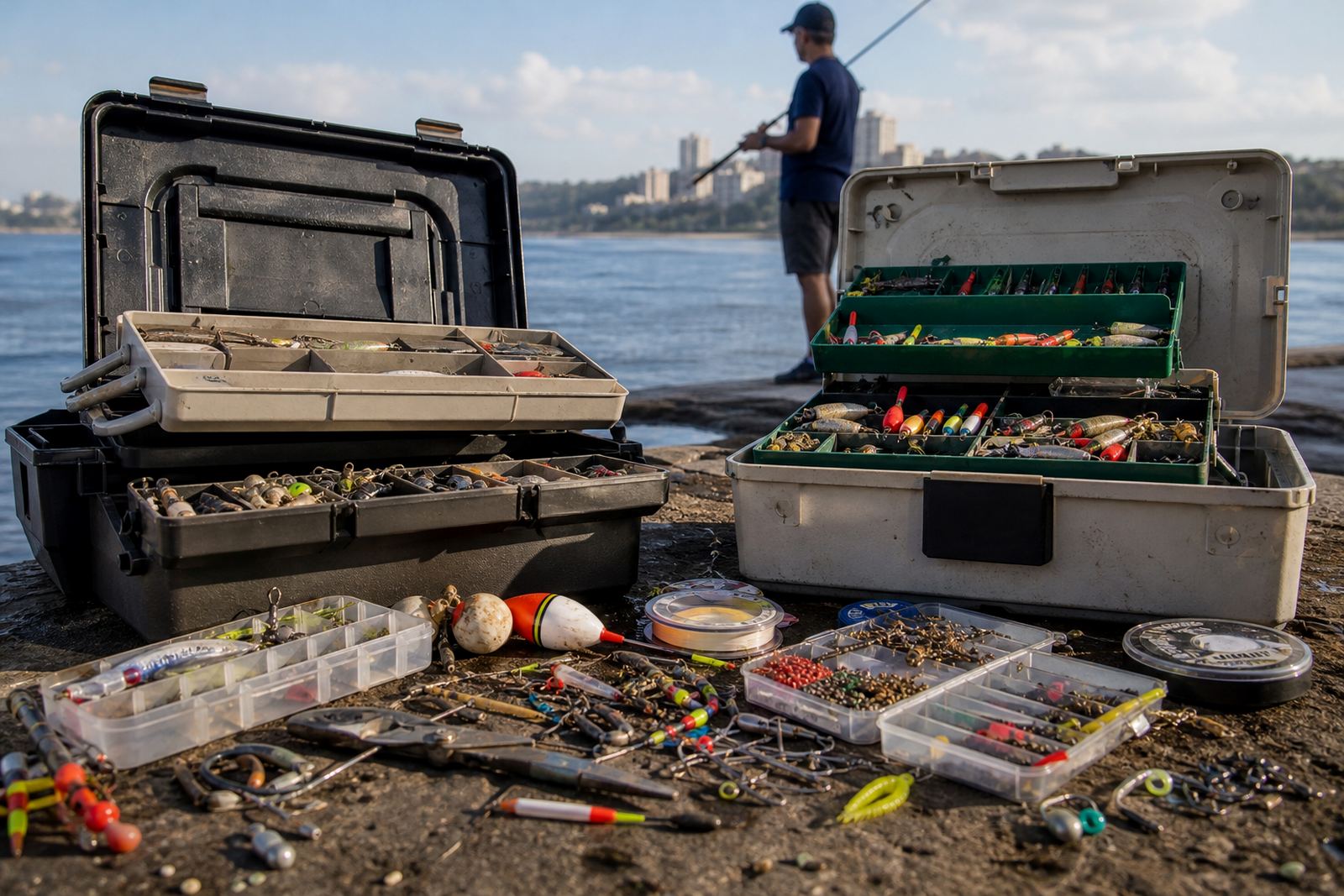
For shore fishing, tackle storage must be easy to carry and quick to open when the bite changes. A box with removable trays works well because you can set out only what you need for the session. On rocky coastlines and piers, avoid bulky lids that need two hands. A firm latch is better than a fancy setup that pops open when bumped against a cooler box or bait bag.
Saltwater anglers should also look for corrosion-resistant hinges and a shell that rinses clean after use. Even a good box will suffer if it sits in the back of a bakkie with wet traces and bait slime, so pack it dry after every trip. A small towel inside the vehicle helps when the wind gets strong and the sand starts blowing into everything.
- Carry only the rigs you actually use: leaders, hooks, swivels, sinkers and a few lures.
- Keep pliers, scissors and hook removers in a side pocket for fast access.
- Store spare line in a sealed compartment to reduce salt and moisture damage.
- Use small screw-top tubs for bait additives, beads and tiny terminal tackle.
Boat anglers should prioritise stability and waterproof storage
Boat anglers need tackle storage that stays put. On a moving deck, loose boxes slide around and spilled hooks become a safety issue. A wider box with a low centre of gravity is usually safer than a tall narrow one. If you fish offshore or in choppy conditions near Durban or Gqeberha, look for storage that fits in a hatch, under a bench, or in a console compartment without rattling.
Waterproof storage is useful, but it must still be practical. A sealed lid helps with spray and sudden rain, while internal dividers prevent lures and hooks from mixing. For boat anglers, the best habit is to keep one box for active fishing and another reserve box for backup terminal tackle, because it saves time when the tide turns and you need to move quickly.
- Choose a box with secure latches that will not open when the deck rocks.
- Pack heavier items low down so the box stays balanced.
- Separate soft plastics, metals, hooks and tools into different sections.
- Rinse the box with fresh water after saltwater trips and dry it before closing it again.
Family fishing kits work best when they are simple
Families do best with a storage setup that keeps things clear and easy to reach. Children do not need a full spread of gear, they need a few safe items and a box that makes sense. A family tackle box should open neatly, close securely, and have enough space for snacks, sun block, pliers and a basic first-aid kit. If the box is too complicated, people end up leaving lures loose in a bucket or mixing hooks with bait, which is not ideal.
For outings around local dams, harbours or rivers, a family kit can be split into three parts: one tray for hooks and sinkers, one for floats and traces, and one for bait or small consumables. Label the trays if needed. It is a simple step, but it helps when everyone wants something at once and the wind is up.
- Keep sharp gear in one locked or hard-to-reach section.
- Pack spare line, sinkers and float stoppers in small separate tubs.
- Add tissue, wet wipes and a rubbish bag for a cleaner pack-up.
- Use bright colours or labels so the right items are found fast.
How to pack a tackle box without wasting space
Good packing starts with sorting the gear by use, not by price. Put the items you use most often at the top or in the easiest tray to reach. Keep bulkier spools, spare rig components and seldom-used lures lower down. If you fish both coast and freshwater, do not mix everything together. Separate your saltwater traces from your river or dam gear so you are not searching through the wrong section at 4am before a trip.
A useful method is to pack from the outside in. Start with tools and emergency items, then terminal tackle, then lures or bait-related items, and finally store the reserve stock. Check the box after every trip and remove damp items straight away. A little organisation now saves time later and it also cuts down on rust, bent hooks, and missing sinkers.
- Do a quick inventory before leaving home: hooks, sinkers, line, tools and bait.
- Restock anything below half full the same day if possible.
- Keep one small dry pack for phone, keys and cash.
- Use silica packs or a dry cloth in humid coastal conditions.
A simple checklist before your next trip
Before you leave Springfield Park or head out on a weekend run, do one final check. Make sure the latch is secure, the trays are not overloaded, and no bait has leaked into the main compartment. If you have just serviced reels or replaced rod guides, keep those items separate until they are needed. This is especially useful on longer trips where load-shedding, early starts and traffic can make repacking feel rushed.
A good tackle box should match your fishing life, not fight it. Shore anglers need portability, boat anglers need stability, and families need clarity. If you can open it quickly, find what you need without rummaging, and clean it easily after use, you are already ahead.
- Rinse saltwater gear after every coastal trip.
- Dry the box fully before storing it in a cupboard or bakkie.
- Replace cracked dividers, worn latches and rusty hooks early.
- Check that bait containers close properly and do not leak.