Start With Water Movement and Depth
Current is the first thing to check before you tie on a sinker. In fast moving water, a light sinker will roll and drag your bait away from the strike zone, while in calmer water you can use less weight and keep a more natural presentation. Depth matters too. A deeper spot often needs more weight to get down quickly, especially when fishing from a harbour wall, estuary edge or drop off.
A simple rule is to start light and only step up if the sinker will not hold. If your line keeps bowing in the tide or sliding off the bottom, increase weight in small steps. For river fishing after rain, or when there is a strong tide pushing past Durban, Umhlanga or the Ballito coast, it is better to have enough hold than to keep re casting all day.
- Still water: lighter sinkers for a softer drop.
- Moderate current: medium weights that hold without dragging.
- Strong current or surf wash: heavier sinkers with better grip.
- Deeper water: choose enough weight to reach bottom fast.
Match the Sinker to the Bottom Type
The ground under the water tells you a lot about what to use. On sand, most sinker shapes work well because they can settle and stay put. On mud, a sinker with too much surface area can sink in and disappear, so a more compact shape is often better. On rock, reef or mixed ground, choose a sinker that is less likely to wedge itself between cracks and be ready to sacrifice a few if the area is rough.
Bottom type also affects bait movement. A sinker that digs in too hard can pin your bait unnaturally, while one that slides too easily can leave you fishing the wrong area. If you are fishing a rocky point near East London or the break walls around Gqeberha, keep extra terminal tackle on hand because snags happen quickly. Load shedding can interrupt a quick trip, so it helps to prep traces and sinkers at home before you leave.
- Sand: general purpose sinkers are usually fine.
- Mud: use a compact sinker that will not bury too deep.
- Rock and reef: keep sinkers simple and expect some losses.
- Mixed ground: carry a small range so you can adjust on the spot.
Choose Shape for Casting Style and Distance
Your casting style should influence the sinker shape as much as the weight does. Long casts from the beach often need a shape that flies straight and lands cleanly. Short, controlled casts from a jetty or harbour edge can use a different profile because distance is not the main challenge. If you are casting into wind, a streamlined sinker often helps more than simply adding extra weight.
For anglers fishing from the Durban beachfront or open coastal marks, distance and line control matter. A sinker that turns in the air wastes energy and can twist your trace. On freshwater banks around Pietermaritzburg, where a softer lob is often better, you may not need the same profile at all. Keep your rod rating in mind as well. A sinker that is too heavy can strain the rod tip and make your casts sloppy.
- Long distance casting: use a more streamlined shape.
- Short range work: choose a shape that holds and settles well.
- Windy conditions: pick a profile that cuts through the air.
- Gentle presentations: lighter, easier casting options can help.
Use Target Species and Bait to Guide the Weight
The fish you are targeting should shape the final choice. Smaller bait on light trace setups usually needs less weight, especially when fishing freshwater species or cautious fish in clear water. Bigger bait, larger traces and stronger surf conditions usually call for more weight so the rig stays where you want it.
If you are fishing for sharks, kob, grunter or larger estuary species, the bait size and current can quickly push you into heavier sinkers. For carp, barbel and bass style bank fishing, a gentler presentation often works better. Think about how the bait moves after the cast. If the sinker drags the bait too far, or makes it tumble, the presentation is off. Our team often checks sinker choice during starter setup or trip gear checks because it saves time and lost bait later.
- Small bait and light trace: lighter sinkers can be enough.
- Large bait or live bait: increase weight to keep control.
- Shy fish in clear water: aim for a natural, low disturbance drop.
- Heavy surf or strong tide: make sure the rig can stay in place.
Build a Small Sinker Kit for South African Conditions
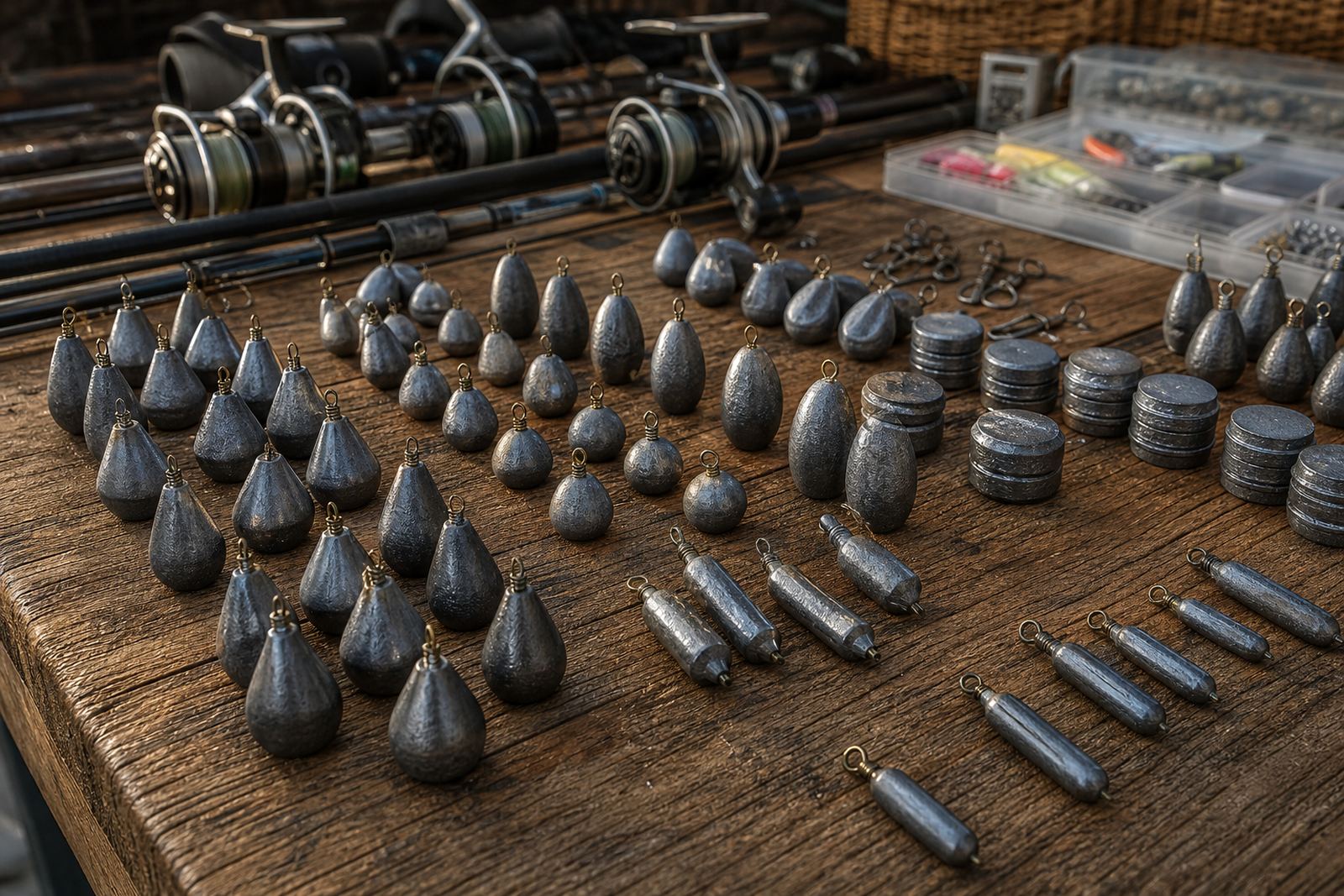
You do not need every size on the shelf, but a small range of weights covers most local conditions. A mixed kit is useful for weekend anglers, club anglers and anyone moving between Durban, Cape Town, Johannesburg or inland dams. Keep a few extra sinkers in each commonly used weight so a bad cast or snag does not end the session.
Store sinkers in a dry tackle box, especially if you fish near the coast where humidity is high. Metal fittings and hooks rust quickly if they are left damp after a session. Rinse gear after saltwater use, let it dry, then sort it back into your tray. This small habit makes a big difference to line clips, swivels and traces, and it keeps your tackle ready for the next trip.
- Carry light, medium and heavier options.
- Keep spare sinkers for rough ground or snaggy marks.
- Separate saltwater and freshwater kits if you fish both.
- Dry everything before packing away.
Quick Field Check Before You Cast
Before the first cast, do a fast check of weight, hold and presentation. Drop the rig near the bank or test the line path in shallow water if you can. If the sinker holds and the bait sits naturally, you are close to the right setup. If it rolls, lifts or digs in too much, adjust before you spend the whole session fighting your tackle.
A practical checklist saves time on the water and helps when conditions change during the day. Tides shift, wind picks up, or a dam bank gets softer after rain. The right sinker this morning may be wrong by afternoon, so keep a few options ready and do not be afraid to change. Small adjustments often catch more fish than sticking with the first choice.
- Check current, bottom and wind before casting.
- Test whether the sinker holds bottom.
- Watch for dragging, snagging or poor bait position.
- Change weight in small steps until the rig behaves properly.