1. Start with where you fish and what you are targeting
The first question is simple: are you fishing sand, rock, grass, a dam bank or a river edge? The right holder depends on the ground under your feet and the pressure the rod will face once a fish takes the bait. A light holder may be fine for small carp work at a stillwater, but surf fishing on the KZN coast needs more holding power because waves, wind and soft sand all push the rod around.
Think about rod length, reel size and the bait you use. A 12 foot surf rod with a heavy sinker needs a firmer base than a short spinning rod used for lure work. If you fish in Durban or along the North Coast where the wind can pick up fast, stability matters more than fancy extras. For freshwater trips around Johannesburg or Pietermaritzburg, portability may matter more if you walk far from the car park.
- Beach and surf fishing: choose a spike or sand holder with good depth and a pointed end
- Dam and bank fishing: use a bank stick or adjustable holder with a firm bite into the ground
- Travel and quick sessions: go for a folding or portable option that packs down small
2. Beach spikes for soft sand and surf conditions
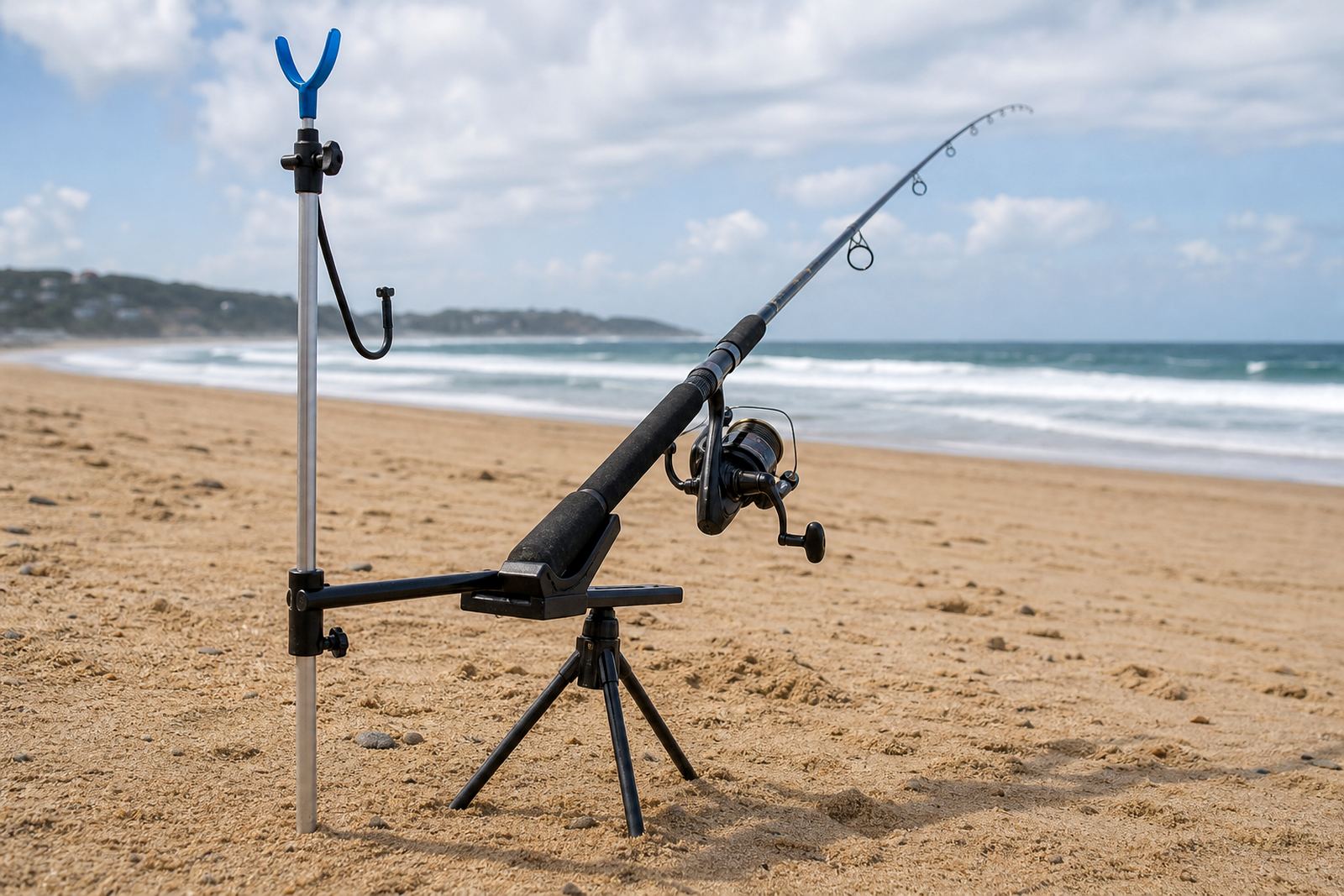
Beach spikes are the go-to for most coastal anglers because they sink into sand with little effort and give a strong upright hold. On the Durban beachfront, at Ballito or down the South Coast, a decent spike lets you set the rod at the right angle so the bait stays in the strike zone while you wait. Some models have a fixed angle and others let you adjust the tilt, which helps when the swell changes through the day.
When choosing a beach spike, check the length of the main shaft and the thickness of the metal. Short spikes can work in hard sand, but longer ones are better when the sand is loose or the rod is heavy. A wide butt cup at the top is useful because it keeps the rod butt from slipping in the wind. If you fish close to reef or on a tide line, make sure the spike drives in cleanly and pulls out without bending.
- Best for: surf casting, slide baiting and long waits on the beach
- Look for: corrosion resistance, a sharp point and a solid rod cup
- Not ideal for: very rocky ground or areas where sand is too shallow over hard pack
After a saltwater session rinse the holder in fresh water, then dry it before storing. Coastal humidity in KwaZulu-Natal can rust cheaper fittings quickly if they are left wet in the back of the bakkie.
3. Bank holders for dams, rivers and rougher ground
Bank holders are useful where a beach spike cannot bite properly. At inland dams, in grassy river edges or on firmer soil, a bank stick with a screw point or stepped end can hold the rod securely. These are especially handy for freshwater anglers around Gauteng and the Free State, where banks may be mixed with stones, clay and roots.
The advantage is control. You can set the holder low for a bite alarm setup or higher when the grass is thick. Many bank holders come with adjustable heads, which helps when the bank is uneven. If you are fishing a slope, place the rear of the holder slightly lower than the rod tip so the rod does not swing or slide when the line tightens.
Check the ground before pushing in. Soft mud can swallow a thin stick, while hard ground may need a stronger point and a bit of body weight to seat it properly. If the bank is unstable, move back a little rather than forcing the holder into a poor spot.
- Best for: carp, kurper and mixed freshwater sessions
- Use on: grass, soil, compact banks and light gravel
- Tip: carry a small mallet only if the holder is made for it, not every stick is built for hammering
4. Portable holders for quick trips, travel and light tackle
Portable rod holders suit anglers who fish on the move. If you are doing a quick after-work session or travelling with limited space, a folding or telescopic holder makes life easier. These options are popular with anglers heading between Durban, Cape Town, Gqeberha and East London because they pack into a rod bag or boot without taking over the whole load.
Most portable holders are lighter than beach spikes, so they work best with lighter rods and calmer conditions. Some have clamp-style feet or fold-out legs. Others use a short spike with a stabiliser arm. The key is balance. If the holder is too light for the rod, the first hard pull on the line can pull it over.
Before buying, test how quickly it opens and locks. You do not want to fight with bits and clips when the tide is moving or the bite is on. Also check whether it can be cleaned easily because sand gets into every hinge if you fish the coast often.
- Best for: light spinning, bank sessions and anglers who move spots often
- Good to have: carry bag, locking joints and a simple height adjustment
- Watch out for: wobble in wind and weak plastic cups on heavier rods
5. How to choose the right holder for your rod setup
Start with the rod and reel, then work backwards. A heavier rod with a large reel and a sinker over the shore needs more support than a compact feeder setup. Match the holder to the balance point of the rod so the tip points where you want it without strain on the butt section. If the holder is too low or too high, you may end up with a line angle that works against the bait presentation.
Use this quick checklist before you buy or pack for a trip:
- Will I fish sand, soil, rocks or mixed ground?
- How heavy is the rod and reel combined?
- Will I move spots often or stay in one place?
- Do I need corrosion resistance for salt water use?
- Can I store and clean it easily after the trip?
If you fish both coast and freshwater, keep at least two types in your kit. A beach spike handles the surf, while a bank holder covers inland trips. That way you are not trying to use the wrong tool for the ground beneath you.
6. Care tips, safety and simple setup steps
Rod holders last longer when you treat them properly. Rinse salt, sand and mud off after every trip, especially after wet weather or a long session in spray. Dry the holder before putting it away, then check for bends, loose screws and cracks around the cup or joints. If a point has dulled, sharpen it lightly rather than forcing it into the ground next time.
Setup is quick if you follow the same order each time:
- Choose the flattest, firmest ground available
- Push or screw the holder in straight, not at an angle
- Set the rod butt fully into the cup
- Check the tip height and line direction
- Give the rod a light test pull before stepping back
Do not place a holder where people are walking or where a hooked fish could drag the rod into a path. In busy public spots around Durban and the beachfront areas, keep your gear tidy and clear of other anglers. A small adjustment now saves a broken rod later, and keeps your session calm when the wind picks up.