Start with the water, species and tackle you are using
Before you buy line, think about where you fish most often. A Durban surf rod needs different line behaviour to a light freshwater spin setup for bass, tilapia or barbel. On the coast, abrasion from rocks, sand and shells is a bigger concern, while inland anglers often need better stretch and easier handling around weed beds and timber.
Match the line to your reel size, rod rating and target species. Thinner lines cast farther and hold less water drag, but they can be less forgiving when a fish surges close to the bank. Heavier lines are easier to control and better around structure, though you may give up some distance. If you are not sure, start with a practical middle ground and adjust after a few trips.
Braided line when you need bite feel and casting distance
Braid is popular with anglers who want direct contact with the lure or bait. It has very little stretch, which helps with hook sets and makes it easier to feel taps, bottom changes and light bites. It also has a thinner diameter for its strength, so it can improve casting distance on many spinning setups. For Durban anglers chasing garrick, kob or shad, braid can be a smart choice when paired with the right leader.
The main trade off is that braid can be less forgiving. It can dig into the spool if your drag is too tight, and it does not like rough surfaces. Use quality knots and check for fraying after fishing near rocks or pier piles. In windy conditions, braid can catch more top water movement, so a heavier leader may help settle the presentation.
- Best for: lure fishing, jigging, fast hook sets and longer casts.
- Check before buying: rod guides, reel capacity and knot compatibility.
- Watch out for: abrasion, wind knotting and poor drag setup.
Monofilament for simple handling and everyday fishing
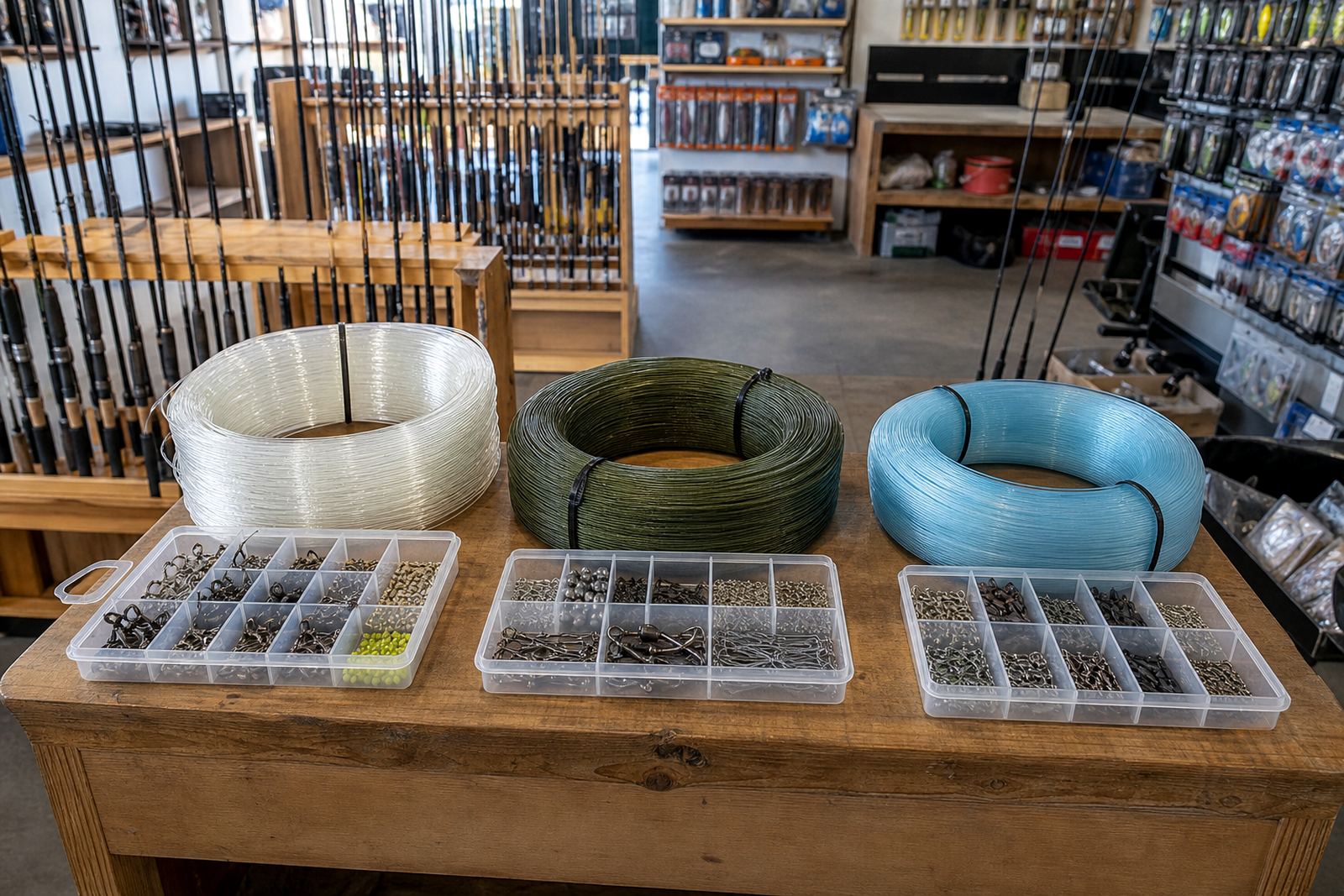
Mono is still a good all-round option, especially for beginners and anglers who want a line that is easy to tie, handle and replace. It has more stretch than braid, which can help absorb sudden lunges and make it less likely to pull hooks free. For general freshwater use, budget bait fishing and casual shore trips, mono gives good value for money.
Mono can lose performance faster in strong sun and saltwater exposure, so check your line often for nicks, clouding or coil memory. If you fish in coastal humidity or leave tackle in the car between trips, replace it more often than braid. A fresh spool of mono can save you from losing fish due to old brittle line, and yes, it usually costs less up front.
- Best for: beginners, bait fishing, float fishing and general-purpose setups.
- Good points: stretch, easy knotting, lower entry cost.
- Limitations: more memory, less sensitivity, shorter service life in harsh conditions.
Leader materials for abrasion protection and better presentation
A leader is the section between your main line and hook, lure or trace. It can be made from tougher mono, fluorocarbon or heavier abrasion-resistant material depending on the job. Leaders are useful when you want to reduce visibility near the bait, protect the main line from rocks or teeth, or add extra shock absorption on hard casts. In many setups, the leader does the hard work while the main line handles the spool.
For estuaries, rocky shorelines and fish with sharp mouths, a leader is often not optional. In freshwater, a leader can help when fish are line-shy or when the water is clear. Keep leader length practical. Too short and you lose protection, too long and the knot travels through the guides more than it should.
How to choose line on a budget without wasting money
You do not need the most expensive line for every rod. Spend where the pressure is highest. If you fish often from the coast, put better money into main line and leader because salt, sand and UV do the damage quickly. For a spare freshwater outfit used a few weekends a month, a good mono setup can be plenty. The trick is matching cost to use, not buying the same line for every reel.
A practical setup is often better than an overcomplicated one. Many anglers keep braid on their main spinning reels and use leader material to suit the session. Others use mono on bait runners or general-purpose reels because it is simple and cheaper to replace. If you are starting out, ask for a setup that lets you fish properly now and upgrade later, not a flashy spool that is expensive to maintain.
- Spend more on: main line for regular coastal fishing, heavy lure work and high-use reels.
- Save on: occasional backup reels, simple bait rods and short-session freshwater fishing.
- Replace sooner if you notice fading, cracking, flattening or poor knot grip.
Simple line setup checklist before your next trip
A quick check before you head out can save a lost fish and a wasted morning. Start by inspecting the first 10 to 15 metres of line for cuts, flat spots and twists. Then check your knots, leader joins and drag tension. If the line has been on the reel for a long time, unwind a little and feel for stiffness or memory. Small issues become big ones once a fish hits hard.
Load-shedding can also affect how you prep tackle at home, so keep line spools, scissors and knot tools together in one place. That way you can sort rigs quickly when power goes off and you are still packing for an early start. A neat setup also helps when you are re-spooling in a hurry, which happens more often than anglers like to admit.
- Check line for damage, memory and colour fade.
- Match leader strength to the water, species and structure.
- Test knots before fishing, not on the first cast.
- Set drag properly for the line type you are using.
- Keep spare leaders and a small line cutter in your kit.