Why bait coolers matter on South African sessions
Fresh bait lasts longer when it stays cool, shaded and dry. In places like Durban, Ballito and Gqeberha, heat and humidity can spoil bait quickly, while strong sun on an open beach or dam wall can warm a bag in under an hour.
A proper bait cooler is not only for fish bait. It also helps with ice packs, drinks, pre-cut traces and anything else you want to keep out of the sun. For long sessions, that means less waste, fewer rushed shop runs and better bait presentation when the bite switches on.
Think about your usual fishing style. A harbour rock angler carrying bait by hand has different needs from a freshwater angler loading the bakkie for a full day at Albert Falls or Midmar. The right cooler size and layout should suit your routine, not just your budget.
Choose the right size and build for your fishing style
Start with capacity. A small bag works for a quick session, but once you pack bait blocks, ice bricks, a lunch pack and a few tins or containers, space runs out fast. For weekend trips, anglers usually do better with a medium cooler bag or a hard cooler with a proper seal.
Look for thick insulation, a water resistant outer shell and strong zips or latches. Salt spray, sand and wet hands are hard on cheap fittings. If you fish from the coast often, choose material that wipes clean and can handle damp conditions without holding bad smells.
- Short sessions: compact bag, 1 to 2 bait tubs, 1 ice pack
- Full day beach trips: medium cooler, separate dry pocket, shoulder strap
- Club or family outings: larger cooler with rigid sides and easy drain access
- Freshwater trips: lighter bag with room for worms, dough bait and snacks
If you carry gear a long way from parking to spot, check the weight when loaded. A cooler that is too bulky becomes a pain on dunes, rocks or steep bank access at some dams.
How to pack bait so it stays usable longer
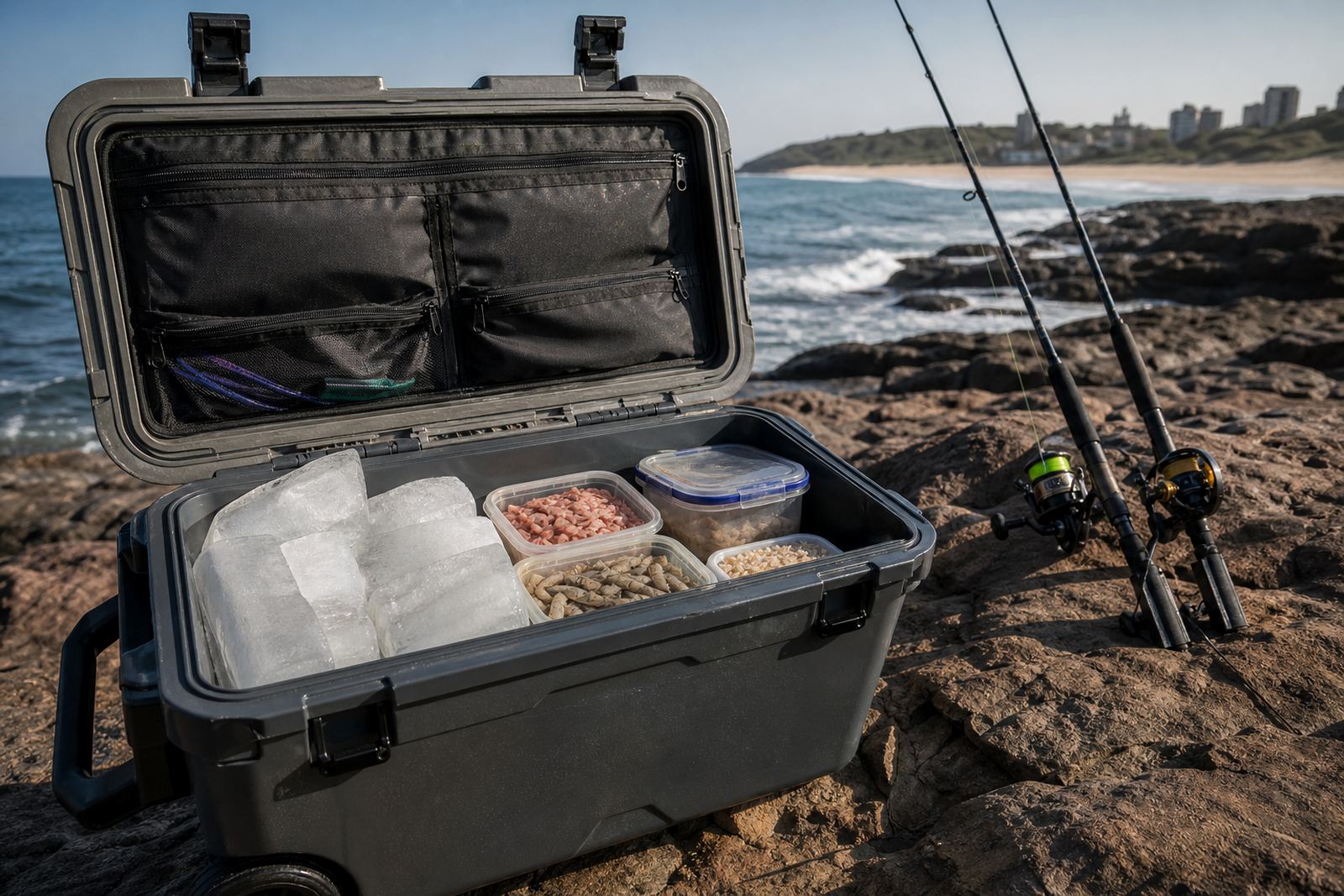
Packing is just as important as the cooler itself. Keep raw bait, cut bait and food separate. Use sealed tubs for bait so melt water does not soak everything else. Put ice or frozen bricks on the top and bottom if the bag allows it, because cool air drops and this helps maintain temperature.
Do not overload the cooler. Air flow matters. A packed bag with no space around the containers warms up quicker, especially if the lid is opened often. Keep the bait you will use first near the top for quick access.
- Pre-chill the cooler before leaving if possible
- Freeze bait at home in portion sizes you will use
- Use separate containers for prawns, sardines, worms and artificial bait
- Label bait tubs if you carry more than one type
- Keep bait out of direct sun while rigging up
A small bit of planning saves a lot of bait loss. If the session may run late, pack an extra ice pack and a spare container so you can refresh the cooler mid day.
What to check before buying a cooler bag
Before you spend money, check the details that matter in real use. A cooler bag can look good on the shelf but fail once it gets wet, sandy or overloaded. Strong stitching, a solid base and easy cleaning matter more than fancy extras.
Ask yourself how and where you fish. Coastal anglers need stronger corrosion resistance on zips and fittings. Freshwater anglers may prefer lighter carry and more compartments. If you fish from a boat, a compact bag that fits under a seat or in a hatch can be more practical than a tall one.
- Does it hold temperature for several hours in warm weather?
- Are the handles and strap comfortable when full?
- Can the inner lining be wiped down easily?
- Will it fit in your vehicle with the rest of your tackle?
- Are the zips, seams and corners reinforced?
Also think about cleaning. Bait smells linger. A smooth lining is much easier to rinse after a session than a rough one with lots of folds and corners. This is one of those small details that matters every week.
Simple bait storage habits that prevent spoilage
Good habits keep bait fresher than any fancy container. The biggest mistake is leaving bait in the sun while setting up rigs, or opening the cooler too often during the hottest part of the day. If you can, keep the bag in shade and only take out what you need.
For longer trips, rotate bait and ice. Replace melted ice bricks when needed, and move the coolest packs around during the day. If you are fishing from the Durban coast in summer, even a few extra minutes of direct sun can make a difference. In hot inland spots like Johannesburg and the North West, the air may be dry but the heat can still dry bait out quickly.
- Store bait in sealed tubs, not loose in the cooler
- Keep cooked and raw bait apart
- Use separate towels for bait handling and rod cleaning
- Drain excess water from the cooler when needed
- Never leave bait in a hot vehicle for long periods
If you keep bait for regular trips, buy only what you can use. Freshness is easier to manage when you are not carrying excess stock from one weekend to the next.
A quick packing checklist for your next session
Use this checklist before you leave home. It keeps packing simple and helps you avoid the common things that get forgotten in a rush, especially on early morning starts.
- Bait tubs sealed and labelled
- Ice packs frozen solid
- Cooler wiped dry inside
- Dry cloth or paper towel packed
- Rubbish bag for used wraps and bait waste
- Extra container for split bait or cut pieces
- Chilled drinks packed separately if needed
- Shade plan for the spot, if no cover is available
For club outings or family trips, it helps to assign one person to manage the cooler. That way bait is not left open while everyone sorts their own gear. Small discipline on the day keeps bait in better condition and makes the session run smoother.
If you are unsure what size or type suits your fishing, speak to the team at Catches through the contact form. We help anglers across Durban, Cape Town, Gqeberha, Johannesburg and East London choose gear that fits the way they fish.