The brief from a Richards Bay harbour angler
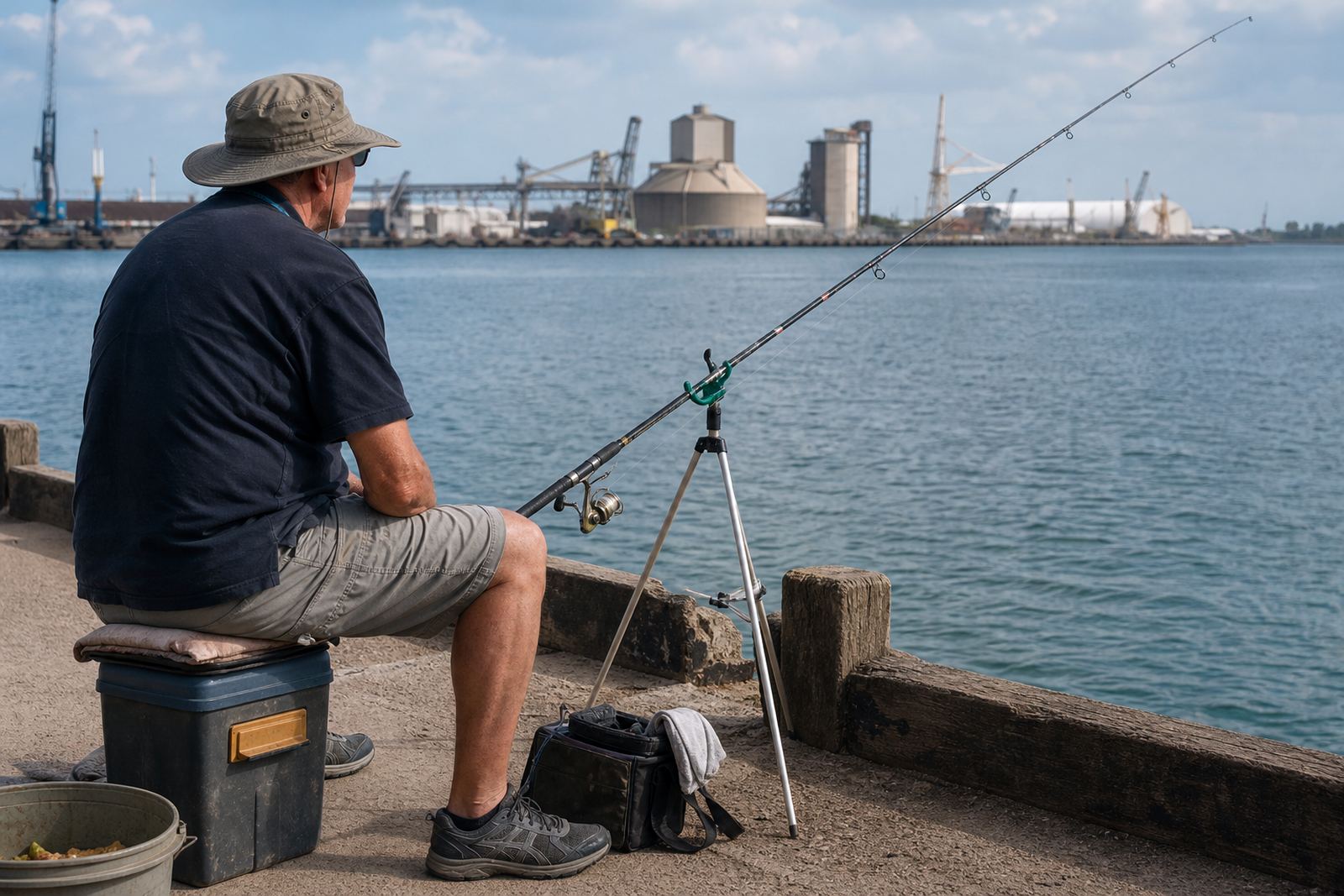
The client was a regular harbour angler based in Richards Bay who fished after work and on early weekend tides. The main issue was not lack of tackle, but time lost at the water: slow rig changes, bait that did not hold well in the heat, and traces that were fine for one session but not ready for the next. He wanted a neater system that would let him change from live bait to cut bait quickly, without unpacking half the bag on a windy quay wall.
The brief was straightforward. Build a harbour-ready tackle set for evening sessions, keep it easy to carry, and make sure the gear would handle salt spray, wet hands and occasional rough handling on the stones. He also wanted advice on when to use lighter leaders for shy fish and when to step up to heavier line for abrasion around concrete, mooring ropes and barnacle covered edges.
- Location: Richards Bay harbour, KwaZulu-Natal
- Fishing style: evening harbour sessions and short weekend trips
- Main goal: quicker rig changes and better bait presentation
- Key concern: salt exposure, humidity and limited time after work
What we had to work around at the harbour
Richards Bay is hard on tackle. Salt mist gets into reels, bait dries out quickly if it sits in open sun, and line can take a knock on rough harbour edges. The client was also dealing with load-shedding at home, so some prep tasks had to be set up in a way that did not depend on long charging cycles or fancy kit. He needed a setup he could grab, check and use without drama.
We also had to keep the system compact. There was no point building a bulky arrangement if it took too long to organise before dark. The storage needed to fit into a single carry bag with room for spare traces, sinkers, hooks, pliers, a line cutter and bait containers. We kept everything practical and labelled, so he could find what he needed in the dark with one torch and damp hands.
- Saltwater exposure and high humidity
- Short setup time before evening tide changes
- Need for abrasion resistance around harbour structures
- Compact carry size for walking the harbour edge
The tackle and bait setup we supplied
We put together a harbour-specific kit with rods and reels suited to medium shore work, plus terminal tackle that could be swapped quickly. The reel setup was matched with smooth drag adjustment, decent line capacity and a line that would behave well in wind. For the rod side, we recommended a length that still gave casting reach without becoming awkward on busy harbour walkways.
For the terminal tackle, we prepared ready-use traces in a few proven harbour styles, including basic sliding rigs and stronger abrasion-resistant leaders for structure. We also packed sinkers in the common weights needed for harbour conditions, so he would not be stuck changing plans because the tide or current picked up. Bait handling advice was part of the supply too, with small containers and portioning tips for sardine, squid and other standard harbour bait.
- 1 medium shore rod for harbour casting and steady control
- 1 reel with smooth drag and corrosion-resistant components
- Pre-tied traces in 2 to 3 practical harbour patterns
- Sinker range for lighter and heavier current conditions
- Bait containers sized for short evening sessions
How we changed the way he prepared for sessions
We spent the first week assessing what he already had, then rebuilt his system around speed and consistency. The reel was serviced, the line was checked and replaced where needed, and the drag was tuned so it would start cleanly without sticking. That mattered because a harbour fish often gives very little warning, and a rough drag can lose a fish on the first run.
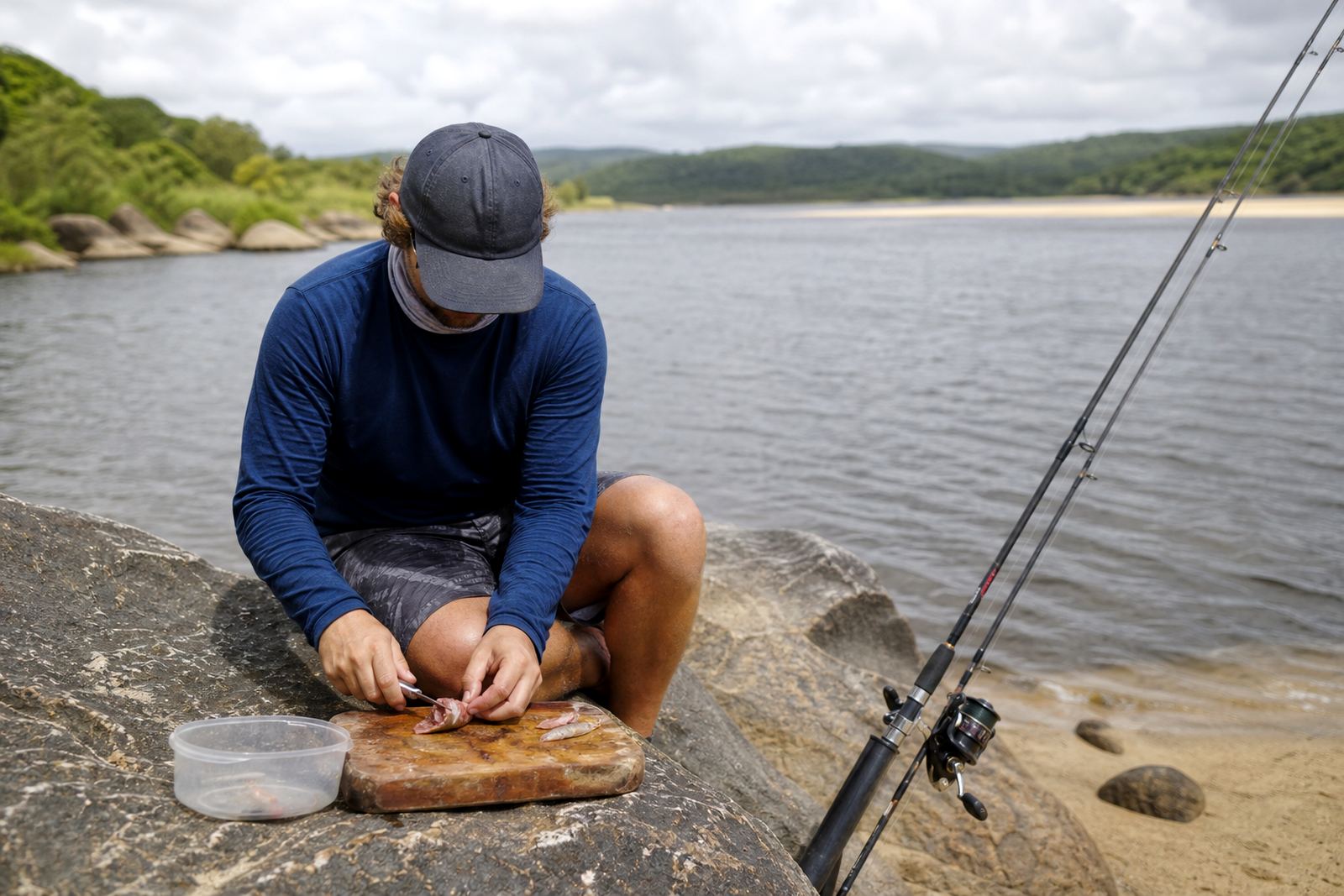
We also sorted his trace-making process. Instead of tying fresh rigs from scratch every time, we set him up with a small stock of ready traces, grouped by target fish and bait type. His bait prep was adjusted so he could portion, store and handle bait more cleanly after work. It sounds simple, but in a busy harbour a minute saved is often the difference between getting one more cast in or packing up early.
Our practical guidance covered rod angle, casting direction around wind shifts, and how to keep bait cooler for longer in warm KwaZulu-Natal conditions. We also showed him how to rinse and dry the gear after each outing, because harbour spray leaves a film that causes trouble later if it is ignored.
Timeline and turnaround over three weeks
The project took three weeks from first check to final handover. Week one was gear inspection and the first service pass. Week two focused on line, traces and bait handling changes. Week three was the final tuning stage, where we checked how quickly the client could move from one rig to another and adjusted the carry layout so it felt natural on the water.
That timeline worked because the improvements were layered, not rushed. We did not try to change everything at once. Instead, each step was tested against real harbour use. The result was a setup that fit the way he actually fishes after work, not a complicated arrangement that looked neat only when spread out on a table.
- Week 1: inspection, reel service and drag check
- Week 2: line replacement, trace prep and bait handling setup
- Week 3: final adjustments and practical on-water review
Results from the evening harbour sessions
After the changes, the client reported faster rig changes and less time lost sorting bait in the dark. He was able to switch between bait styles more cleanly, keep his traces organised, and fish longer during the best part of the evening tide. The reel felt smoother under pressure, and the new layout meant he spent less time rummaging through loose tackle.
The clearest improvement was consistency. Instead of starting each session with a half-prepared bag and a few loose bits in the bottom, he now had a simple system that held together in harbour conditions. That brought better confidence on the stones and fewer avoidable mistakes when the bite picked up. It also made cleaning up after the session much quicker, which matters when you still have a drive home and work the next day.
- Faster rig changes during short bite windows
- Cleaner bait handling in warm, humid conditions
- Better trace organisation and less tackle loss
- More useful fishing time during evening tides
What we would do again for a similar harbour project
We would use the same approach again for any angler fishing Richards Bay, Durban Bay or similar coastal harbour areas. Start with the way the person actually fishes, then build around tide timing, carry weight and local conditions. A good harbour setup does not need to be complicated, but it does need to be ready when the water turns.
If we repeated this job, we would keep the same focus on quick access, salt resistance and simple maintenance. We would also keep a small spare stock of the most used trace parts and sinker sizes, because harbour fishing often changes with current, weather and bait availability. The right system is the one that still works after a long week, when the wind is up and the light is fading, not just on the first day.
Key facts
| Project location | Richards Bay Harbour, KwaZulu-Natal |
|---|---|
| Client type | Private harbour angler |
| Project timeline | 3 weeks |
| Core focus | Faster rig changes and bait handling |
| Gear scope | Rod, reel, terminal tackle, bait prep advice |
| Conditions addressed | Salt spray, humidity, wind and rough harbour edges |