Family brief: lighter gear, less fuss, better beach time
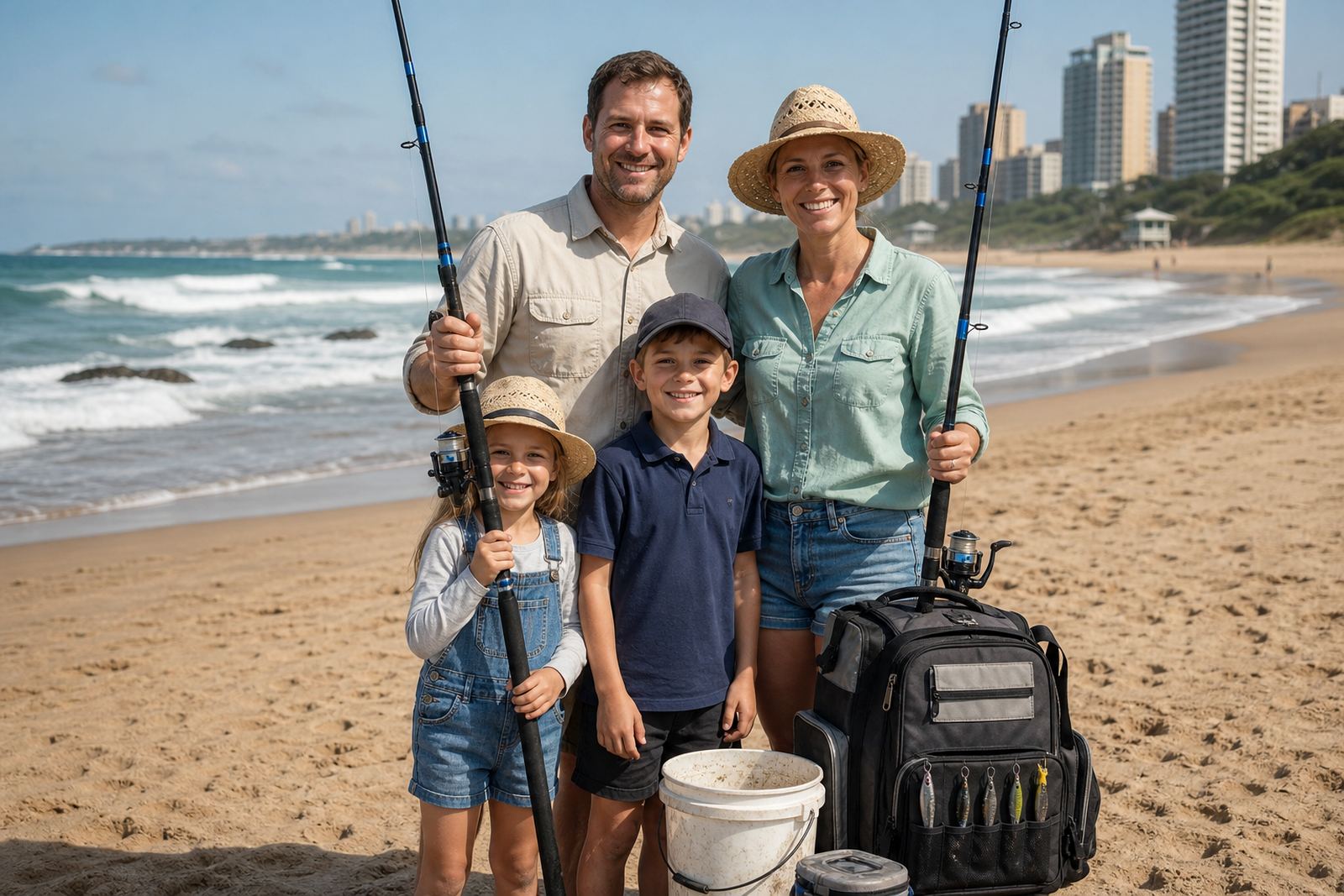
The client was a Durban family from the Umhlanga area who wanted to spend more time fishing and less time sorting out tangled lines, awkward rods and overcomplicated rigs. They had been using mixed hand-me-down tackle, which made a short beach session feel longer than it should. Their brief was straightforward: give us sensible surf outfits for adults and a junior angler, keep the setup easy to carry, and make sure everything could handle South African coastal conditions.
They fish mainly from the Umhlanga beachfront, with occasional trips south toward Durban and north toward Ballito. That meant we needed tackle that works in salt air, stands up to sand, and is simple enough for a family that goes out after work or on a weekend morning. They also asked for advice on bait, leader lengths, and how to store gear in the car without salt water and sand taking over. Their budget was practical rather than flashy, so the focus stayed on value, fit for purpose and low maintenance.
- Location: Umhlanga, Durban north coast
- Use case: family surf fishing and relaxed weekend sessions
- Target species: small to medium coastal species, plus general bait fishing
- Priority: easy casting, simple rigs, and durable saltwater gear
What we supplied for the surf and shoreline
We put together two adult surf outfits and one lighter setup for the younger angler, with matching terminal tackle so the family could use the same basic rig style across all three. The adult rods were 12 ft surf rods with a medium-heavy action, suited to throwing bait rigs and sinkers into the breakers without feeling bulky. For the junior setup we went shorter and lighter, with a rod that was easier to hold for longer periods and a reel that did not overpower the blank.
The reels were saltwater-friendly fixed spool models with smooth drags and enough line capacity for beach work. We spooled each reel with braid on the main line and added mono leaders for abrasion resistance in the surf. We also supplied trace material, hooks in a few useful sizes, swivels, sinkers for changing sea states, and bait accessories that make prep quicker when the family is trying to get to the beach before the wind picks up. All of this was selected with Durban humidity and coastal spray in mind, so the gear can be rinsed down and stored properly after use.
- 2 x 12 ft surf rods for adult anglers
- 1 x lighter rod and reel combo for a junior angler
- Reel spooling with braid and leader material
- Terminal tackle: hooks, swivels, sinkers, trace components
- Bait prep items for quick beach-side rigging
Constraints from coastal weather and family logistics
The main challenge was not the tackle itself, but how the family would actually use it. On the north coast, wind can come up fast and sand gets into everything. Add a car full of towels, cooler boxes and children, and you need gear that packs neatly and does not create extra admin. We kept the number of rod lengths manageable, reduced duplicate tackle, and chose reels that are easy to rinse and service after use.
Another constraint was timing. This family wanted to fish around school routines and weekend traffic, so they needed a setup that was ready to go rather than something that needed a long prep session every time. We built the kits so they could load up on a Friday afternoon, head out to Umhlanga or Ballito the next morning, and get fishing without first untangling old traces or checking every knot from scratch. Small details mattered here, like line capacity, leader strength and a layout that would work for both adults and a younger angler. It had to be practical, not just technically correct.
- Coastal salt, sand and humidity
- Limited pack-up time with children in the mix
- Need for quick rinse-down and storage after use
- Simple rigging that family members could repeat on their own
How we set up the tackle for Durban surf conditions
We serviced and tested the reels before handover, checked drag settings, and made sure each outfit was balanced for the rod length. The line spooling was done neatly so the braid lay evenly on the spool, which helps with casting and reduces wind knots. We also replaced a worn rod guide on one of the older family rods they wanted to keep, and repaired a chipped tip section so it could be used as a backup rather than left in the garage.
For the rig side, we showed them a simple surf trace for bait fishing, plus a slightly lighter version for calmer water and smaller bait. We also covered sinker choice, because along the Durban north coast a family does not want to fight the current every time conditions change. They left with advice on when to use a grapnel-style sinker, when a plain sinker is enough, and how to change traces without wasting time on the beach. We also packed a basic trip gear check list for them, which included spare leaders, a cloth for hands and a small bait tray. That little prep makes a real differnce on busy mornings.
- Reel servicing and drag tuning
- Line spooling with even lay and correct tension
- Rod guide replacement and tip repair
- Simple surf trace setup for changing sea conditions
Timeline: one week from first call to ready-to-fish
The project took one week from first enquiry to collection. Day one was the brief and stock check. Day two was the gear selection and sizing. By midweek we had the reels serviced, the line spooled, and the spare rod repaired. The family came in for a final fit check near the end of the week so we could confirm the rod lengths, reel balance and trace preferences before they headed to the beach.
Because the request was time-sensitive, we kept the process tight and practical. There was no need for a drawn-out back and forth. We asked clear questions about where they fish, what they target, who uses which rod, and how much kit they wanted to carry. That let us match the setup to real use rather than guesswork. The result was a tidy set of family fishing kits that could be loaded into the car without taking over the boot. Simple, but sorted.
- Week 1: brief, stock matching and reel assessment
- Midweek: servicing, spooling and repairs
- End of week: fit check, rig advice and handover
What changed after the first few beach sessions
After a few outings, the family reported that the setup was easier to manage and less tiring to use. The junior angler could hold the lighter outfit for longer, and the adults found casting and retrieving more comfortable over a full morning session. They also mentioned that pre-tying a few traces at home saved time on the beach, especially when the wind picked up or the kids wanted to move spots quickly.
The other clear win was cleaner storage. The family now rinses the reels, wipes the rods, and keeps the terminal tackle in separate containers instead of loose in the car. That small habit has already reduced rust on hooks and salt build-up on the gear. They have also started asking for bait advice before each trip, which helps them buy only what they need for the conditions. For a family setup, that is exactly what we wanted: less faff, more fishing, and gear that stays ready for the next weekend.
- Less fatigue during longer beach sessions
- Faster setup and pack-down
- Cleaner storage with less corrosion risk
- Better confidence with bait and rig choice
Key facts
| Client type | Durban family, Umhlanga area |
|---|---|
| Project location | North coast beach fishing, Durban to Ballito |
| Timeline | 1 week |
| Main gear | 2 surf rods, 1 lighter junior setup, 3 reels |
| Service work | Reel servicing, line spooling, rod guide replacement, tip repair, drag tuning |
| Use profile | Weekend surf fishing for coastal species with simple family rigs |