Classic J hooks for everyday bait fishing
J hooks are the traditional open-shank hook used for bait fishing. The shape gives a straight point and a clear throat, which makes them easy to bait and simple to use on a wide range of rigs. They are a practical option for anglers who fish with sardine strips, worm, prawn, pilchards, chokka, dough bait, or small live baits. For many local anglers, especially those fishing from the beach or a sidewall in Durban, a J hook is still the first hook in the tackle box because it is familiar and dependable.
These hooks are available in different wire gauges and point styles so you can match the hook to the bait and the target species. Light-wire J hooks work well for small baits and finicky feeders, while stronger patterns suit heavier saltwater use and larger baits. The right size matters, because a hook that is too big can spoil the bait presentation and a hook that is too small may not hold under pressure.
- Easy to bait with cut or whole baits
- Suitable for sliding or fixed trace setups
- Useful for general fishing in surf, estuary, river and dam conditions
- Available in small, medium and larger sizes for different species
Sizes, finishes and hook patterns to choose from
When ordering J hooks, check the size number, wire thickness and finish. Smaller sizes are often chosen for light freshwater work and smaller estuary species, while medium sizes are common for general bait fishing around the coast. Larger J hooks are better suited to chunk baits, bigger traces and stronger fish. Some anglers prefer a finer point for easier penetration, while others prefer a heavier gauge for extra holding power.
In coastal conditions, especially around Durban, Umhlanga and Ballito, a corrosion-resistant finish is important because salt spray and humid storage can shorten the life of untreated hooks. Freshwater anglers in Pietermaritzburg or inland Gauteng often still choose corrosion-resistant hooks because tackle boxes are exposed to damp garages, rain and long storage periods. Keep in mind that hook size is not only about fish size, it is also about bait size and the way the bait sits in the water.
- Small sizes for worm, prawn and finesse bait presentations
- Medium sizes for sardine, pilchard strip and standard trace work
- Larger sizes for thicker baits and stronger saltwater applications
- Different wire gauges for lighter or heavier fishing styles
Where J hooks suit best on the water
J hooks are used across many South African fishing spots because they are versatile and easy to rig. They suit surf fishing for species such as shad, kob, grunter and stumpnose depending on the bait and size used. In freshwater they work well for carp, barbel, tilapia and other bait feeding species where a simple bait presentation is preferred. They also suit estuary fishing where anglers need a neat rig that sits well in moving water.
For beginners, J hooks are a straightforward option because the rigging process is simple and the tackle is easy to understand. For experienced anglers, they remain useful when a bait must be presented in a specific way or when a trace needs to be adjusted quickly on the side of the water. If you fish from rocks or breakwalls, choose the size carefully so the hook matches the bait and you still get a solid set when the fish takes off.
- Coastal surf, rocks and harbour edges
- Estuaries and lagoon mouths
- Rivers, canals and dams
- General bait fishing for beginners and experienced anglers
Rigging, installation and tackle setup
J hooks can be tied directly to trace material or mounted on a snood, depending on the rig and target species. The knot choice should match the line thickness and hook eye size. A compact knot helps keep the hook sitting correctly and reduces twisting when casting. If you are using a bait clip or casting sinker, make sure the hook is tied to a trace length that suits the bait size and casting style. For most bait fishing, the hook point should remain clear and facing the right way, not buried deep inside the bait.
There are no power or gas requirements for J hooks themselves, but the gear they are used with matters. You may need a rod and reel matched to the line class, plus sinkers, swivels, leaders and bait cotton depending on the rig. For heavier surf work, a stronger rod and reel setup helps when casting bigger baits into wind or current. If you are fishing at night or during load-shedding, pack your tackle, trace bits and bait prep items before you leave home so you are not sorting through kit in the dark.
- Check the hook eye for a clean tie point
- Match hook size to bait and target species
- Use the right leader strength for saltwater or freshwater conditions
- Keep spare hooks in sealed packets to avoid rust and tangles
Care, storage and servicing between trips
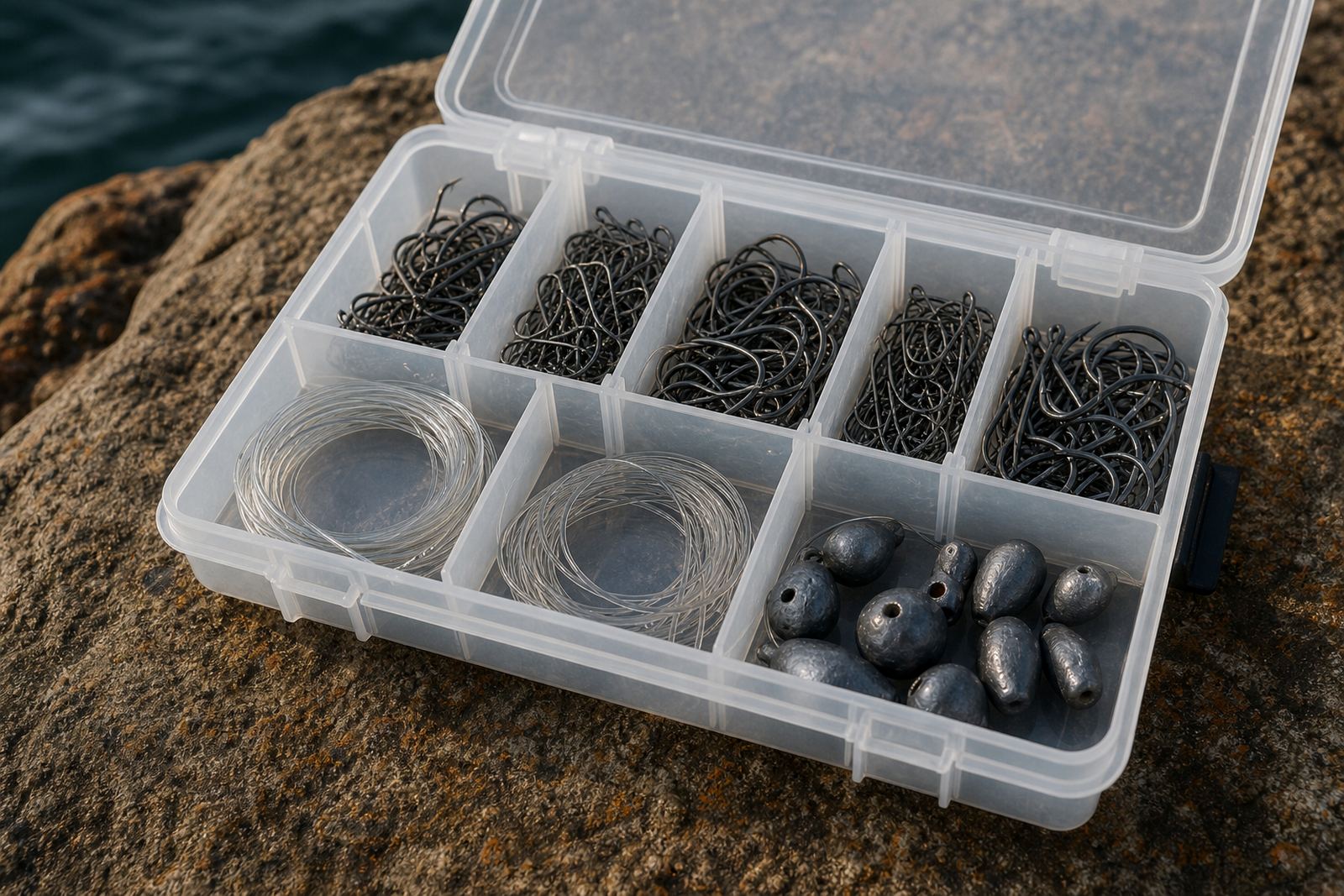
Hooks take a beating in South African fishing conditions. Saltwater, sand, bait oils and damp storage can all shorten hook life if they are not cleaned and packed properly. After a session, rinse hooks with fresh water, dry them and store them in a sealed tackle box or container. If you have fished in heavy surf or on a wet boat deck, check for any dull points or surface rust before packing away. A small file can help with light touch-ups but if a hook is bent or badly corroded, replace it.
In humid coastal areas like Durban and Gqeberha, even unused hooks can show rust if they are stored loose in a box with wet traces or old bait residue. Keep different sizes separated so you can find what you need quickly before a session. If you fish often, it helps to sort hooks by size and finish into small labelled containers. That saves time and stops mix-ups when you need a specific pattern for the day.
- Rinse after saltwater use and dry fully
- Store away from damp line, bait and sinkers
- Replace hooks that are bent, dull or rusty
- Keep spare packs sorted by size for fast access
What to check before you place your order
Before ordering J hooks, check the size range, quantity per pack and whether you need a lighter or stronger wire. Think about where you fish most often, what bait you use and the species you are aiming for. If you are buying for a club, group or family trip, it may be better to mix sizes so you are covered for both small and larger baits. Anglers fishing from Durban to Cape Town and inland to Johannesburg often need different hook counts depending on the water and the time of year.
If you are not sure which size to choose, start with the bait you use most often and work from there. Sardine and pilchard baits generally need a different hook size to worm or prawn bait, and a stronger hook may be the better call for rough surf or bigger fish. Our team can help with hook selection, trace advice and starter setup guidance through the enquiry form on our contact page. One quick check before buying can save a lot of wasted bait and missed takes, so its worth getting the size right first time.
- Target species and fishing location
- Bait type and bait size
- Hook size, wire gauge and pack quantity
- Whether you need extra corrosion resistance for coastal use
Key facts
| Product type | Classic J hook for bait fishing |
|---|---|
| Use | Saltwater and freshwater |
| Sizes | Multiple sizes for light to heavy bait presentations |
| Finish | Corrosion-resistant options for coastal conditions |
| Common rig use | Trace rigs, snoods and general bait setups |
| Best for | Surf, estuary, river, dam and harbour fishing |