What our reel servicing includes
Our reel servicing is a full strip, clean and lubrication service for most spinning reels, baitcasting reels and conventional reels used for shore, estuary, boat and freshwater fishing. Salt spray, sand, fine dust and old grease can all cause rough winding, noisy retrieve and sticky drags, especially around Durban and other coastal areas where humidity stays high.
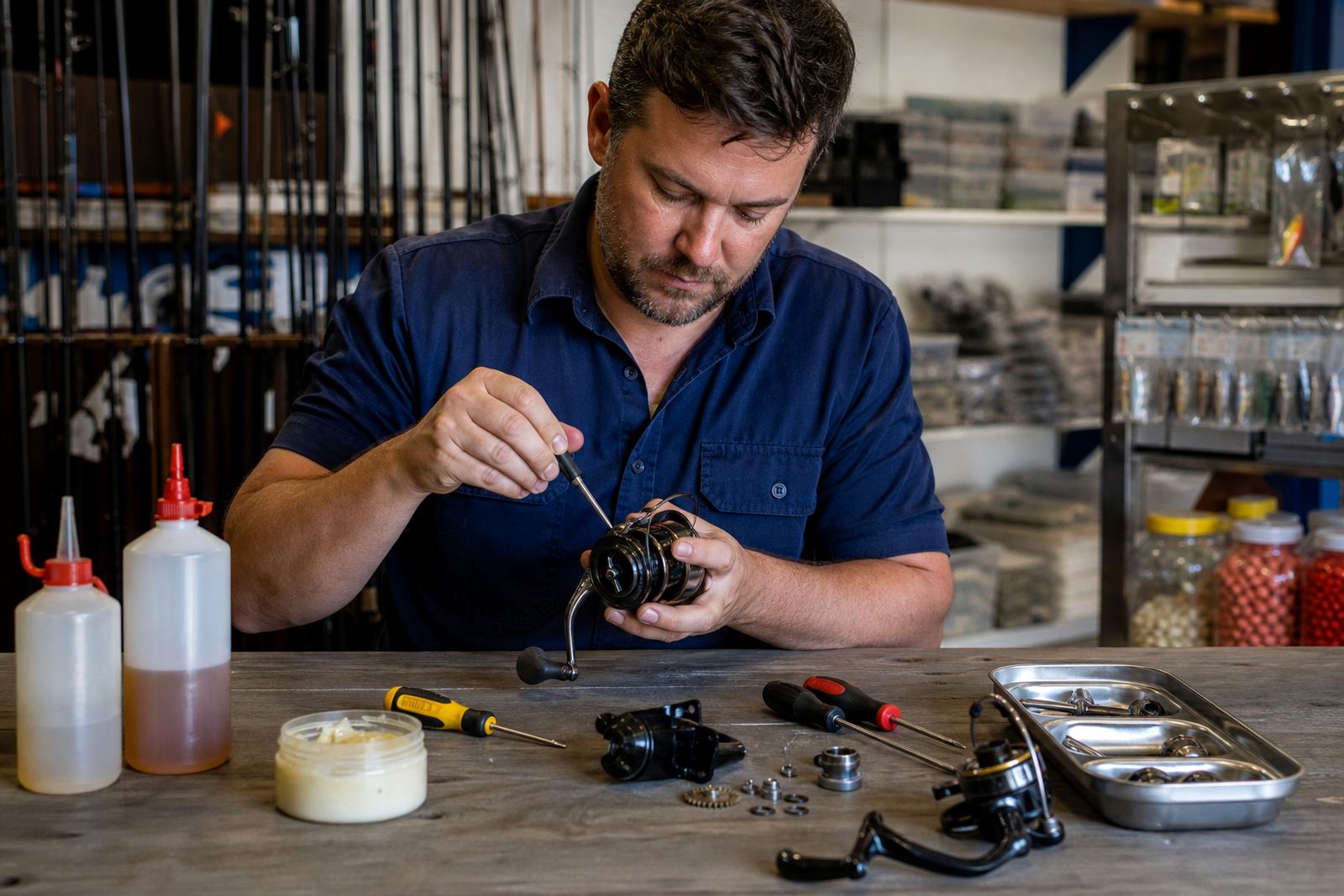
Each service is handled by our reel technician with care and the parts are inspected before anything is refitted. We clean internal gears, remove old line residue, check the handle and bail action, inspect bearings where accessible, and replace worn lubrication with suitable grease and oil. If a part is damaged, we will flag it before work continues so you know what needs attention and what can be left as is.
- Full strip and internal clean
- Degreasing of gears, shafts and spool areas
- Fresh grease and light oil applied where needed
- Drag check and adjustment
- Bail, handle and anti-reverse inspection
- Basic corrosion and wear assessment
How the service process works
Bring your reel to our Durban store or send details through the enquiry form on our contact page for service guidance and intake instructions. When the reel arrives, we log the model, note visible issues and confirm whether it needs a standard service, a repair or parts replacement. This helps us keep the turnaround clear and avoids surprises.
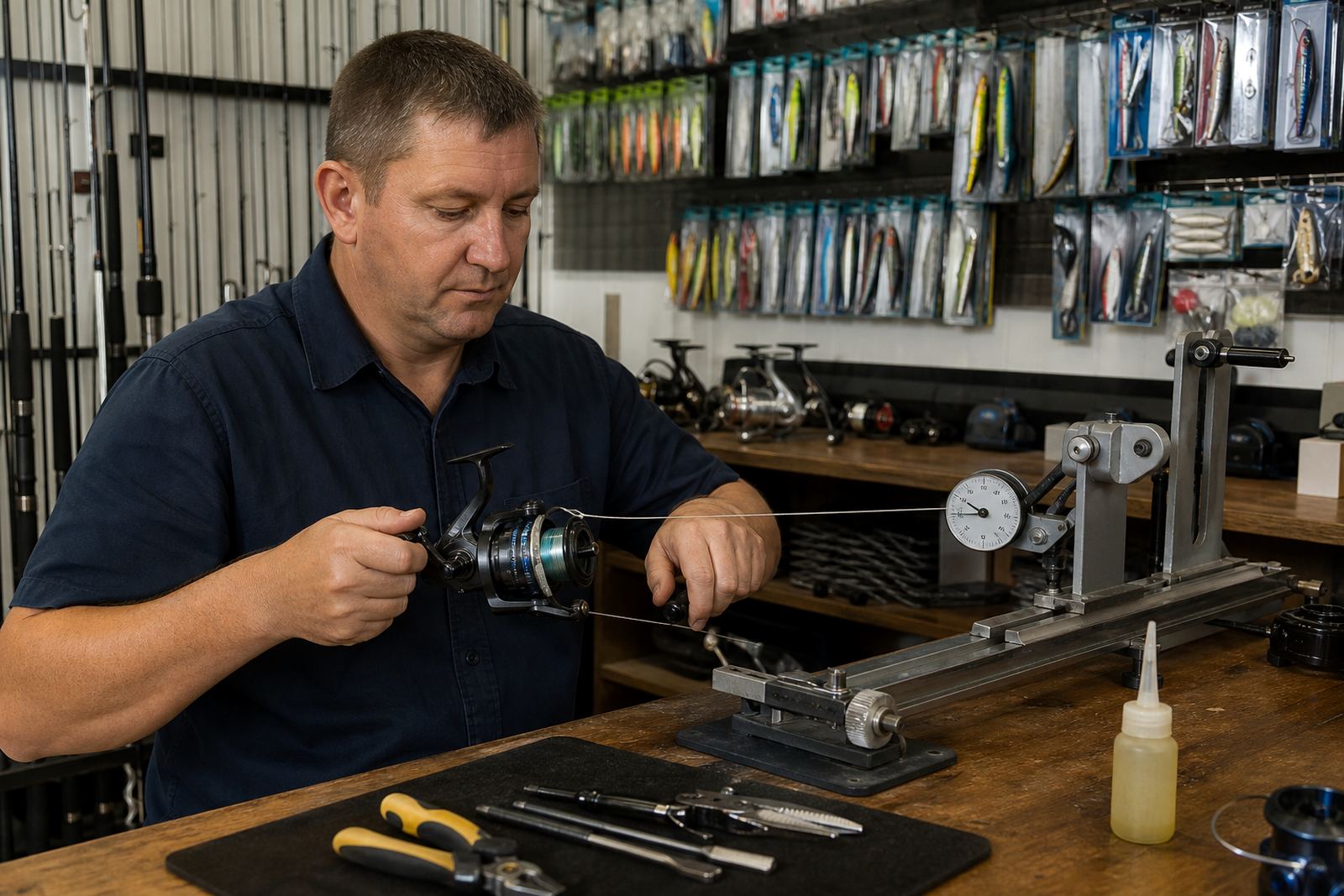
The reel is then stripped and cleaned, with special attention paid to salt build-up and trapped grit around the spool, rotor and clutch area. After reassembly, we test the drag, wind action and free movement. If the reel has had braid packed too tightly, a bent handle arm, or line that has cut into the spool lip, we will advise on the next step before you collect it.
- Intake and condition check
- Strip, clean and re-lubricate
- Reassemble and test function
- Feedback on any worn components
- Collection with service notes
Turnaround times and when to book
Turnaround depends on the reel type, its condition and whether parts are required. A standard servicing job is usually faster than a full repair, while heavily corroded reels or reels with seized screws can take longer. Peak periods before holiday fishing, school breaks and long weekends can add to the queue, so it is best to book ahead if you are preparing for a trip.
As a practical guide, reels used often in saltwater should be serviced every 3 to 6 months. Freshwater reels that are used less often can usually be serviced every 6 to 12 months. If you fish hard sand, surf or estuary water, or if your gear is stored in a damp garage or boat locker, shorter intervals are smarter. A reel that feels rough under load should not wait for the next planned outing.
Pricing approach and what affects the cost
Our pricing is based on reel type, condition and the amount of labour involved, not on guesswork. A standard service is quoted differently from a job that needs bearing replacement, drag washer work or corrosion treatment. We keep pricing practical and explain what is included before work proceeds.
Factors that affect the cost include the size of the reel, whether it has sealed or open internals, how much salt or sand contamination is present, and whether the reel has been overfilled with grease. We also consider whether line needs to be removed and re-spooled after the service. For club anglers and bulk bookings, we can assist with multiple reels at once, which is useful before competition days or charter trips.
- Reel size and type
- Condition of internals
- Need for extra parts or labour
- Line removal and re-spooling requests
- Bulk order requirements for clubs or teams
Why coastal reels need more attention
Coastal reels work in tougher conditions than many anglers realise. Fine salt crystals can work their way into the drag stack and bearings, while damp air in Durban and other coastal towns encourages corrosion on screws, springs and exposed metal parts. Even a reel that looks fine outside can have dirty internals after a few sessions on the beach or rocks.
Freshwater reels still need care, especially after dusty bank fishing, rain or muddy river use. If a reel has been left in the boot of the car during hot weather, the lubrication can thin out and the drag washers may not behave as they should. Good servicing keeps the reel smoother and helps avoid strain on line and knots when a fish runs hard.
The right service interval for your fishing style
Not every reel needs the same schedule. A weekend angler who fishes a few times a month will need less attention than someone targeting shad, kob, bass or carp every week. Heavier surf and boat setups usually need more regular cleaning because they are exposed to spray, sand and pressure from larger fish. Light tackle used for freshwater still benefits from a proper service before and after the busy season.
If you are unsure when your reel was last serviced, we can help you decide based on how it feels, where it has been used and what species you target. A reel that starts to click unevenly, wind with drag on, or make grinding noises should be checked sooner rather than later. That small delay often turns into a larger repair if ignored.
Key facts
| Service type | Routine reel servicing for spinning, baitcasting and conventional reels |
|---|---|
| Condition check | Strip inspection of gears, bearings, drag, handle and anti-reverse |
| Lubrication | Fresh reel grease and light oil applied where required |
| Recommended interval | 3 to 6 months for saltwater use, 6 to 12 months for freshwater use |
| Turnaround | Depends on model, condition and parts availability |
| Booking method | Enquiry form on our contact page for intake and service guidance |