What drag tuning covers at Catches
Drag tuning is more than just tightening a knob and hoping for the best. We inspect how the drag starts, runs and releases under pressure, then adjust the reel so the pull stays smooth across the working range. That matters when a fish surges at the side of the boat, runs under a pier, or makes a long burst in surf or dam water.
Our service suits coastal anglers in Durban, Umhlanga, Ballito and the South Coast, as well as freshwater anglers travelling from Pietermaritzburg or placing orders from Johannesburg, Cape Town and Gqeberha. Salt, sand and humid storage conditions often affect drag washers and spool behaviour, so a reel that felt fine last season may not be right now. We check for uneven release, drag hesitation and heat build up, then set the reel to a usable pressure for your line class and target species.
- Initial drag test under load
- Inspection of washers, spindle and spool contact points
- Cleaning of light salt residue and grit
- Adjustment for smoother start up and more even pressure
- Advice on usable drag settings for your line and rod
How the process works in store
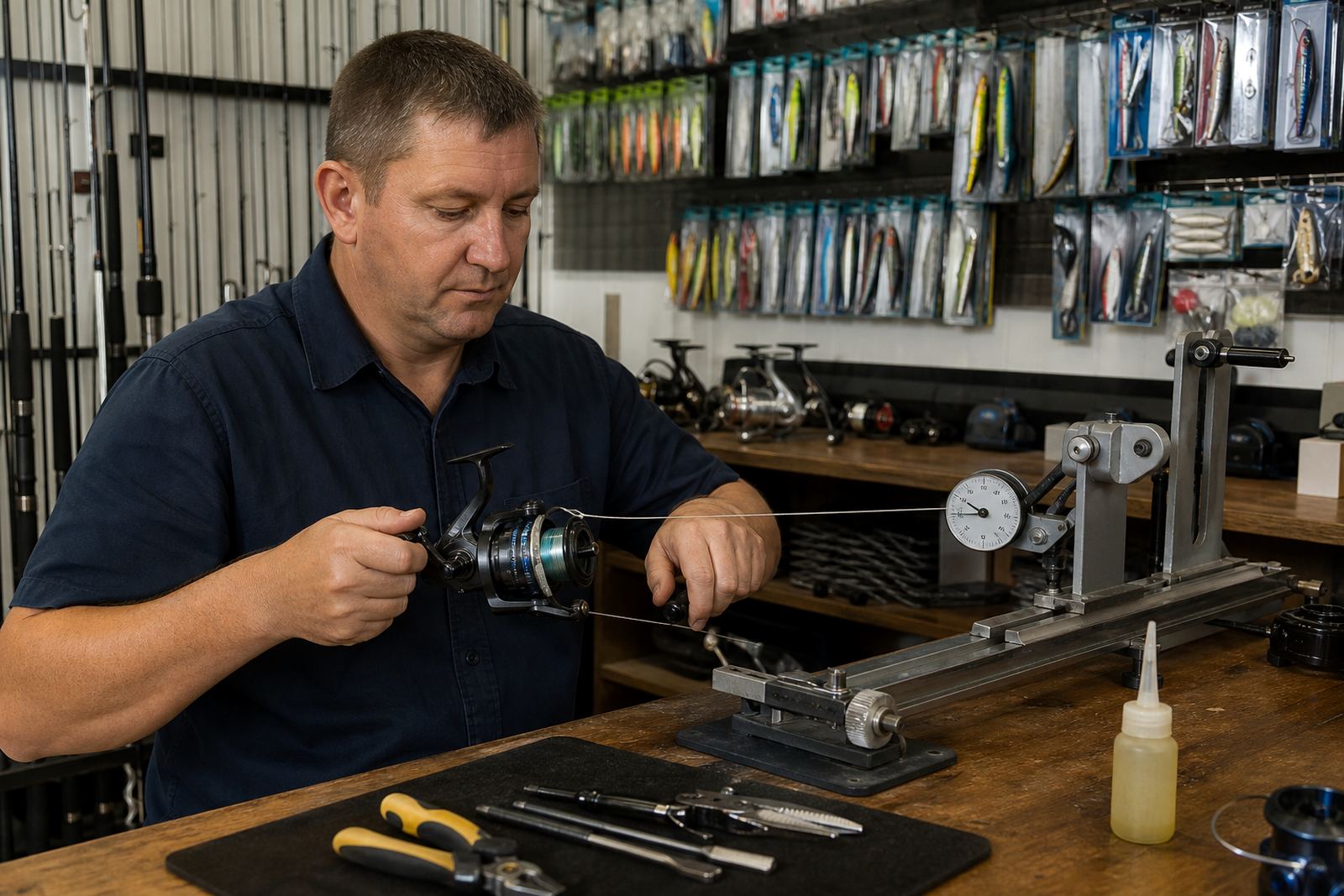
Bring the reel in with the line you actually fish with, if possible. That lets us judge the drag with the same braid, mono or fluorocarbon setup you use on the water. We start with a visual check, then test the drag on a controlled pull so we can see whether the pressure rises evenly or jumps too quickly.
If we spot signs of wear, we will explain what can be corrected through tuning and what needs repair or replacement. In some cases, a reel only needs cleaning and correct grease selection. In other cases, the washers are glazed, compressed or contaminated, and the drag will never feel right until those parts are serviced. We do not guess. We test, adjust and re-test until the reel feels consistent.
- Check in and reel assessment
- Load test to measure release smoothness
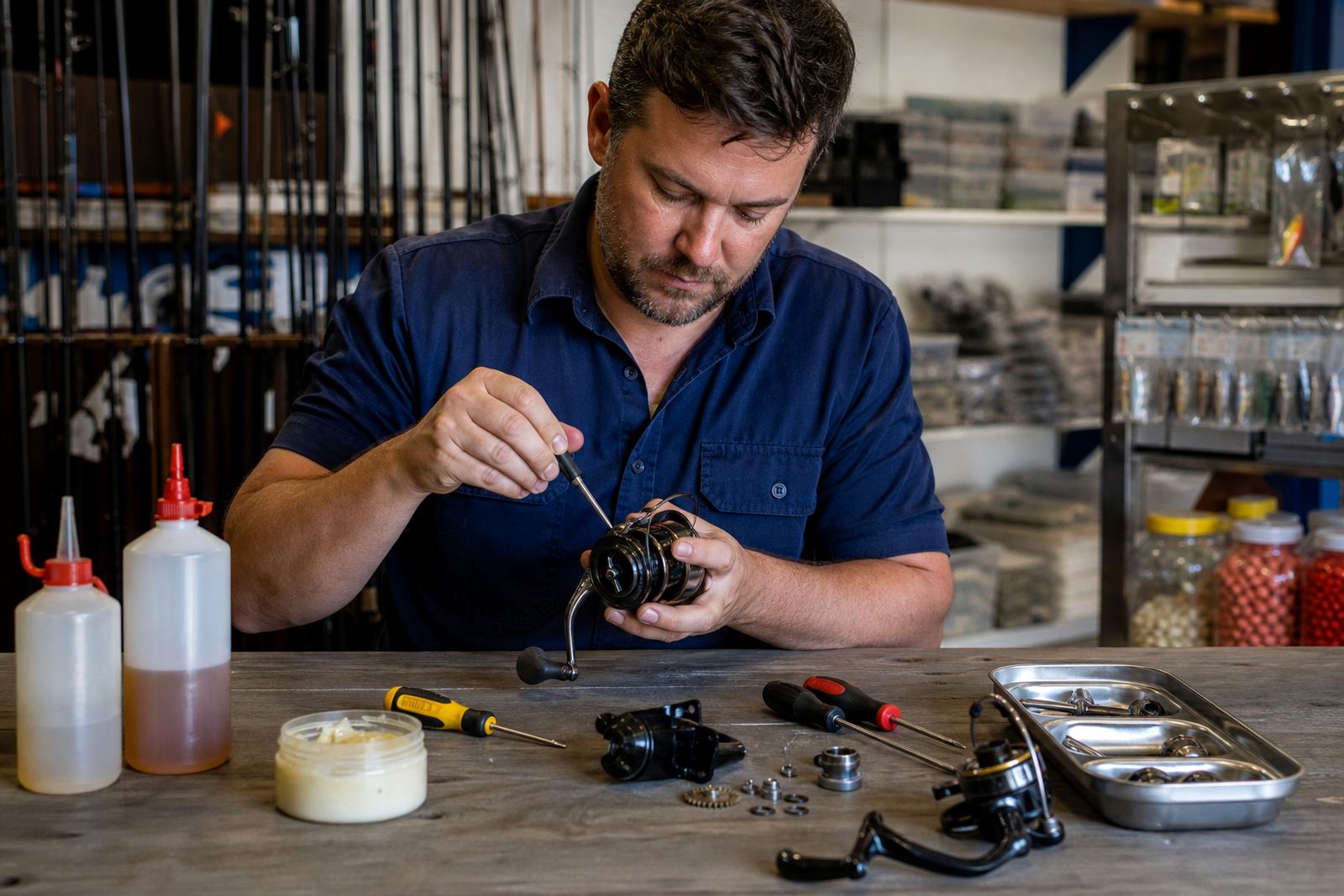
- Strip-down of accessible drag components if needed
- Cleaning, lubrication and reassembly
- Final test and settings advice before collection
Typical drag tuning specs and setup targets
Every reel has its own limit, but the goal stays the same: steady pressure without stick-slip or sudden surges. For most surf and boat reels, we aim for a drag curve that starts smoothly at low tension and stays predictable through the mid range. For light spinning setups used on estuary, bass or bream fishing, we focus on fine control at lower settings where line breakage is more likely if the drag bites too hard.
We also look at practical field numbers. On many setups, anglers use roughly one third of line breaking strain as a starting point, but that is only a guide. The real setting depends on rod action, knot strength, line age and the fish you are targeting. A 15 lb line on a light rod will need a different feel from a 50 lb braid setup for offshore work, and a bait runner style reel needs a different test again. Our tuning is set for use not just for numbers on paper.
- Light spin setups: fine start-up control at lower drag settings
- Medium coastal reels: even release under sustained pressure
- Heavy surf and boat reels: smooth pull with less heat build up
- Freshwater reels: precise adjustment for finesse or pressure fishing
- Line class matching: braid, mono and fluorocarbon considered separately
When to service drag washers and settings
We recommend drag checks more often for anglers fishing saltwater, especially if reels are exposed to spray, wet reels are stored in car boots, or gear is used most weekends. In Durban’s humid conditions, corrosion and moisture can affect the drag stack quicker than many anglers expect. A reel that has sat untouched for months may need a tune before the first trip of the season, not after.
As a general guide, have drag tuning checked every 6 to 12 months for regular use, or sooner if you notice jerky release, grinding, a burning smell, sticky pressure or line snapping at low settings. After a hard session in salt water, give the reel a rinse and dry it properly, then loosen the drag off for storage. It sounds simple, but it prevents compression and helps the washers stay in better shape, even if the reel has had a rough month.
Pricing approach and turnaround time
Our pricing depends on the reel type, the condition of the drag system, and whether the work is a straightforward tune or part of a wider repair. A lightly used reel that only needs adjustment and cleaning will cost less than one with worn washers, salt intrusion or damaged internal parts. We quote based on what the reel needs, so you only pay for the work that is actually needed.
Turnaround depends on queue, parts required and the reel’s condition. Simple drag tuning can often be completed quickly, while deeper service work may take longer if parts have to be sourced or additional repairs are needed. For club anglers and bulk order clients, we can discuss grouped servicing so your reels come back ready for the next event. If you are planning a trip, bring the reel in early, not the day before. That gives us room to sort out any surprises.
- Quoted after inspection
- Simple tune jobs handled faster than full strip-downs
- Additional parts quoted before fitting
- Bulk club work can be scheduled together
What to bring and how to keep drag performance steady
Bring the reel, spool if it is separate, and if possible the rod it is paired with. If you use a specific leader or line class for surf, rock and surf, freshwater or boat fishing, tell us what it is. That helps us set the drag with the right level of give. We can also advise on starter setup and trip gear checks if you are preparing for a weekend away or a longer fishing trip.
Once the reel has been tuned, keep the drag backed off after use, especially in coastal storage conditions. Do not crank it down tight and leave it there for weeks. A quick wipe after fishing and a proper dry before storage makes a real difference. If you hear the drag changing in the middle of a fight or feel inconsistent pressure, bring it back in. Small issues are easier to fix before they turn into a full repair. And yes, a clean reel still needs checking now and then.
- Bring reel and line details where possible
- Loosen drag after every trip
- Rinse lightly after saltwater use and dry fully
- Book a check if the drag feels sticky or uneven
Key facts
| Service type | Drag tuning for spinning, baitcasting and boat reels |
|---|---|
| Best for | Coastal and freshwater anglers using light to heavy tackle |
| Typical line range | About 4 lb to 50 lb+, depending on reel and setup |
| Inspection focus | Smooth start-up, even pull, washer condition and pressure control |
| Maintenance interval | Every 6 to 12 months, or sooner after heavy saltwater use |
| Base | Springfield Park, Durban with orders handled for South Africa |