

Home / Stories / Margate Beach Cast

Stories

Margate Beach Cast

A Margate angler came to us after losing too many rigs in heavy surf and mixed bottom on the South Coast. We upgraded the sinker and trace setup so the rig would hold better, fish cleaner, and stand up to long sessions on the beach.

Margate Beach Cast

What the Margate angler needed from the rig

The brief came from a regular beach angler in Margate who fishes the South Coast from the shore and wanted better holding power on a stretch known for moving sand, side wash and the odd snag. The existing setup was light on the sinker side and the trace material was not giving enough confidence when the tide pushed hard, so the rig would drift too much before the bait could sit properly.

They wanted a practical fix, not a full rebuild. The goal was simple: keep the bait in the strike zone longer, reduce lost tackle, and make the rig easier to replace under pressure when the fish moved through. Because the angler fishes after work and on weekends, everything had to be quick to use and reliable in surf that changes by the hour.

  • Client type: shore angler from Margate, KwaZulu-Natal
  • Fishing style: South Coast beach casting for mixed species
  • Key issue: poor holding power in moving surf and rough bottom
  • Main aim: stronger sinker grip and more durable trace materials

Conditions that shaped the recommendation

South Coast beach fishing can be tricky, especially when the wind shifts and the seabed changes from sand to rubble in one cast. We factored in long casts, tide push, and the need to keep the rig in position without going so heavy that it became awkward to fish. Salt spray and coastal humidity also matter, because metal parts can start looking tired fast if they are left unwashed after a session.

There were a few constraints to work around. The angler wanted gear that would handle general beach fishing rather than a single target species, and the setup had to suit both bait presentation and retrieval speed. The line had to remain manageable in warm weather, and the trace material had to give enough bite resistance without turning stiff and bulky. That balance matters more than people think, especially when you are fishing through load shedding evenings and packing up in the dark. We kept it practical and no fuss.

  • Surf pressure: moderate to heavy on selected marks
  • Bottom type: sand with scattered rough patches and shell
  • Weather factor: humid, salt-heavy air with frequent wind changes
  • Use case: general beach casting, not a specialist one-species rig

What we supplied and changed

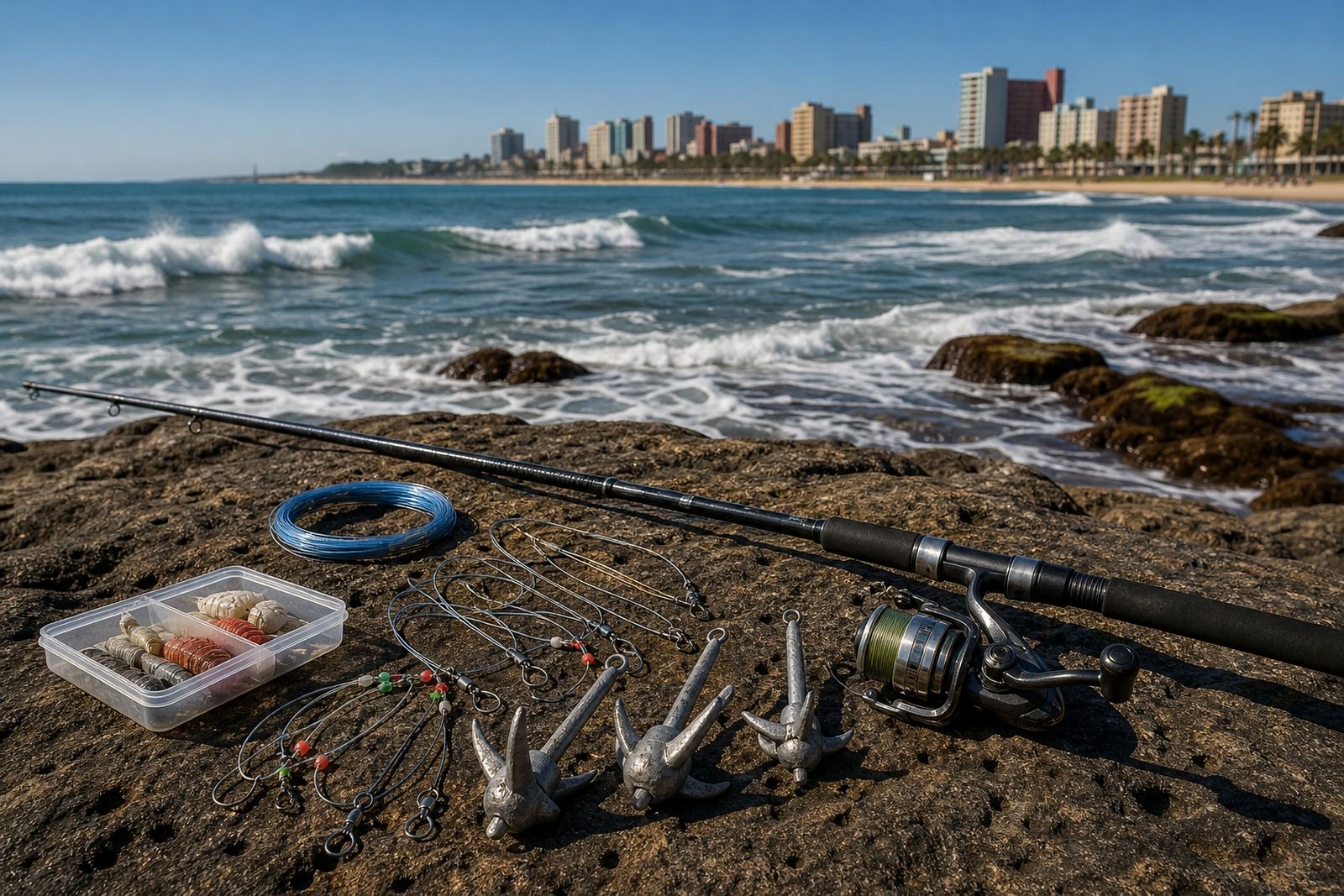
We supplied a heavier sinker option suited to stronger holding conditions, plus upgraded trace materials with better abrasion resistance. The sinker choice was matched to the likely pull on the day rather than just weight alone, so it could dig in and stay put longer. We also changed the trace layout to improve bait presentation and reduce tangles on the cast.

On the tackle side, we checked hooks, swivels, beads and crimps for wear, then rebuilt the trace with parts sized for South Coast surf work. The result was a cleaner rig that held its shape better and could be reset quickly after a bite or pull-out. Line spooling was checked for even lay too, because an uneven spool can cost distance and create avoidable twist.

  • Heavier sinker setup for improved bottom hold
  • Trace material upgraded for abrasion resistance
  • Hardware checked and replaced where needed
  • Rig layout adjusted for easier casting and bait control

How the setup was matched to the beach

We kept the setup within sensible beach-casting limits, rather than pushing weight too far and making the rod work harder than needed. The trace was set up to suit common South Coast bait fishing situations, where a neat presentation can matter as much as brute strength. For the Margate customer, that meant choosing parts that were tough enough for rough ground but still light enough for a natural bait drift when conditions eased.

We also discussed how the setup should be used on the beach. A heavier sinker is useful only if the angler gives it enough time to settle and checks the angle of the line after the cast. Little things like bait size, leader length, and where the rig is dropped relative to the gutter can make a real difference. Our advice was to fish the first hour carefully, read the pull on the line, then adjust rather than forcing the same rig in every spot.

  • Target use: adaptable for multiple beach conditions
  • Bait presentation: balanced for surf, not overloaded
  • Leader choice: matched to rough ground and abrasion risk
  • Practical use: easy to reset between casts

Timeline from enquiry to handover

The job ran over two weeks from first enquiry to final handover. In week one we assessed the existing rig, asked about the beach marks being fished, and identified where the tackle was failing. In week two we assembled the revised setup, tested the fit, and talked through how to adjust the rig for different tide lines and wind direction.

That short turnaround suited the customer because they wanted the gear ready before a planned weekend trip. We kept the process straightforward and gave clear guidance on what to watch for on the first few sessions. The customer left with a setup that was ready to fish straight away, rather than one that still needed a lot of tinkering at the shoreline.

  • Week 1: assessment and gear review
  • Week 2: supply, rig rebuild and handover
  • Outcome: ready for the next planned surf session

What changed on the water

After the upgrade, the angler reported better holding on the beach and fewer lost traces in the same conditions. The rig stayed where it was meant to sit for longer, which meant more time with bait in front of fish and less time re-rigging. That kind of improvement can look small on paper but makes a real difference over a full session.

The customer also found the setup easier to trust in rougher water. That matters because when you know the rig is sorted, you fish with more patience and a better read on the bite. We were told the improved holding power was most noticeable on days when the swell had a bit of push and the wind was messing with the cast. It was a solid result, and a simple one too.

  • Better sinker hold in moving surf
  • Less trace loss on rougher bottom
  • Cleaner bait placement after the cast
  • More confidence during longer fishing sessions

What we would do again for another South Coast beach rig

If we were repeating this job for another South Coast angler, we would follow the same approach: assess the beach conditions first, then choose sinker weight and trace material based on how the water actually moves. That is the part many people skip. A rig that works on one stretch of coast can fail quickly a few kilometres away, so local judgement matters.

We would also keep the build modular, so the angler can swap components without rebuilding the whole trace every time the conditions change. For beach anglers in Margate, Scottburgh, Amanzimtoti or Port Edward, that saves time and keeps the tackle box simpler. If the brief is stronger holding power, the answer is usually a balanced setup, not just a heavier piece of lead. The fish dont care how fancy the rig is, they care whether the bait is there and holding still.

Key facts

Project locationMargate, KwaZulu-Natal
Customer typeSouth Coast beach angler
Timeline2 weeks
Main upgradeHeavier sinker and stronger trace materials
Use conditionsSurf, side wash, mixed bottom and coastal humidity
ResultImproved holding power and fewer lost rigs

What our Fishing Tackle customers say

Verified Google reviews

Questions we get asked

Was this setup made for one species only?

No. It was built as a general South Coast beach rig for mixed surf fishing, with enough strength for changing conditions and different bait choices.

Why change both the sinker and the trace material?

Because the sinker controls how well the rig stays put, while the trace material controls abrasion resistance and how long the rig lasts in rough water.

Can you help with similar rigs for other coastal towns?

Yes. We regularly help anglers in Durban, Cape Town, Gqeberha and East London with tackle advice, rig setup and component matching for their local conditions.

Planning something? Send the team a message.

Contact form