The brief from a Howick lure angler
The client fishes bass regularly around Howick and nearby waters, with early starts, changing weather and a mix of bank and small-boat sessions. He wanted a practical system that could handle different lure styles, keep soft plastics from getting crushed, and make sure terminal tackle was easy to grab when the bite window opened.
His old setup had loose packets, mixed jig heads and too many trays in one bag, so every trip meant a bit of sorting before he could fish. He also asked for storage that would hold up in damp conditions, because mist, rain and wet hands are part of life inland too, not just on the coast.
- Fishing style: lure fishing for bass
- Location: Howick, KwaZulu-Natal
- Main problem: cluttered storage and slow rig changes
- Priority: better organisation without carrying extra weight
What we supplied for the setup
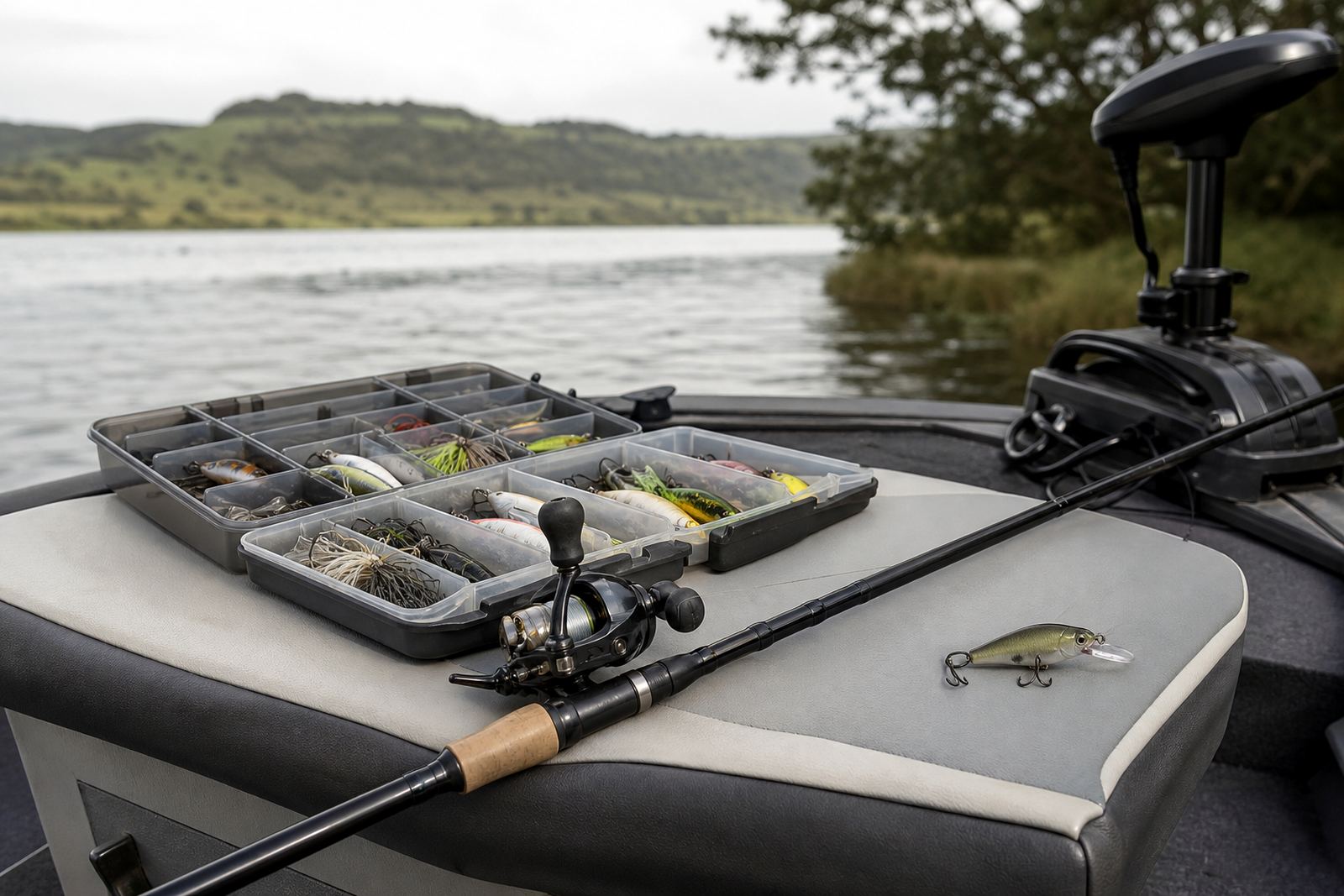
We put together a freshwater bass package with specialist storage, a few soft plastic options and the hardware needed for quick changes. The main aim was to split the tackle into clear groups: hard lures, soft plastics, weights, hooks and leader material. That way the angler can load only what he needs for the day.
We also matched the storage to the type of fishing he does. Some sessions call for finesse presentations, others for a more aggressive retrieve, so the kit had to support both. The final selection included compact carry storage, labelled compartments and tackle that could be topped up easily later.
- One tackle bag with multiple zip compartments
- Box storage for hooks, weights and terminal tackle
- Soft plastics sorted by profile and colour
- Jig heads and weedless options for different cover
- Leader material and trace components for quick rigging
How we built the tackle system
We spent time with the client going through the way he fishes: where he starts, how he moves between spots, and which rigs he ties most often. From there we laid out the kit so the most-used items sit at the top and the back-up items are stored deeper in the bag. That sounds small, but it saves a surprising amount of time on the bank.
We also advised on soft plastics by shape, because paddletails, stickbaits and craw styles are not all used the same way. The goal was not to overfill the bag, but to make each item earn its place. A tidy system also helps stop scent transfer and avoids soft plastics sticking together in the heat, which can be a nuisance on long summer days.
- Top layer: daily-use lures and leader material
- Middle layer: terminal tackle and rigging tools
- Lower layer: backup plastics and seasonal options
- Separate storage for wet or used items after a session
Timeline and turn around time
The project took 2 weeks from first chat to final handover. Week one covered the brief, tackle selection and storage planning. Week two covered packing, checking counts and talking through how the angler should rotate stock as items get used up.
We did not rush the process, because a bass setup only works if the angler can keep it consistent. A rushed purchase often leaves gaps, especially in sizes of hooks, sinkers and soft plastics. By taking a measured approach we could fill the real gaps rather than simply adding more gear.
- Week 1: brief, selection and storage plan
- Week 2: packing, stock check and handover advice
- Total turnaround: 2 weeks
Results on the water around Howick
The client reported that his pre-trip pack time dropped noticeably, because the tackle now has a place and he is not digging through mixed packets. He also found it easier to switch between finesse rigs and more active lure work, since the right hooks and plastics are now easier to reach. That means less faffing, more fishing, which is the point.
He was especially happy with the way the soft plastics are stored. They no longer get crushed or tangled with weights and hooks, and he can see at a glance what needs replacing before the next trip. For a regular angler, that sort of order saves money over time as well as effort.
- Faster pre-trip packing
- Quicker rig changes on the bank
- Less tackle loss through misplacement
- Cleaner soft plastic storage for longer life
What we would repeat for a similar angler
We would use the same process again for any lure angler who wants a tighter freshwater system. Start with how and where they fish, then build the bag around the actual habits rather than a one-size-fits-all layout. That keeps the kit practical for local dams, streams and farm waters.
For Howick specifically, we would again choose storage that handles damp mornings and afternoon heat, because both are part of the routine. We would also keep the selection focused, so the angler can carry enough variety without turning the bag into dead weight. Small changes in organisation make a proper difference when the bite is short.
- Work from fishing style first, not just product count
- Separate hard lures from soft plastics and terminal tackle
- Choose storage that stands up to damp, heat and regular use
- Keep the kit light enough for quick moving between spots
Key facts
| Client type | Freshwater lure angler |
|---|---|
| Town | Howick, KwaZulu-Natal |
| Project timeline | 2 weeks |
| Main focus | Tackle organisation and soft plastic storage |
| Core gear supplied | Storage, terminal tackle, soft plastics and rigging items |
| Fishing style | Bass lure fishing for bank and light boat use |