Brief From A Travelling Jetty Angler
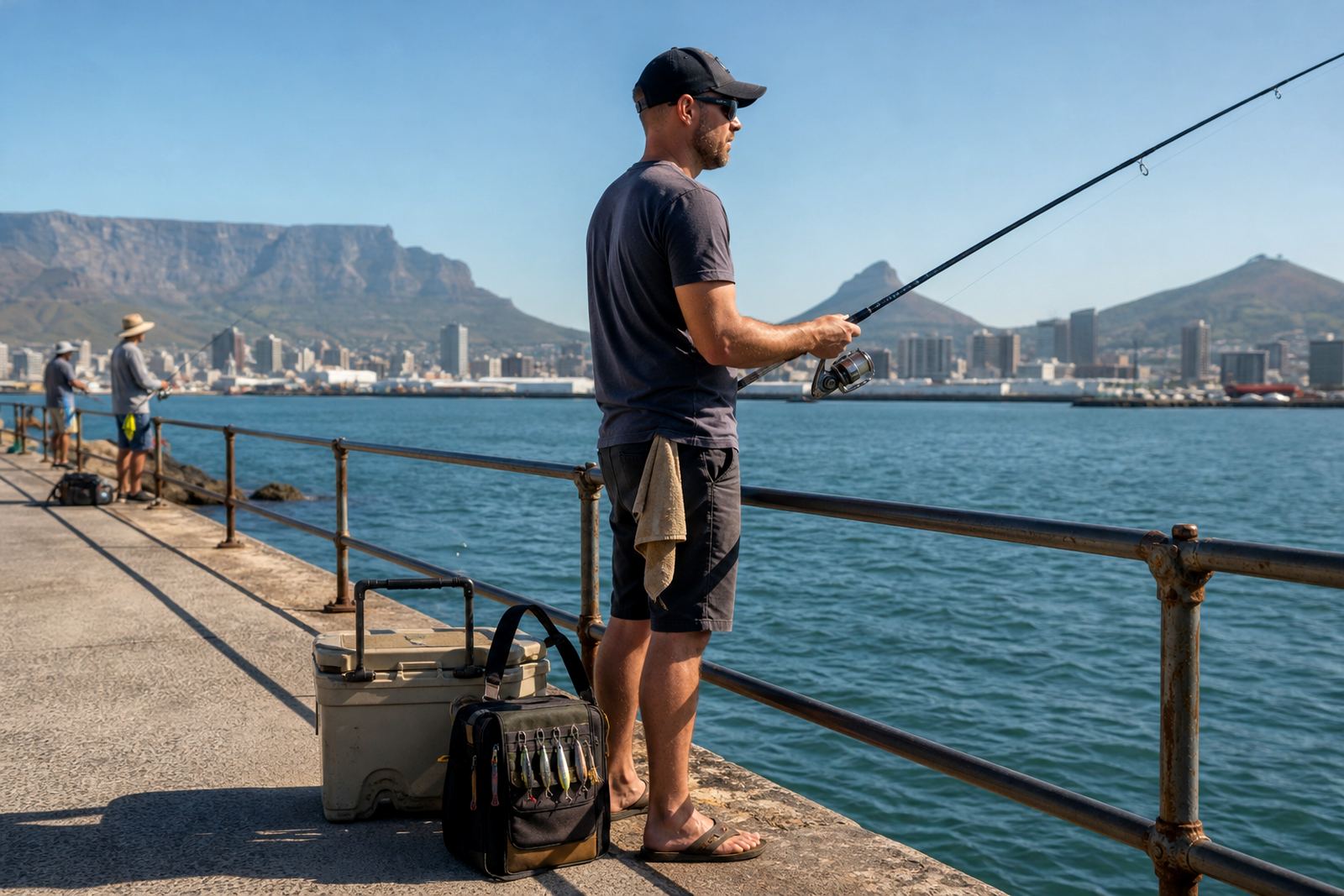
The client was a travelling angler based in Cape Town who spends most weekends moving between jetty points, harbour walls and sheltered estuary mouths. The brief was simple on paper but quite specific in practice: one adaptable spinning setup for light to medium saltwater use, with enough backbone for sinkers, soft plastics and bait rigs, yet still comfortable for long walks and early starts.
He wanted gear that could cope with wind off the Atlantic side, occasional spray, and the sort of gritty rinsing that happens after fishing around slipways and concrete edges. He also wanted a setup that would not feel overgunned for freshwater sessions when he heads inland. We kept the build practical, easy to service and not too heavy in the hand.
What Had To Be Balanced For Cape Town Conditions
Jetty fishing around Cape Town is never just about casting distance. You are dealing with gusty side wind, slippery footing, sharp barnacles, and salt that gets into everything if you leave gear unwashed for too long. Add load-shedding into the mix, and the client needed a kit he could pack, rinse and store without fuss after an evening session.
- Saltwater resistance for harbour spray and damp storage
- Enough casting control for 10 g to 40 g lures and small bait rigs
- Line choice that stays manageable in wind
- Components that are easy to clean after each outing
- A reel with smooth drag for fish that run under ledges
We also had to account for travel. The setup needed to fit in a small vehicle with other kit, so we avoided anything too bulky and kept the rod length practical for jetties, where awkward swings can be a problem when people are moving behind you.
The Setup We Supplied
We built the outfit around a 7 ft 6 in medium-fast spinning rod with a casting range suited to general jetty and harbour use. The rod gives a crisp tip for lure work but still has enough lower-section power for fish that head straight for structure. We paired it with a 4000 size spinning reel with a sealed drag stack, smooth winding under pressure and a braid-friendly spool lip.
The main line was 15 lb braided line, with a 20 lb fluorocarbon leader for abrasion resistance around rocks, pylons and mussel-encrusted edges. We spooled the reel carefully to prevent twist and set the drag light enough to protect the hook hold, but firm enough to stop a fish diving straight into cover. The handle and guides were checked for alignment before handover, and we packed a spare trace kit for quick changes on the water.
- Rod length: 7 ft 6 in
- Line class: 10 g to 40 g casting range
- Reel size: 4000
- Main line: 15 lb braid
- Leader: 20 lb fluorocarbon
Notes On Repair, Spooling And Durability
Because the client fishes hard and does not want downtime, we treated the reel as more than just a box item. We checked drag smoothness, handled line lay, and made sure the bail arm and roller were clean and running properly before spooling. That matters on saltwater outfits, where one small sticky spot can turn into a line issue very quickly.
We also advised him on rinsing after each trip, especially after fishing in damp winter weather or near spray zones. The setup was prepared with maintenance in mind, so if the reel needs a service later, it can be stripped, cleaned and returned to action without drama. That kind of planning saves money over time, and it keeps the outfit performing properly rather than wearing out early.
Turnaround And Handover In Two Weeks
The project took two weeks from brief to handover. Week one was spent confirming the preferred fishing style, checking expected casting weights and deciding on the rod action and reel size. Week two covered spooling, final checks, trace preparation and practical advice for use in windy Cape Town conditions.
At collection, we ran through a few simple points so the client could make the most of the setup straight away:
- Start with a lighter drag setting for first casts and adjust after the fish is hooked
- Rinse the reel after saltwater use, then dry it before storage
- Use the leader for abrasion protection when fishing near rock or steel edges
- Carry pre-tied traces so time is not wasted on the jetty
The client left with a setup that could move between harbour fishing and freshwater trips without needing a second rod. That flexibility was the main win.
What We Would Repeat For The Next Jetty Build
If we were building the same style of outfit again, we would keep the same logic: match the rod to the casting weight first, then choose the reel around line management and drag smoothness. For Cape Town anglers, a balanced setup is more useful than a heavy one. You want enough power to turn a fish, but not so much weight that your wrist is tired before the tide changes.
We would also repeat the focus on easy servicing. A travelling angler needs gear that can be cleaned, stored and returned to use quickly. That means sensible line choice, corrosion-aware components and a trace plan that works for both bait and lure fishing. For someone moving between jetty, harbour and estuary water, that approach just makes sense and keeps the whole day easier.
Founded in 2008, we have seen how South African fishing habits shift with weather, tides and travel plans. This Cape Town jetty project was a good example of building for real use rather than showroom ideas, and the result was a setup that fitted the angler's routine from the first outing.
Key facts
| Client type | Travelling angler in Cape Town |
|---|---|
| Project type | Adaptable spinning setup for jetty and harbour use |
| Rod spec | 7 ft 6 in medium-fast spinning rod |
| Reel spec | 4000 size spinning reel with smooth drag |
| Line setup | 15 lb braid with 20 lb fluorocarbon leader |
| Turnaround | 2 weeks from brief to handover |