Why the client needed a tougher setup
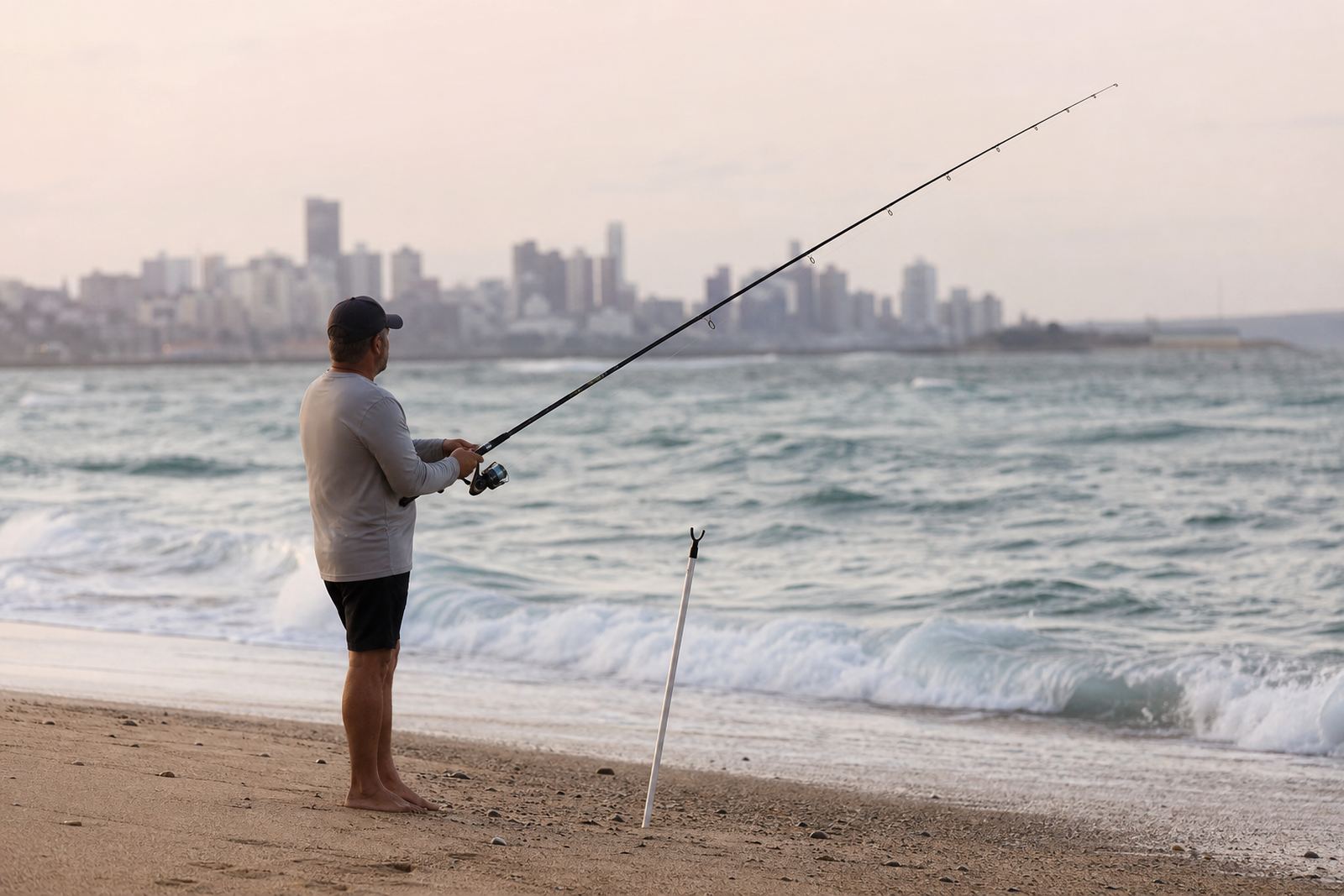
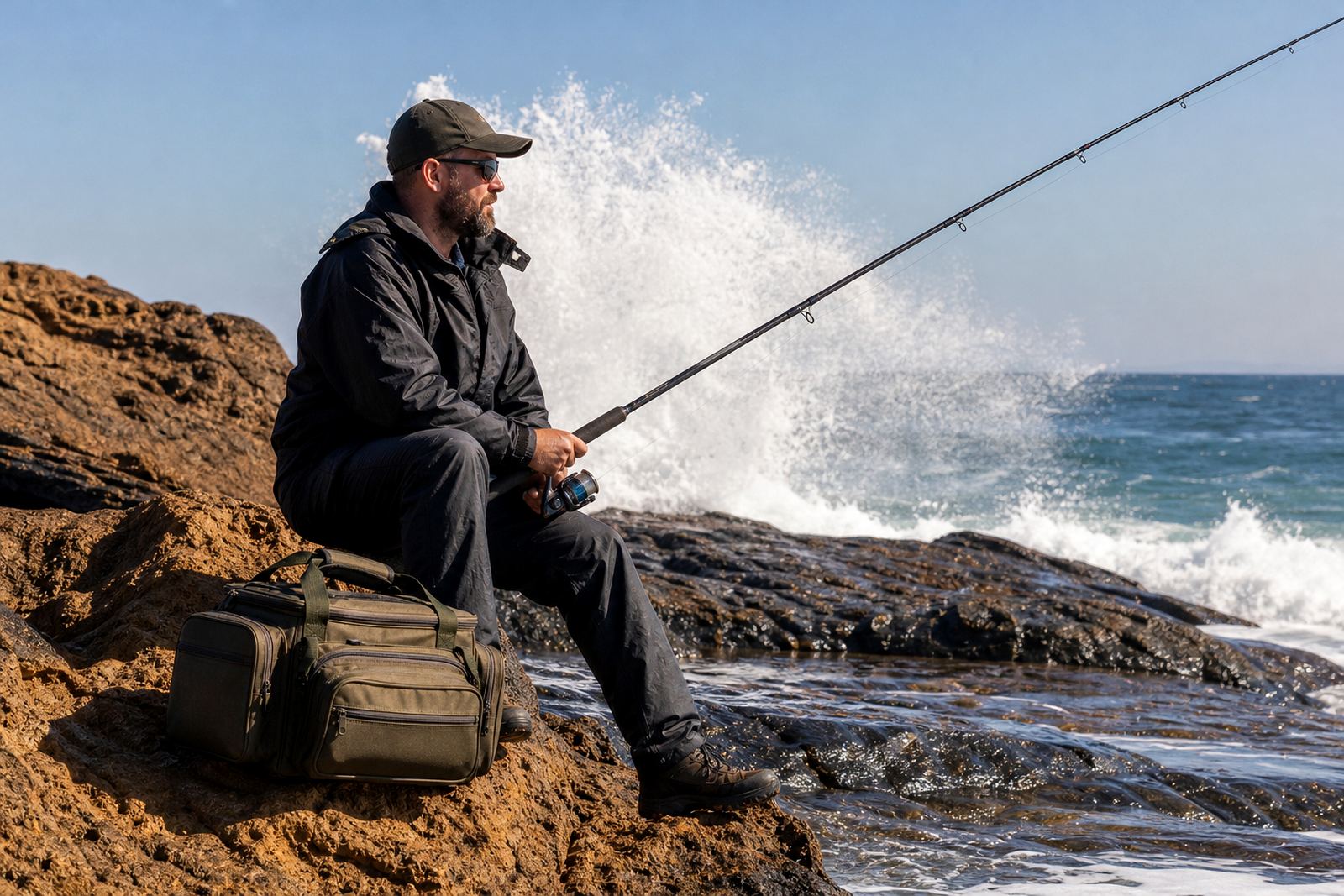
The client was a regular rock and surf angler fishing the Bluff side of Durban, mainly off rough ledges where swell, kelp and fast moving water can ruin lighter tackle in a hurry. He wanted a rig that would handle heavy sinkers, keep traces tidy in current, and give better chances when bait had to sit still on a broken bottom.
The brief was simple, but specific: reduce tackle losses, improve bite detection, and make the setup easier to reset between casts. He also wanted gear that would work on local quarry fish, shad, bronzie scratch fishing and the odd bigger eddy on a push tide. Coastal humidity and salt spray were part of the picture too, so corrosion resistance mattered from the start.
The constraints we worked around
Bluff ledges are not kind to soft tackle. The main issues were abrasive rocks, unpredictable surge, and enough current to drag lighter sinkers off line. The client also fishes after work, so he needed a setup that could be tied and re-tied quickly without carrying too many loose bits in the bag. Load-shedding was another practical factor, so he wanted serviceable gear that did not depend on electric accessories or fiddly charging routines.
- Fishing from exposed rock with heavy wash and weed
- Need for stronger trace and sinker hold in current
- Corrosion risk from salt air and wet storage after the session
- Quick change rigging for short evening windows
- Simple enough for mixed target species, from bait fish to better edibles
We also kept the setup within sensible carry weight so he could move along the point if a spot got blown out. That matters when the tide turns and you have to move fast over uneven rock, especially with wet boots and a rod in hand.
What we supplied and set up
We built the order around stronger terminal tackle and practical coastal use. The final setup included a 12 foot surf rod matched to a high-capacity spinning reel, with smooth drag and enough line pickup for long casts off the Bluff. We spooled it with abrasion-resistant main line and added a shock leader sized for repeated casting with heavier sinkers.
For the trace side, we supplied a selection of abrasion-resistant mono, stainless steel hooks in a range of sizes, crimps, swivels, beads, sinker clips, and pre-cut bait cotton. We also put together sinker options from 5 oz to 8 oz, because the client needed hold more than distance. A couple of pulley traces and sliding traces were included for changing conditions, plus bait stops and glow fittings for low-light sessions.
- Rod length: 12 foot for shore casting and line control
- Reel capacity: suited to heavier line and long sessions
- Main line: abrasion-resistant monofilament
- Leader: heavier shock leader for rocky conditions
- Sinker range: 5 oz, 6 oz and 8 oz
We also showed him how to set the drag for controlled pressure rather than locking it hard. That small change helps when a fish turns in current, and it cuts down on break-offs near the rocks.
Timeline from brief to ready-to-fish
The full turnaround took one week from first conversation to collection. Day one was the brief and gear check, then we confirmed target species, preferred casting distance, and the kind of water the client usually fishes. By midweek the components were matched up, line was spooled, and the traces were cut and tested for knot security and abrasion points. We finished with a short run-through on rig changes and bait presentation.
The client collected the setup over the weekend and took it straight to the Bluff on a rising tide. He wanted a gear change that would feel practical on the rocks, not just look good in a bag, so we kept the setup tight and easy to manage. No extra clutter, no overcomplicated bits, just the right tackle for the job.
What changed on the water
After the first few sessions the client reported fewer lost sinkers and better bait stability in the wash. The heavier terminal setup sat better on the bottom and the traces held up against rock scuffing far longer than his previous lighter rig. He also found the line easier to manage in side wash, which helped with bite reading when the current was pulling hard.
We heard back that the bait stayed in place more consistently, especially when using sardine and prawn combinations on rougher ground. The reel drag was smoother under pressure, and that gave him a cleaner fight when a fish moved toward cover. He also mentioned that the better trace spacing made bait presentation more natural, which matters when the water is coloured and the fish have only a short feeding window.
- Fewer tackle losses on rough ledges
- Better sinker hold in strong current
- Cleaner bait presentation in broken water
- More confidence when fighting fish close to structure
What we would repeat for a similar angler
For another Bluff or South Coast angler fishing ledges, we would keep the same principle: match the tackle to the ground, not just the target fish. A slightly heavier leader, proper sinker selection and reliable trace hardware make a real difference when the swell lifts. We would also keep a second pre-tied trace set aside in the bag so a broken rig can be swapped fast without wasting daylight.
If the angler fishes both coastal and freshwater spots, we would split the kit into two clear line classes and keep spare hooks and swivels sorted by size. That makes packing easier for quick trips from Durban out toward Ballito, or inland to Pietermaritzburg when the plan changes. Good tackle should be ready when the tide turns, not still being sorted on the rocks.
For this client, the result was a simpler, tougher rock session setup built for Durban conditions. It handled the current, stood up to abrasion, and gave him a cleaner way to fish the Bluff without overthinking every cast.
Key facts
| Client type | Rock and surf angler from Durban |
|---|---|
| Location | The Bluff, Durban, KwaZulu-Natal |
| Project timeline | 1 week from brief to collection |
| Core gear | 12 foot surf rod, high-capacity spinning reel, abrasion-resistant line |
| Terminal tackle | Heavy trace components, swivels, sinker clips, hooks, bait cotton |
| Main outcome | Better sinker hold, fewer break-offs, cleaner bait presentation |