What Our Reel Repair Service Covers
Our reel repair service is set up for anglers who need the reel working properly, not just looking clean. We inspect the full unit, identify the cause of poor performance, and repair the parts that affect winding feel, casting, drag control and line lay. This includes reels used hard in salt spray around Durban, as well as freshwater reels that have picked up grit, corrosion or dried grease.
We work on common faults such as rough bearings, slipping drags, noisy gears, bent handles, poor spool movement and damaged line rollers. If a reel is still worth saving, we will say so clearly. If a repair is not economical, we will explain the options before any work goes ahead.
- Spinning reels, baitcasting reels and conventional reels
- Handle play, rotor wobble and gear noise
- Drag sticking, drag slip and inconsistent pressure
- Corrosion cleanup after coastal use
- Line roller issues and poor line lay
Fault Finding Before Any Parts Are Replaced
We start with diagnosis because many reel problems come from more than one issue. A reel that feels heavy may need cleaning, but it could also have worn bearings, old grease or a damaged gear set. A drag that feels jerky can be caused by contaminated washers, a warped surface or moisture ingress, especially after fishing in humid coastal conditions or after a wet boat session.
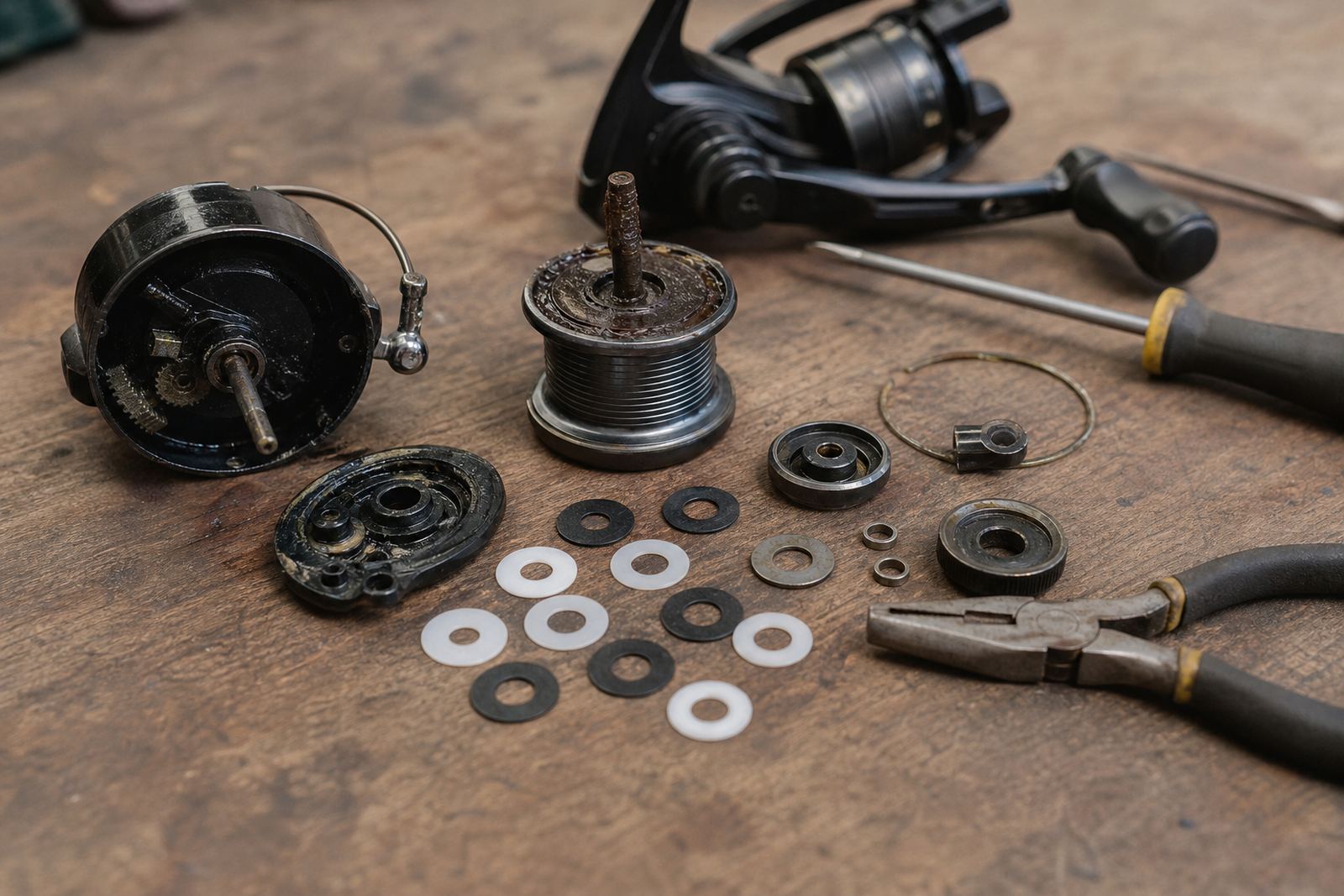
Our checks are practical and measured. We inspect the spool, main gear, pinion gear, bail arm, handle assembly, drag stack and line roller. We also check for salt build up, sand intrusion and signs of over tightening. Where needed, we test components under load so the fault is not guessed at. That saves time and helps keep the repair cost sensible.
- Internal strip down and visual inspection
- Check for worn bearings, washers and gears
- Assess drag smoothness under load
- Review spool travel and oscillation
- Confirm whether the reel is repairable and what it needs
How The Repair Process Works
You can bring the reel in through our Durban store area or place a repair enquiry through our contact form if you are outside Springfield Park. Once we receive the reel, we log the issue, inspect the unit and confirm the likely cause. If extra parts are needed, we will explain the repair before proceeding. That way you know what is being done and why it matters.
After approval, we clean the reel, replace worn parts, reassemble it and test the action. On reels used in the salt, we pay special attention to corrosion points, drag pressure and lubrication balance so the reel does not feel over packed with grease. A reel that is too heavily greased can feel sluggish, especially in cooler weather or after long storage.
- Submit the reel with a brief fault note
- Receive diagnosis and repair recommendation
- Approve the work and any parts required
- Repair, reassemble and test the reel
- Collect once the repair is signed off
Turnaround Times And What Affects Them
Simple reel repairs can often be handled quickly, while more involved work takes longer if parts are needed or if corrosion has reached more than one component. Turnaround depends on reel type, the level of wear, and whether the reel has been exposed to salt water, sand or impact damage. In peak fishing periods, we recommend bringing in reels early so they are ready before your next trip.
As a guide, basic service related repairs may take a few working days, while heavier repairs can take longer if replacement parts must be sourced. We keep the process clear and do not hold a reel longer than needed. If a repair is urgent for a planned trip, let us know and we will advise what can realistically be done in time.
- Light repair and clean up: usually a few working days
- Parts dependent repairs: allow extra time
- Salt corrosion cases: may need deeper cleaning
- Busy periods: book early for faster planning
Pricing Based On The Repair Needed
We price reel repairs according to the fault, labour involved and any parts required. That keeps the cost fair because a small bearing swap is not the same as rebuilding a gear train or replacing a damaged drag system. You get a proper assessment first, then a quote based on the work needed. No one likes surprise costs on tackle maintenance, especially when a reel still has good life left in it.
For anglers looking after multiple reels, we can also discuss maintenance planning so the repairs are spread out sensibly across the season. If the reel needs only cleaning, adjustment or minor parts, we will say so. If it is more cost effective to replace the reel, we will explain that too. Honest advice matters, particularly for club anglers and regular coastal users.
- Quoted after fault diagnosis
- Costs depend on labour and parts
- No unnecessary replacement work
- Bulk club or multiple reel assessments available
Keeping Reels Healthy Between Services
Most reels last longer if they are checked before the damage becomes obvious. Salt, dust and moisture can build up slowly, and once corrosion starts it can affect drag feel, handle movement and bearing life. For coastal anglers, we suggest a service interval of every 6 to 12 months depending on how often the reel is used. For freshwater anglers, once a year is usually enough unless the reel has been dropped, soaked or packed away wet.
After each trip, a quick wipe down and proper drying helps a great deal. Avoid rinsing a reel under hard running water, because that can push moisture into the wrong places. If you fish in the Durban humidity or near the coast, store reels loosely spooled and out of direct damp. A small amount of care prevents bigger repair bills later.
- Coastal reels: service every 6 to 12 months
- Freshwater reels: service every 12 months
- After salt exposure, wipe and dry promptly
- Keep reels out of damp storage areas
Key facts
| Reel types supported | Spinning, baitcasting and conventional reels |
|---|---|
| Common faults repaired | Rough bearings, drag slip, gear noise, handle play, poor line lay |
| Diagnostic focus | Bearings, drag stack, gears, spool travel, rotor and line roller |
| Service area | Durban, Cape Town, Gqeberha, Johannesburg, East London |
| Typical maintenance interval | 6 to 12 months for coastal use, 12 months for freshwater |
| Base location | Springfield Park, Durban |